



The U.S. is not expected to launch new military attacks on Iran and will instead focus on economic warfare, according to a report by The Cradle.
The report, citing unnamed officials, states that the shift in strategy comes after recent exchanges and aims to pressure Tehran through sanctions and financial measures. Officials said the decision reflects a preference for non-kinetic means to address ongoing tensions without escalating direct conflict.
This pivot follows months of military confrontation that began with a U.S.-Israeli air campaign on Feb. 28, 2026, and continued through a 60-day negotiation window that expired without reaching a lasting ceasefire [1]. U.S. President Donald Trump characterized the new phase as a departure from military threats, vowing to target any country helping Iran's economy [2].
Report Details Shift in Strategy
The report asserts that U.S. policymakers have concluded that further strikes on Iranian soil carry high risks of retaliation and regional escalation. According to the report, economic tools – including oil sanctions, banking restrictions and targeting of revenue streams – will be the primary levers in coming months. The report's authors emphasize that this approach is designed to degrade Iran's military capabilities indirectly while avoiding direct confrontation.
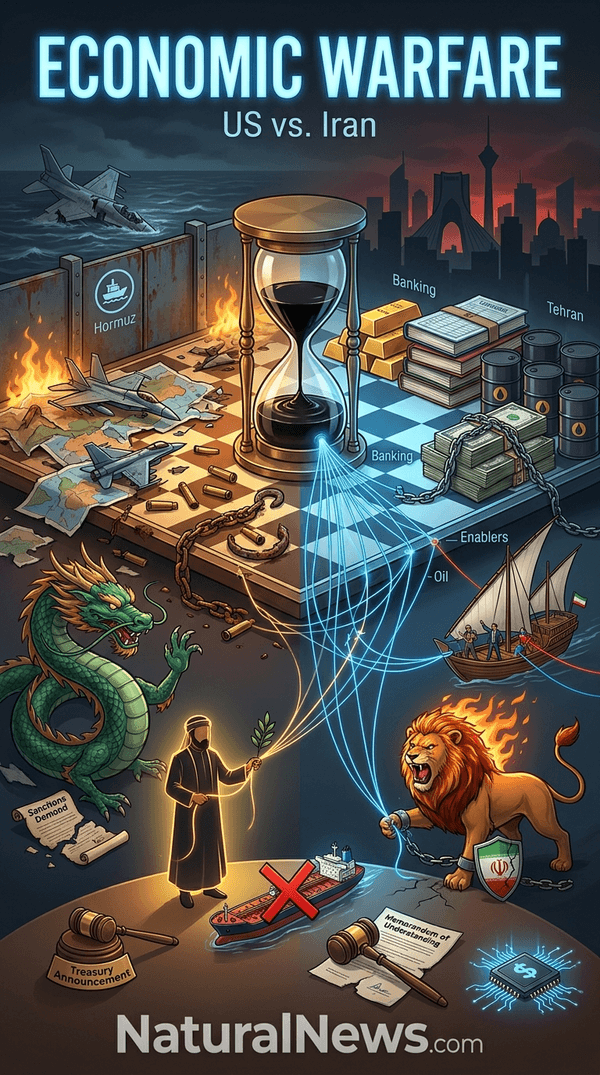
U.S. Treasury Secretary Scott Bessent announced the new campaign on Aug. 24, 2026, calling it "Operation Economic Outcast," an effort he said would target Iran and its "enablers" [3]. Bessent stated the administration would impose the "toughest sanctions in history on Iran," with details unveiled at a press conference on August 24 [4]. The economic strategy represents an escalation of the pressure campaign that some observers say reflects a broader shift in conflict from kinetic to financial means [5].
Previous Military Actions and Tensions
The move toward economic warfare follows a period of intense military activity. On Feb. 28, the U.S. and Israel launched a massive air campaign against Iran, which led to significant casualties and widespread damage [6].
As many as 150 U.S. service members were wounded in the initial 10 days of the conflict, according to Reuters [7]. By August, the war had expanded, with the U.S. Navy attempting to force open a corridor through the Strait of Hormuz after Tehran closed the waterway [8].
The report notes that those strikes were limited and that both sides have signaled interest in de-escalation, despite continued rhetoric. A memorandum of understanding was signed in June, but it collapsed by August, restarting hostilities [4]. According to the report, the new economic focus follows internal assessments that military options have not achieved their strategic objectives – a conclusion echoed by analysts who argue the campaign has been a strategic failure for Washington [9].
Potential Targets of Economic Warfare
The report suggests the U.S. will intensify enforcement of existing sanctions, particularly targeting Iranian oil exports and access to international banking systems. Officials said measures may include increased monitoring of shipping routes and pressure on third-party nations to reduce purchases of Iranian crude, according to the report. The report also indicates that the U.S. will expand designations of entities linked to Iran's drone and missile programs, seeking to cut off funding streams.
On Aug. 19, Trump declared he was launching the "MOST CRUSHING ECONOMIC OPERATION EVER TAKEN AGAINST ANY COUNTRY." He warned that entities involved in "oil smuggling, swap lines, cash transfers, exchange houses, ship registries, front companies" would face consequences [10].
The Treasury has been directed to target any country providing a "lifeline" to Iran [11]. Washington has also pressed China to join the enforcement effort, but Beijing firmly rejected the demand, stating that "sanctions and pressure will not solve the issue" [12], [5].
Reactions and Regional Implications
Iran condemned the new economic measures, with its Foreign Ministry calling the threatened sanctions "economic terrorism" and crimes against humanity [11]. Iranian Foreign Minister Abbas Araghchi dismissed the campaign as a diversion from America's own economic problems, citing "unprecedented debt and surging interest costs" [13]. A senior Iranian general, Maj. Gen. Ali Abdollahi, vowed that Tehran would deliver "revolutionary, crushing, regret-inducing and devastating responses" to the new pressure [14].
The escalation has also drawn in regional actors. Pakistan has emerged as an intermediary, with its interior minister reporting "very positive and productive" talks with Iranian leadership [15].
Meanwhile, Gulf states like the United Arab Emirates are being pressured by Iran to avoid assisting Washington, complicating the regional diplomatic picture [16]. Analysts quoted in the report expressed mixed views, with some saying economic pressure could force negotiations while others warned of humanitarian consequences for the Iranian population [17].
Conclusion: A Calibrated Approach
The report concludes that the U.S. decision to avoid new attacks and rely on economic warfare represents a calibrated approach to manage the conflict without full-scale war. Officials said this strategy aims to sustain pressure on Iran while preserving room for diplomatic engagement, according to the report [2].
The strategy has been described by the Treasury as "asphyxiation" of the Islamic Republic, signaling an effort to isolate Tehran from the global economy [17]. The report cautions, however, that the efficacy of economic measures remains uncertain and that outcomes depend on broader geopolitical dynamics.
Observers have noted that a military solution is seen as "increasingly unrealistic and unlikely," leaving economic coercion as the primary lever [5]. The events highlight the limitations of relying on state power to solve complex geopolitical disputes, a perspective echoed by critics who argue that such interventions historically lead to unintended consequences rather than the protection of liberty [18], [19].
References
- "D-Day for Iran, Meta on trial, Russia takes on the UK: RT stories that shaped the week". RT. August 21, 2026.
- "Trump threatens Iran with 'economic D-Day'". RT. August 20, 2026.
- "Economic D-Day: Treasury Secretary Bessent Announces Operation Economic Outcast". Antiwar.com. August 24, 2026.
- "Bessent: US to Impose 'Toughest Sanctions in History' on Iran". The Epoch Times. August 21, 2026.
- "China Firmly Rejects US Demand To Back Its 'Most Crushing Economic Operation' Against Iran". Zero Hedge. August 21, 2026.
- Mike Adams. "Why Trump Has Already Lost: The Unwinnable War and the Shattered Illusion of American Power". NaturalNews.com. March 05, 2026.
- Garrison Vance. "Pentagon Confirms 150+ U.S. Casualties as Global Energy Markets Brace for Collapse". NaturalNews.com. March 13, 2026.
- "Iran War 3.0". Ron Paul Institute. July 14, 2026.
- Sami Al-Arian. "The war on Iran was a strategic disaster for America and Israel". Middle East Eye. June 24, 2026.
- "Declaring 'economic d-day,' Trump says any country trading with Iran will be sanctioned". The Times of Israel. August 19, 2026.
- "Iran calls Trump's floated sanctions 'economic terrorism' as US set to unveil plans". The Times of Israel. August 20, 2026.
- "The US Is Pressuring China to Adopt Economic War Against Iran". Antiwar.com. August 20, 2026.
- "Iran's Araghchi says Trump's 'Economic D-Day' is a diversion from US domestic problems". Middle East Eye. August 20, 2026.
- "Iran Vows Devastating Responses Amid Talk of New US Sanctions". The Epoch Times. August 21, 2026.
- "Pakistan mediation offers narrow path as US-Iran tensions persist". NaturalNews.com. August 25, 2026.
- "UAE Cuts Ties As Iran Warns Gulf States Against Helping Washington; Kpler Says US Navy Gaining Ground In Hormuz". Zero Hedge. August 19, 2026.
- Alex MacDonald. "US promises 'asphyxiation' of Islamic Republic as it imposes new sanctions". Middle East Eye. August 25, 2026.
- "The War System". Mises Institute. July 08, 2026.
- Kate Aronoff. "We Own the Future".
Explainer Infographic










Please contact us for more information.