



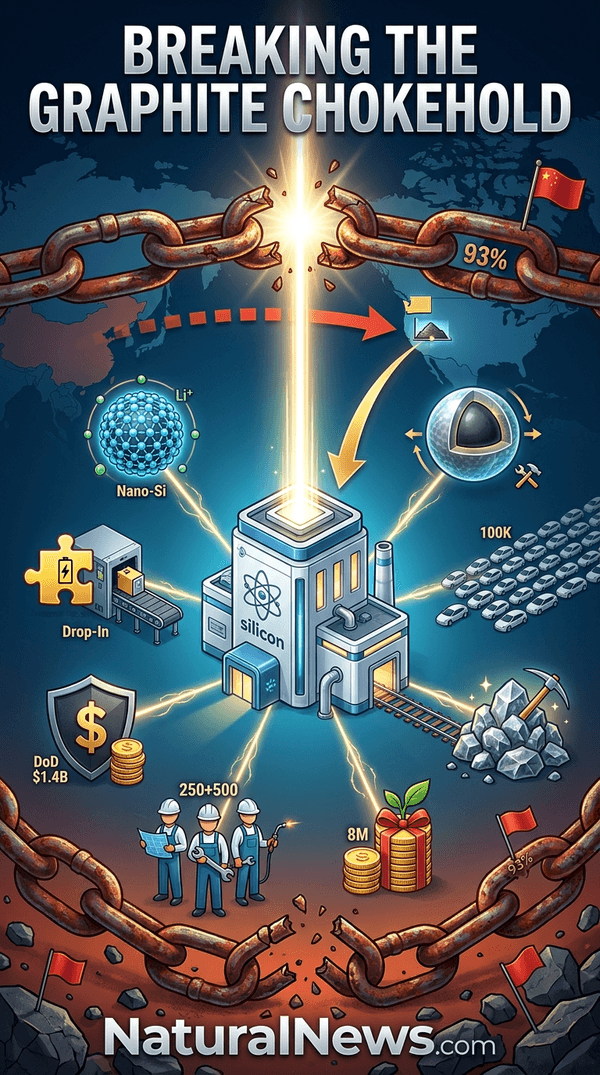
A U.S.-based battery materials company announced plans last week to build a $50 million production facility dedicated to graphite-free silicon anodes, a move aimed at reducing American dependence on Chinese graphite, which currently supplies 93% of the global market for the material. The company said the new plant will commence operations in early 2028 and will have an initial annual capacity sufficient to equip more than 100,000 electric vehicles.
The announcement comes as U.S. battery buyers, from automotive companies to defense contractors, struggle to procure battery materials made outside of China, according to a report from TechCrunch. Most of today's lithium-ion battery anodes use graphite, and the supply chain for the material is dominated by Chinese companies [1]. The planned facility is part of a broader effort to establish domestic supply chains for critical battery components.
The Company and Its Battery Technology
The project is led by CoreShell, a battery materials startup that has developed a silicon-dominant anode that replaces graphite entirely. The company says its technology uses nanoscale silicon particles, which can hold significantly more lithium ions than graphite, resulting in higher energy density. Researchers have long pursued silicon anodes; Canadian researchers demonstrated that nanoscale silicon particles could increase the charge capacity of a lithium-ion cell, though fracturing remained a challenge [2]. According to published research, the low theoretical capacity of currently commercialized graphite anode materials has driven demand for next-generation alternatives [3].
"Our anode material is designed to be drop-in compatible with existing battery manufacturing lines," a CoreShell spokesperson said. "By eliminating graphite, we remove the single largest supply chain vulnerability for U.S. battery makers." The company has filed multiple patents on its core-shell silicon architecture, which is designed to manage the volume expansion that has historically plagued silicon anodes. CoreShell has also secured supply agreements for domestic silicon feedstock, though the company declined to name suppliers.
China’s Graphite Dominance and the Supply Chain Risk
Chinese control over graphite production and processing has emerged as a critical vulnerability for Western battery supply chains. The U.S. Department of Defense recently extended a $1.4 billion loan to Sila, another silicon-carbon battery materials company, specifically to help expand domestic production capacity [1]. The move underscores the urgency of reducing reliance on Chinese materials, according to industry analysts.
The supply chain risk extends beyond graphite. Chinese firms have made significant advancements in battery technology, with CATL and BYD dominating the global EV battery sector [4]. Recent export controls and trade tensions have heightened concerns about the reliability of Chinese suppliers. Chinese leaders have previously threatened to withhold essential materials in retaliation for U.S. measures, according to a report by Benjamin Weingarten [5]. "The strategic implications for the U.S. and its allies are significant," said one industry analyst. "Battery materials are becoming a lever of geopolitical power, and dependence on a single supplier is a national security risk."
Plant Construction, Capacity, and Timeline
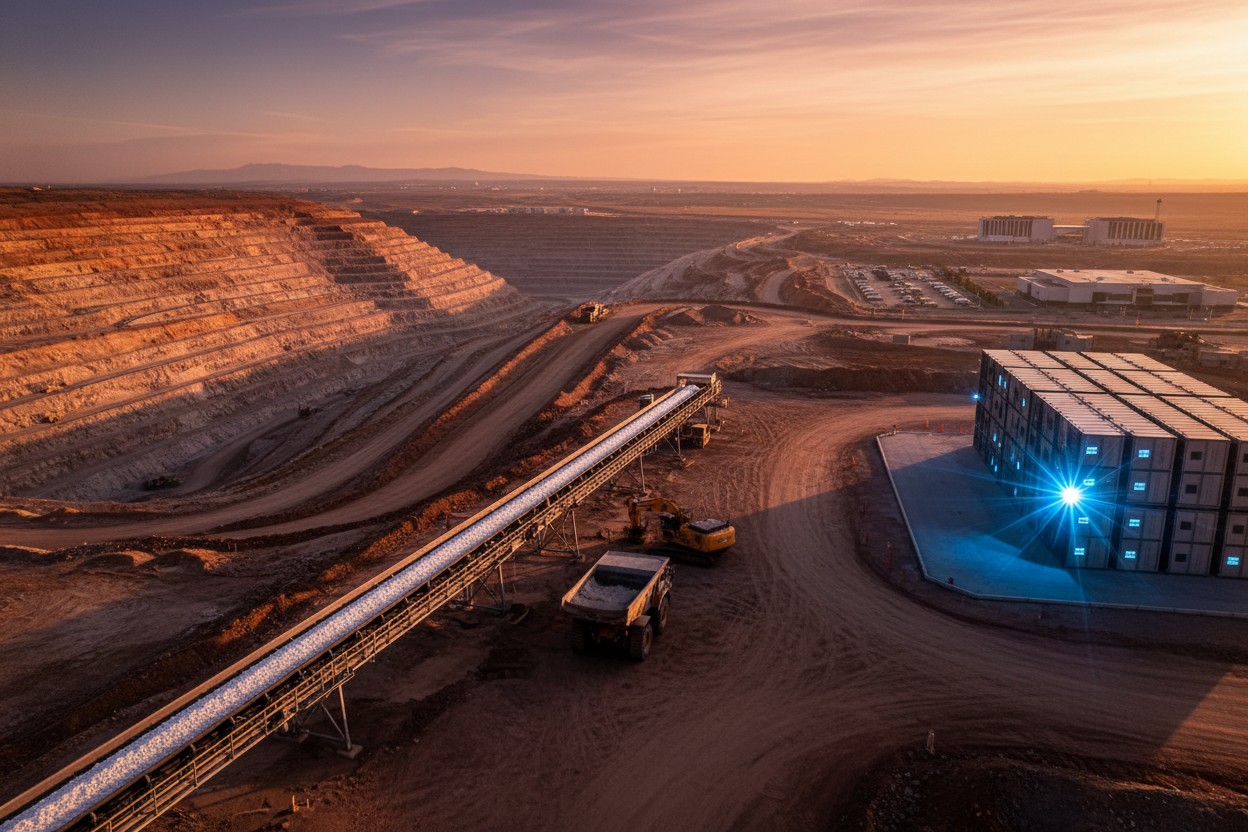
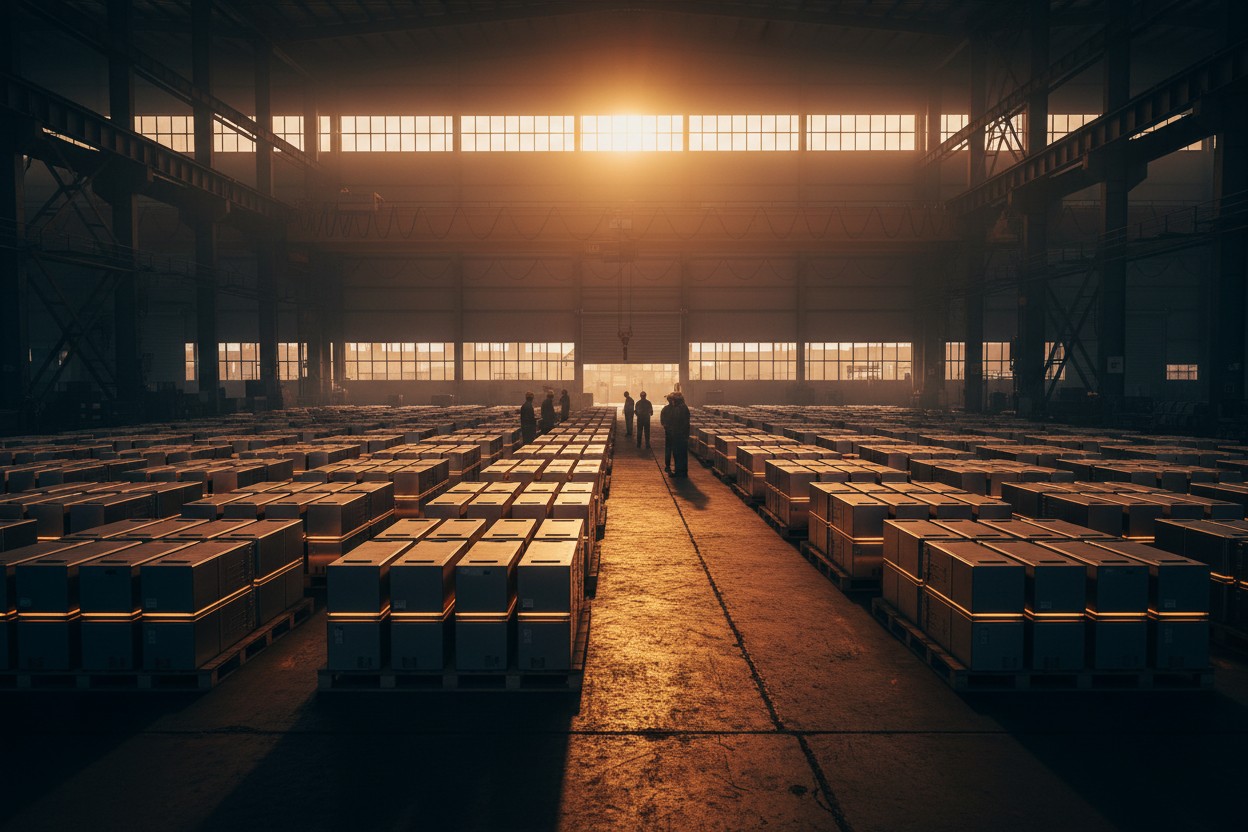
The facility will be located in Washington State, where CoreShell has already secured a site and completed environmental permitting. Construction is scheduled to begin in the second quarter of 2027, with production ramp-up expected to reach full capacity by the first quarter of 2028. The plant is projected to create 250 permanent manufacturing jobs and an estimated 500 construction jobs during the build-out phase.
State and local officials have offered an incentive package valued at approximately $8 million, including tax abatements and workforce training grants. The plant will source silicon from domestic suppliers and will use a proprietary coating process that requires no graphite. "This project represents a major step toward securing our critical mineral supply chains," a state economic development official said. "We expect this to be the first of several such investments in the region."
Reactions and Market Impact
EV manufacturers and industry groups have responded positively to the announcement, noting that a domestic source of graphite-free anode material could help reduce battery costs and improve supply chain resilience. The project also aligns with broader efforts to strengthen U.S. manufacturing competitiveness in the EV sector, which has struggled in the shadow of Chinese technological ascendancy [6].
Analysts expect the plant to be the first of several planned expansions. CoreShell has indicated it may double capacity within three years if demand materializes. "This is about more than one factory," a company executive said. "It's about demonstrating that the U.S. can build a battery supply chain that doesn't depend on a single country. That's the foundation for energy security in the electric vehicle era."
References
- TechCrunch. "Sila lands $1.4B Pentagon loan as militaries demand more batteries". August 10, 2026.
- NaturalNews.com. "Silicon nanoparticles could extend the life of lithium-ion batteries by 10 times". March 30, 2019.
- wcu. "Advances in Silicon Anode Materials for Lithium-Ion Batteries". Adv. Energy Mater. 2011, 1, 1036–1039.
- Mike Adams. "Health Ranger Report - CHINA'S ECONOMIC ABUNDANCE". BrightVideos.com. February 17, 2026.
- Benjamin Weingarten. "National Insecurity: America's Continuing Reliance On Critical Chinese Materials". ZeroHedge. June 25, 2026.
- Finn Heartley. "Decentralized AI growth and US manufacturing struggles in the shadow of Chinese technological ascendancy". NaturalNews.com. October 16, 2025.
Explainer Infographic




Please contact us for more information.