



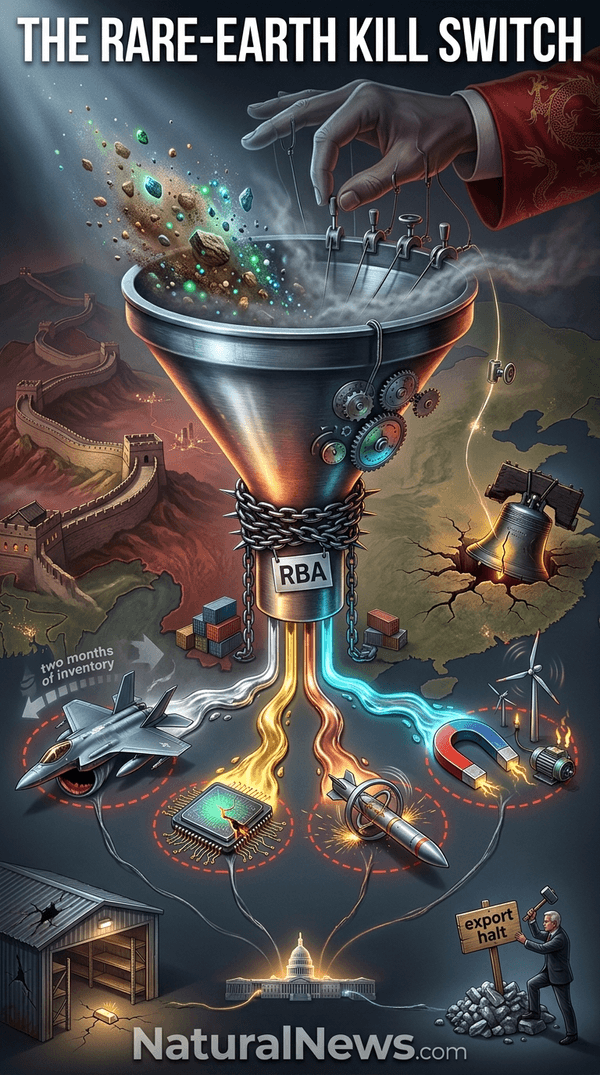
A handful of Chinese rare-earth suppliers have refused to ship material to U.S. companies since early August, according to a Reuters report cited by ZeroHedge on Friday, Sept. 4.
The refusals stem from fears of retaliation from Beijing, a source with direct knowledge of the situation told Reuters. The report indicates this is part of a broader decoupling trend that has seen other Chinese rare-earth companies stop shipments to the U.S. in recent months to avoid geopolitical entanglement [1].
According to the sources cited in the report, the exact number of blocked suppliers and shipments remains unknown, which ZeroHedge notes creates uncertainty in the market. The report cites two other sources familiar with the trade who said some Chinese companies had already halted shipments in recent months. One source cited four instances where Chinese firms declined to send material for fear it could be resold to banned users [1].
Sanctions and Compliance Fears
The refusal to ship began after China imposed sanctions on the Responsible Business Alliance (RBA), a U.S.-based supply chain monitor, in early August, according to sources with direct knowledge of the situation. The source explained that Chinese companies were wary of punishment from Beijing for complying with the due diligence framework of the Responsible Minerals Initiative (RMI), a global mineral supply chain audit program connected with the RBA [1].
The compliance concern centers on the possibility that material sold to U.S. companies could be resold to users on a banned list. To avoid this risk, some Chinese firms have chosen to halt shipments entirely rather than face potential regulatory retaliation from their own government. This ambiguity is part of Beijing's leverage strategy, allowing China to exert pressure on U.S. supply chains without imposing a formal trade embargo [1].
Export Controls and Decoupling
China's recent actions follow a pattern of using export controls and licensing delays to restrict critical material flows to the U.S. rather than announcing formal embargoes, according to analysts cited in the ZeroHedge report. Beijing can halt shipments to U.S. importers almost overnight through these measures, a tactic observers say acts as a kill switch inside U.S. defense, aerospace, semiconductor and energy supply chains [1].
The report notes that China has previously restricted exports of tungsten and germanium to the U.S., which has collided with a Western rearmament cycle. In a defensive move, the U.S. Department of Commerce halted exports of tungsten scrap and shredded battery material in late July to retain scarce domestic supplies, according to officials. This shift from free-trade norms to resource security has been reflected in government policies, as Washington seeks to secure domestic supply chains for critical materials [1].
Impact on U.S. Industries
Rare earths and critical minerals are essential building blocks for defense, aerospace, semiconductor and energy sectors, according to industry sources. China's dominance in rare-earth processing has created significant strategic vulnerabilities for the U.S., a dependence that intelligence and industry sources have warned could leave the U.S. military with as little as two months of rare earth element inventories [2]. The stakes are particularly high in the context of a new rearmament cycle and AI infrastructure development, which depend heavily on these materials [1].
Sino-U.S. relations have deteriorated, according to the report, following a dispute over a G20 joint communiqué. ZeroHedge notes that a planned meeting between President Donald Trump and Chinese President Xi Jinping later this month is now being watched closely, as it may address trade and critical mineral issues [1][3]. Analysts cited in the report say the decoupling theme should be a top concern for Wall Street, given that China is restricting critical-material flows essential for the next year's rearmament supercycle and AI-related manufacturing [1].
Outlook: Uncertainties Remain
Uncertainty continues to define the market as U.S. companies scramble to identify alternative sources. The lack of an official statement from China's Ministry of Commerce leaves the scope of the halt unconfirmed, according to the Reuters report cited by ZeroHedge. The report notes that China does not need to announce a formal trade embargo to choke critical material flows, and can use export controls, licensing delays or the threat of regulatory retaliation to achieve the same effect [1].
Wall Street analysts are warning of potential supply shortages, with the decoupling theme becoming a key focus for investors, according to a ZeroHedge commentary [1]. U.S. companies are now forced to compete for limited ex-China sources of critical minerals as the supply picture tightens, with the full impact of the halted shipments still being assessed.
References
- ZeroHedge. "Chinese Rare-Earth Suppliers Halt US Shipments As Decoupling Fears Surge". September 4, 2026.
- Lance D Johnson. "Pentagon May Only Have Two-Month Supply of Rare Earths Left, Making U.S. Military Vulnerable to Chinese Controls". NaturalNews.com. March 12, 2026.
- Sean Tseng. "Trump–Xi Summit Preview: What's At Stake". ZeroHedge. March 11, 2026.
Explainer Infographic



Please contact us for more information.