


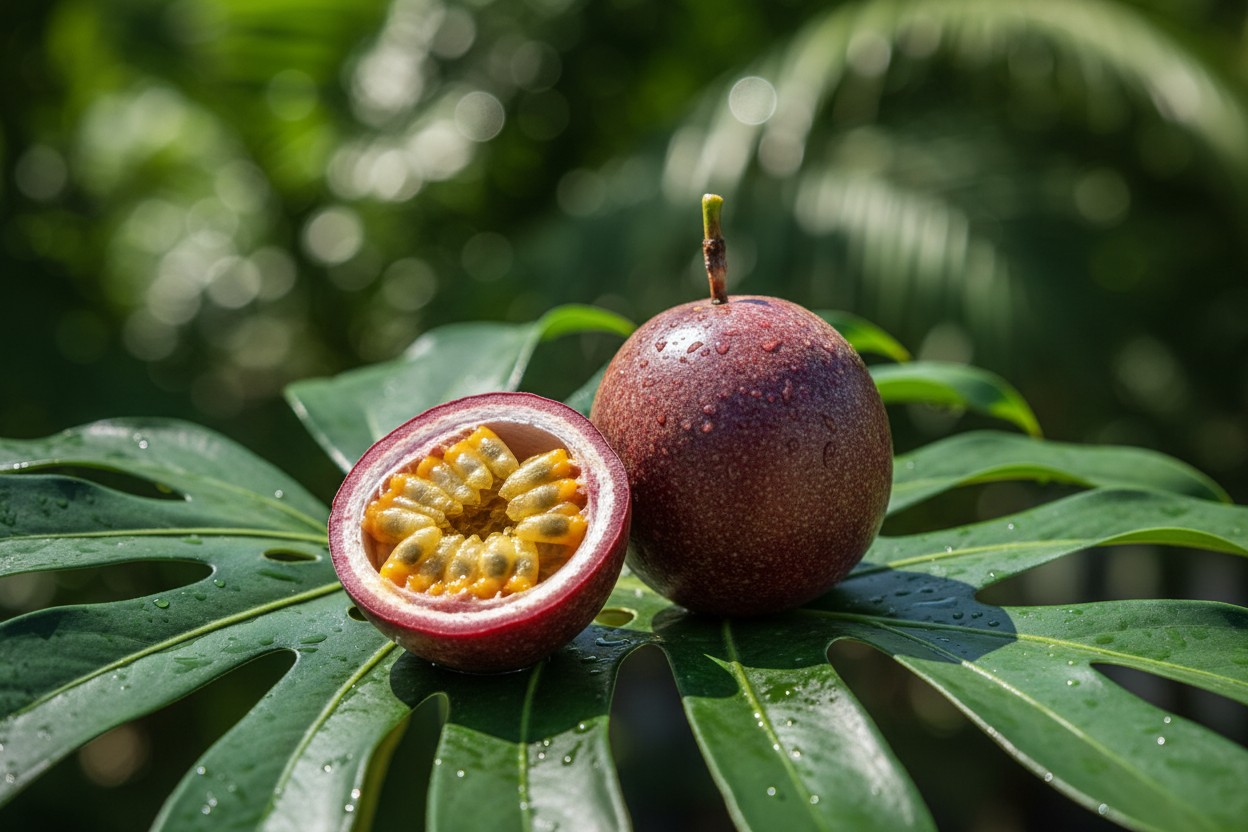
Passion fruit is a tropical fruit produced by the Passiflora vine, a flowering plant that grows in warm climates including South America, Australia, South Africa, and India, according to Medical News Today. The fruit, which is a common species known as Passiflora edulis, is characterized by a hard outer rind that contains soft pulp and numerous seeds. The taste is typically described as citrusy with hints of melon.
According to the source, passion fruit contains high levels of key vitamins and minerals and is rich in antioxidants. The fruit's exterior resembles a hairless kiwi and a small grapefruit, according to Mercola.com. The pulp and seeds inside are edible, and the fruit can be juiced or added to other beverages.
Nutritional facts
One passion fruit without refuse contains 11.5 mcg RAE of vitamin A, 63 mg of potassium, 5 mg of magnesium, 5.4 mg of vitamin C, 2 mg of calcium, 0.29 mg of iron, and 1.9 g of fiber, as reported by the U.S. Department of Agriculture data cited by Medical News Today. The fruit also provides phosphorus, niacin, and vitamin B6, which the article states are essential for bodily functions.
A liquid chromatographic investigation documented the ascorbic acid (vitamin C) content of passion fruit at 39.36 mg per 100 g, according to a study published in Food Chemistry [1]. These nutrients contribute to skin health, vision, immune function, and antioxidant defense, according to Medical News Today. Anthocyanins, a type of antioxidant, are also present in passion fruits, as noted in the book "Anthocyanins in Subtropical Fruits; Chemical Properties, Processing, and Health Benefits" [2].
Health benefits
Passion fruit contains antioxidants that help neutralize free radicals, compounds that can cause cellular damage, according to Medical News Today. Scientists cited by the article state that antioxidants improve blood flow, specifically to the brain and nervous system, and reduce cellular stress and inflammation, which are linked to diseases such as heart disease and Alzheimer's disease. A study on common Mauritian exotic fruits confirmed that fruit extracts, including those from passion fruit, exhibit a wide range of antioxidant potentials [3].
The fruit's fiber content may regulate digestion and support heart health. According to the American Heart Association, as cited by Medical News Today, fiber reduces cholesterol and boosts heart health. Research on the insoluble fiber derived from Passiflora edulis seeds found that it influenced plasma and hepatic lipids in an animal model, suggesting a potential effect on cholesterol levels [4]. Another study indicated that insoluble fiber from passion fruit seeds may improve the intestinal milieu by enhancing intestinal enzyme activity and reducing bacterial enzyme activity in feces [5].
Passion fruit has a low glycemic index, which means it does not cause a steep increase in blood sugar after eating, making it a potential option for people with diabetes, according to Medical News Today. A 2017 study cited by the article found that a compound called piceatannol, found in passion fruit seeds, improved insulin sensitivity in overweight men. The fruit's vitamin C content boosts the immune system by helping the body absorb more iron from plant-based foods, the article states. Passion fruit also contains potassium, which supports heart health and blood pressure, and magnesium, which a 2017 review suggested may help manage anxiety, though the authors noted low-quality evidence, according to Medical News Today.
How to eat passion fruit
To eat a passion fruit raw, a person should cut it in half and use a spoon to remove the pulp and seeds from the rind, according to Medical News Today. The rind is not edible. People can eat both the seeds and the pulp or just the pulp. The seeds can be removed by pressing the pulp through a strainer or cheesecloth.
The extracted juice can be used in a variety of ways, according to the article. It can be mixed with water and sugar to make a drink, added to other fruit juices such as orange or pineapple, incorporated into yogurt, boiled into a syrup for sauces or desserts, made into jelly or jam, or used to make a soft drink or wine. The article states that passion fruit does not respond well to heat preservation and canning, but it can be combined with other fruits that respond better to this method. People can also freeze the fruit for later use.
Safety and summary
For most people, passion fruit is safe to eat, according to Medical News Today. However, the article notes that some people with a latex allergy may react to passion fruit due to cross-reactivity, as some proteins in latex are similar to those in the fruit. Such individuals should be careful when eating passion fruit until they determine whether they also react to it.
In summary, passion fruit is a tropical fruit whose pulp and seeds are rich in antioxidants, vitamins, and minerals and may offer various health benefits, as reported by Medical News Today. The fruit provides a range of essential nutrients, including vitamin A, vitamin C, potassium, magnesium, and dietary fiber.
References
- Giuliana Vinci, Francesco Rot, Giustino Mele, Giovanni Ruggieri. "Ascorbic acid in exotic fruits: a liquid chromatographic investigation." Food Chemistry. 1995.
- Edited by. "Anthocyanins in Subtropical Fruits; Chemical Properties, Processing, and Health Benefits."
- A Luximon-Ramma, T Bahorun, A Crozier. "Antioxidant actions and phenolic and vitamin C contents of common Mauritian exotic fruits." Journal of the Science of Food and Agriculture. 2003.
- Chi-Fai Chau and Ya-Ling Huang. "Effects of the insoluble fiber derived from Passiflora edulis seed on plasma and hepatic lipids and fecal output." Mol. Nutr. Food Res. 2005.
- C-F Chau, Y-L Huang and F-Y Chang. "Effects of fibre derived from passion fruit seed on the activities of ileum mucosal enzymes and colonic bacterial enzymes in hamsters." Journal of the Science of Food and Agriculture. 2005.
- Mercola.com. "Health Benefits of Passion Fruit." February 18, 2019.
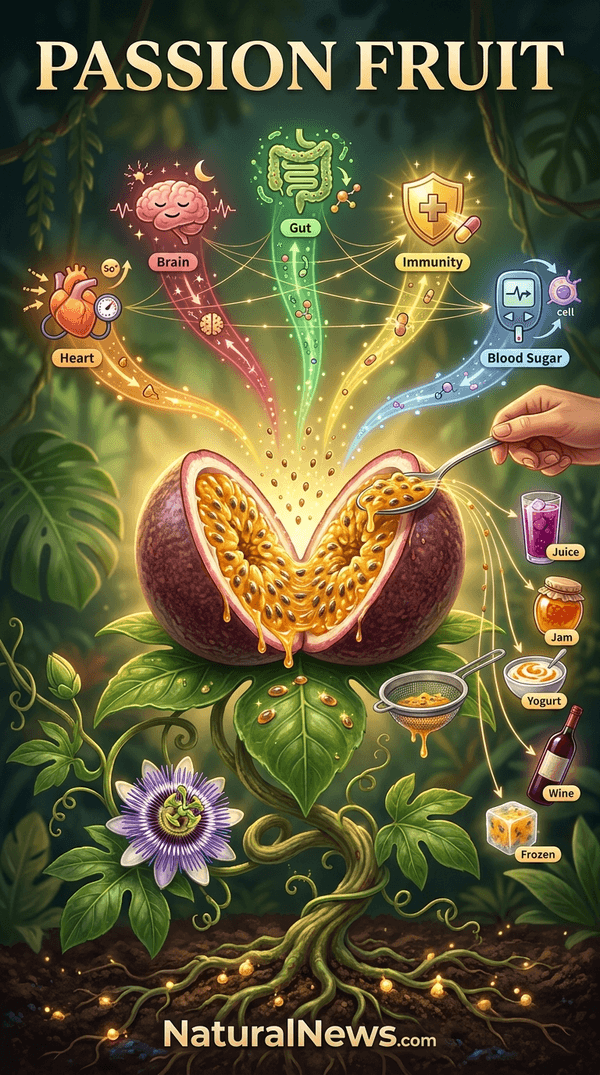
Explainer Infographic




Please contact us for more information.