


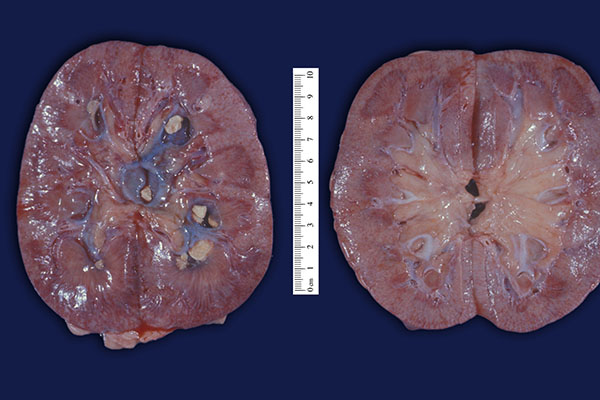
- A groundbreaking discovery reveals living bacteria and their biofilms embedded within the structure of common calcium oxalate kidney stones, challenging the long-held view that they are purely inert mineral deposits.
- This upends the traditional chemical model of stone formation, which was based solely on urine concentration and crystallization and suggests bacteria may act as a scaffold for stone growth.
- The finding is highly significant because calcium oxalate stones account for nearly 80% of cases, meaning a bacterial role is likely widespread, not limited to rare "infection stones."
- It opens new avenues for treatment, pointing toward potential future strategies like precisely targeted antimicrobial therapies to prevent stone formation by disrupting the bacterial environment.
- The discovery advocates for a more holistic view of urological health, emphasizing the role of the urinary microbiome and the need for personalized care that addresses both metabolic and biological causes.
In a discovery that upends a century of medical dogma, researchers at the University of California–Los Angeles have found living bacteria embedded within the most common type of kidney stone. The finding, published in the prestigious journal PNAS, suggests these painful crystalline formations may not be inert mineral deposits but, in part, biological structures. This revelation, spearheaded by urology professor Dr. Kymora Scotland and her team, challenges the foundational understanding of a condition that afflicts millions and points toward revolutionary new strategies for prevention and treatment.
The old model: A simple chemical process
For decades, the medical establishment has explained kidney stones through a straightforward chemical model. The prevailing theory held that when urine becomes too concentrated with substances like calcium and oxalate, these minerals crystallize. Over time, these crystals grow too large to be flushed from the kidney naturally, aggregating into hard, jagged stones. This process was viewed as purely physicochemical—a matter of solubility and saturation, not biology. This model guided all prevention, which focused on diet, hydration and metabolic management.
The UCLA team, using advanced microscopy to peer into the structure of common calcium oxalate stones, made a startling observation. They did not find a uniform crystalline mass. Instead, they discovered distinct, regular bands—like tree rings—composed of bacterial DNA and biofilms. Biofilms are slimy, structured communities of bacteria that are notoriously resistant to treatment. The presence of these live bacterial layers integrated into the stone's architecture indicates the bacteria are not mere contaminants but may be active participants in construction.
Rethinking the most common culprit
This discovery is particularly significant because it involves calcium oxalate stones, which account for nearly 80% of all kidney stone cases. Previously, only one rare stone type, known as struvite or "infection stones," was linked to bacterial activity. The medical community had long classified the vast majority of stones as "metabolic," meaning their cause was tied to body chemistry. This new evidence blurs that clean distinction, suggesting a bacterial role in stones previously thought to be sterile.
The research proposes a novel mechanism for stone formation. Instead of minerals simply clumping together, bacteria may act as a scaffold or a nucleation site—a focal point around which crystals can efficiently gather and layer. This biofilm model could explain why some stones form recurrently and grow rapidly. It also provides a compelling biological link to explain the long-observed clinical connection between recurrent urinary tract infections and recurrent kidney stone formation, a correlation the old chemical model struggled to fully clarify.
Implications for treatment and prevention
The clinical implications are profound. If certain bacteria are instrumental in building these stones, then targeting that microbial environment becomes a logical prevention strategy. This could open the door to therapies beyond simply adjusting diet or fluid intake. As noted by Dr. Michael Zell, a urologist at University Hospitals not involved in the study, this suggests a potential role for precisely targeted antimicrobial treatments, even for stones not traditionally considered infectious.
Current preventive advice remains valid but may be incomplete. Patients are rightly counseled to increase water intake to dilute their urine and are sometimes prescribed medications like citrate to inhibit crystal formation. For the rare struvite stones, antibiotics are standard. However, for the common calcium oxalate former, the toolbox has been largely non-biological. This study hints that a one-size-fits-all, purely chemical approach may miss a key biological driver for a substantial number of patients.
The road ahead: Unanswered questions
Scotland and her team are now focused on critical follow-up research. They aim to identify the specific bacterial species involved, understand why some individuals are more susceptible to this bacterial-mediated stone formation and decipher the exact molecular dialogue between the microbes and the mineral components. Furthermore, it remains to be seen if this biofilm mechanism applies to other stone types.
This breakthrough underscores a broader principle in modern medicine: the human microbiome plays a role in far more conditions than previously imagined. From gut health to mental well-being and now to kidney stone formation, the influence of our bacterial inhabitants is pervasive. This discovery advocates for a more holistic view of urological health, where the urinary tract's local microbiome is considered a significant factor in disease.
Empowering patient understanding
For the millions who suffer from kidney stones, this news is empowering. It moves the condition from a vague consequence of "bad chemistry" to a potentially targetable biological process. It validates the experiences of those with recurrent stones and unexplained infections, suggesting their struggles may have a unified, treatable cause. It also reinforces the importance of personalized care, as understanding the specific cause—metabolic, bacterial or both—is key to effective prevention.
"A kidney stone is a solid, rock-like mass that forms in the kidney from crystallized minerals in the urine," said BrightU.AI's Enoch. "Small stones may pass without issue, but larger ones can become lodged in the urinary tract, blocking urine flow. This obstruction often results in severe pain as the stone travels or is expelled."
The UCLA study does not just add a footnote to urology textbooks; it rewrites a fundamental chapter. By revealing that the most common kidney stones are partly bacterial colonies, it shatters a long-held assumption and illuminates a path toward more effective, personalized treatments. While the practical applications are still on the horizon, the paradigm has decisively shifted.
Watch and discover what causes kidney stones and how to prevent them naturally.
This video is from the Andreash channel on Brighteon.com.
Sources include:


Please contact us for more information.