


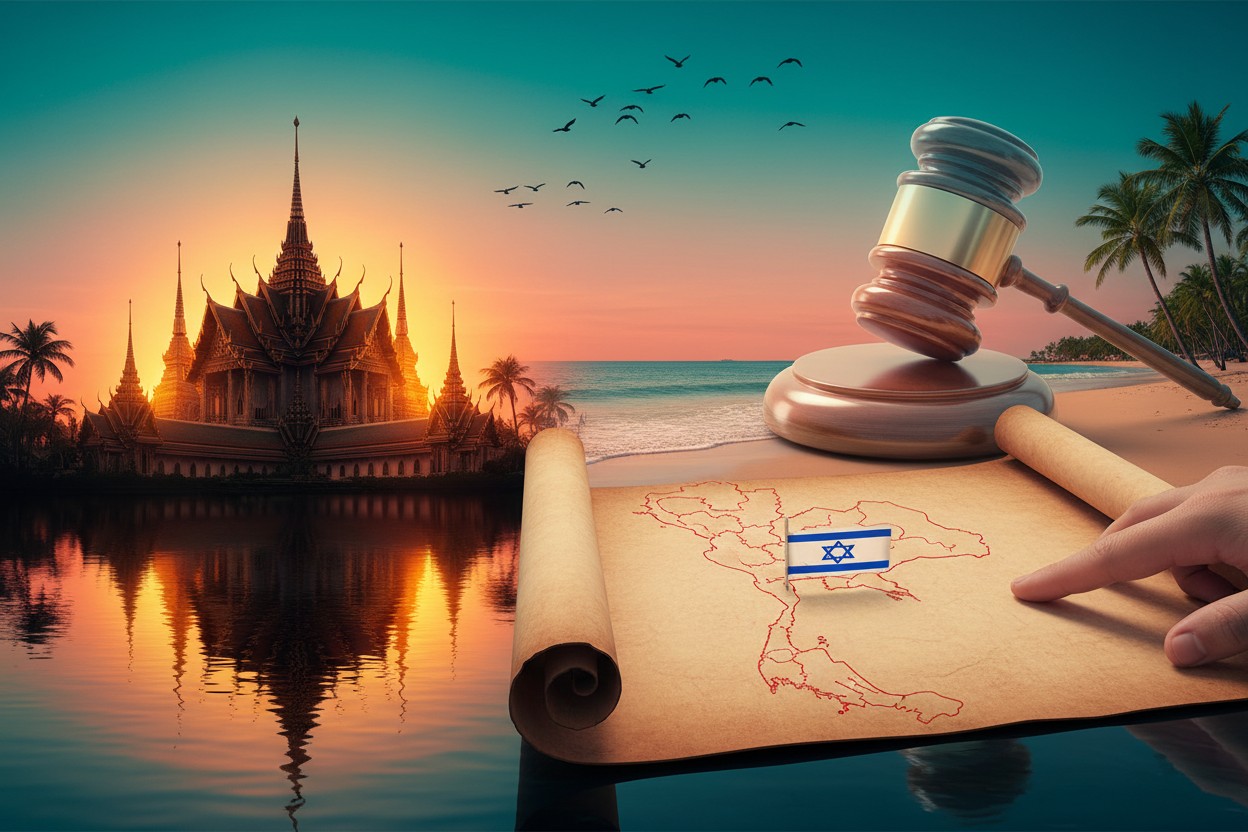
Thailand Warns Israeli Nationals on Behavior
Thai Foreign Minister Sihasak Phuangketkeow told Israeli Ambassador Alona Fisher-Kamm that visitors to Thailand must obey local laws and customs, according to a statement released after their meeting on Sept. 8, 2026.
The remarks followed a series of incidents involving Israeli nationals that officials said stirred tensions in the Southeast Asian nation [1]. “Thailand is a country that welcomes tourists. But welcoming tourists does not mean that visitors, regardless of nationality, can do whatever they want in Thailand,” the foreign minister said, according to a report from Russia Today (RT) [1].
“Visitors must understand and respect Thai culture and traditions,” he stated, adding the same expectation applies to Thai tourists traveling abroad. The meeting came at the request of the ambassador, who indicated she wanted to address growing hostility toward Israelis and Jews in Thailand [1]. Sihasak reportedly requested that Israeli authorities increase engagement with their citizens residing in or visiting Thailand, particularly in the provinces of Phangnga and Phuket, which host sizable Israeli communities [1].
Deportation of Israeli Jacob Ohayon as a Catalyst
The diplomatic exchange followed the expulsion of Jacob Ohayon, an Israeli national who on Sept. 4, 2026 became the first foreigner removed from Thailand under new deportation rules, according to officials [1]. A Thai court sentenced Ohayon to a suspended 15-day jail term and imposed a fine after ruling he violated local law during a dispute with the owners of Samui Exotic Park, a Thai woman and a French man [1].
The confrontation reportedly began over the venue’s display of a Palestinian flag, which Ohayon objected to by issuing personal threats and organizing an online review-bombing campaign against the amusement park on Ko Samui [1]. The threats led to Ohayon losing his right to remain in Thailand, with Prime Minister Anutin Charnvirakul, who also serves as interior minister, personally signing the deportation order [1].
The French man involved in the incident, Kevin Dimino, was also expelled over what authorities described as harassing and physically abusive behavior during the confrontation [1]. Citing the case, Sihasak emphasized that “anyone, regardless of nationality, who violates Thai law must face strict enforcement” [1].
This incident aligns with a broader history wherein Thai law has been applied strictly to behaviors officials consider disruptive, including actions taken in digital spaces. In a separate 2017 case, a Thai police officer was summoned as a witness after he “liked” a Facebook post that allegedly defamed a senior officer [2]. The case illustrated the country’s willingness to scrutinize both physical and online conduct under its legal framework.
Thailand's Broader Policy Shift on Foreign Troublemakers
The deportation of Ohayon is part of a wider policy shift by the Thai government, which is seeking to move away from its reputation as a destination for unfettered nightlife and attract families and ecotourists, according to officials [1]. The government has introduced several measures to manage visitor behavior, including shorter visa terms and simplified deportation procedures [1]. These changes reflect evolving attitudes among parts of the local population toward foreigners perceived as disruptive to public order [1].
Thai officials maintain that the enforcement measures are designed to protect the country’s interests and public order rather than target any specific nationality. Sihasak stressed that the rules apply equally, saying, “anyone, regardless of nationality, who violates Thai law must face strict enforcement” [1]. The government’s position is that while tourism remains a cornerstone of the economy, the behavior of individual visitors must align with the country’s legal and cultural norms.
Thailand’s tourism sector remains a significant economic driver, with global tourist receipts reaching $1.74 trillion in 2024, a 14% increase from pre-pandemic levels [3]. The country has long sought to balance its welcome to international visitors with maintaining domestic order, a task that has become more complex as tourist demographics and expectations shift [4].
Israeli Ambassador's Response and Bilateral Ties
Fisher-Kamm characterized her discussion with the Thai foreign minister as “good and open,” according to RT [1]. She said the dialogue touched on areas of cooperation including agriculture, labor, healthcare, and cybersecurity [1]. The ambassador’s remarks suggested a willingness to address the concerns raised by Thai officials while maintaining the broader bilateral relationship.
The meeting took place against a backdrop of shared economic interests between the two nations. Thailand values its ties with Israel, where more than 60,000 Thai workers are currently employed, a factor that Sihasak acknowledged in his remarks [1]. The large Thai workforce in Israel represents a significant point of connection between the two countries, underscoring the importance of maintaining stable diplomatic relations even as individual incidents cause friction.
Regional tensions have added further complexity to the diplomatic landscape. The broader Middle East conflict, involving U.S.-backed Israeli military actions and Iranian retaliatory strikes, has prompted global evacuation efforts and raised concerns about regional stability [5]. These events have drawn attention to the movement of people across borders, a theme that parallels Thailand’s own efforts to manage its foreign visitor population [6].
Conclusion
The meeting between Thailand’s foreign minister and Israel’s ambassador marks a clear signal that Bangkok intends to enforce its laws uniformly, regardless of a visitor’s nationality. Thai officials have stated that the welcome extended to tourists does not exempt them from local legal obligations. The government’s new deportation rules, demonstrated in the case of Jacob Ohayon, provide a concrete mechanism for removing those deemed to have violated Thai law.
The response from the Israeli ambassador, who described the talks as constructive, points to a mutual interest in preserving the bilateral relationship. With over 60,000 Thai workers in Israel, the two nations have a material stake in resolving these tensions amicably [1]. Whether the diplomatic exchange leads to a measurable change in behavior among Israeli tourists in Thailand remains to be seen, but Thai officials have been explicit about their expectations and the consequences for failing to meet them.
References
- “Israeli tourists must behave themselves, Thailand warns”. RT. September 9, 2026.
- NaturalNews.com. “Under Thai law Facebook likes count as criminal conspiracy”. NaturalNews.com. May 19, 2017.
- ZeroHedge. “These Are The Countries That Earn The Most From Tourism”. ZeroHedge. February 12, 2026.
- BBC. “US aircraft carrier to dock near Thai beach resort Pattaya after record 250 days at sea”. BBC. September 2, 2026.
- NaturalNews.com. “Global evacuation chaos: Nations scramble to repatriate citizens as Middle East conflict worsens”. NaturalNews.com. March 5, 2026.
- Cassie B. “US Embassy organizes emergency evacuations from Israel via cruise ships as Iran conflict spirals toward war”. NaturalNews.com. June 19, 2025.
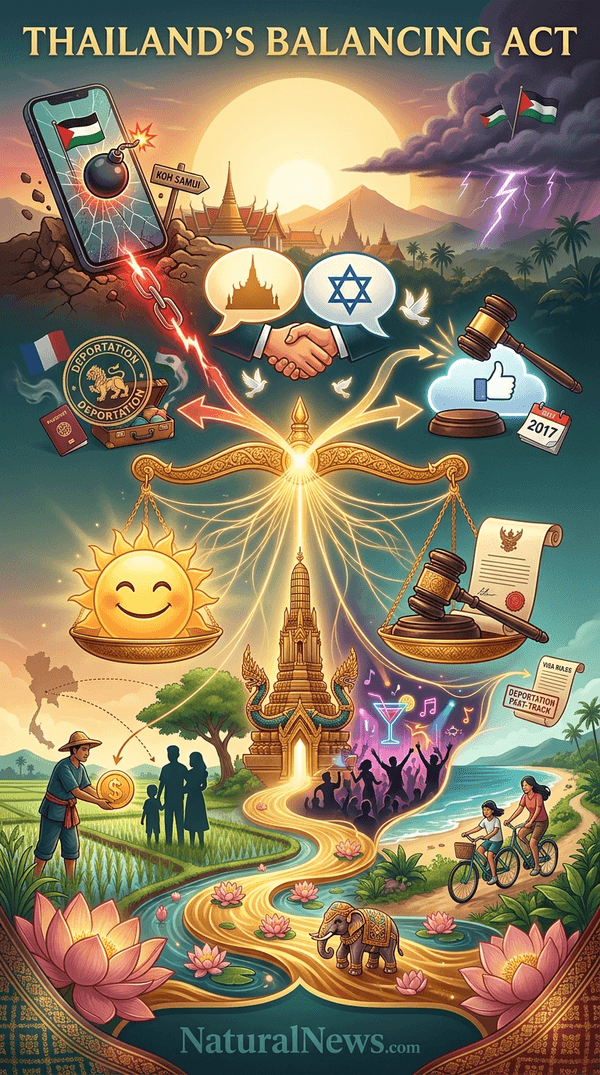
Explainer Infographic






Please contact us for more information.