


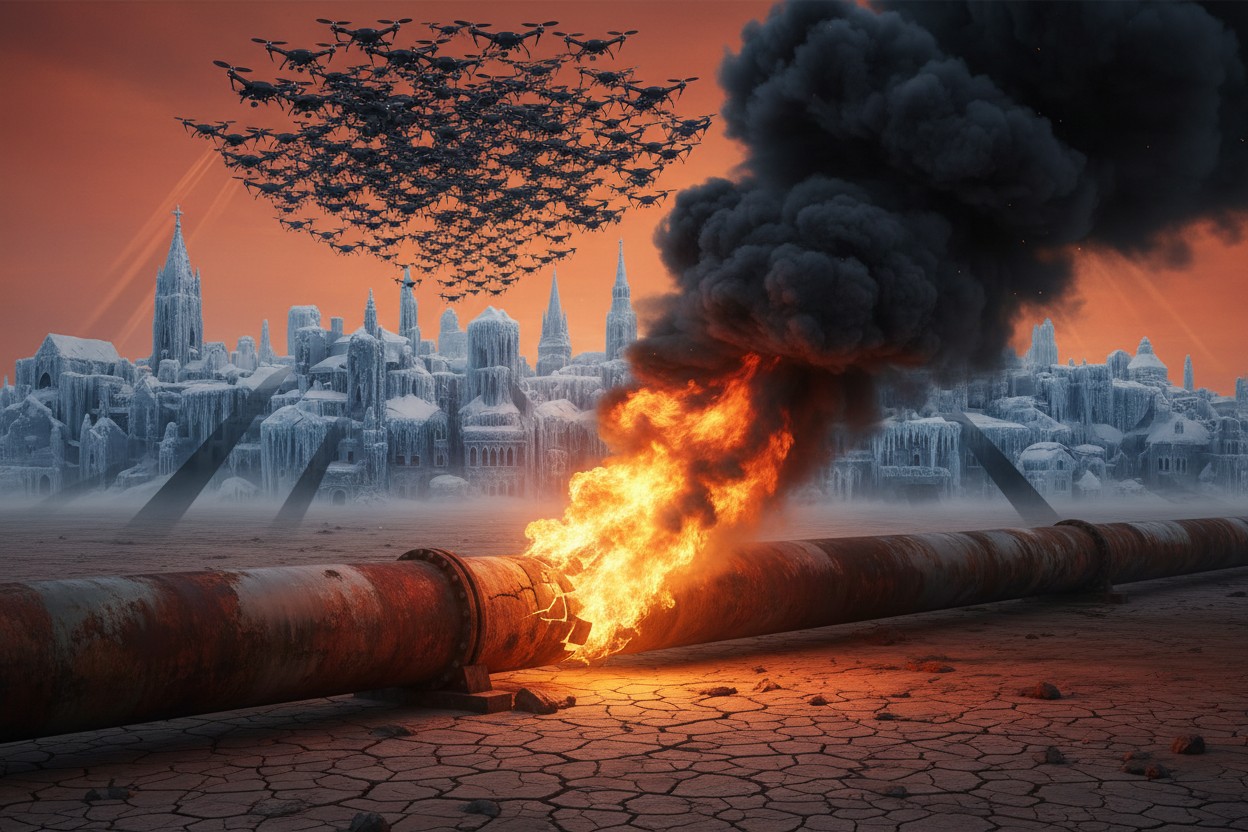
Introduction: Europe's Last Energy Lifeline Just Got Cut
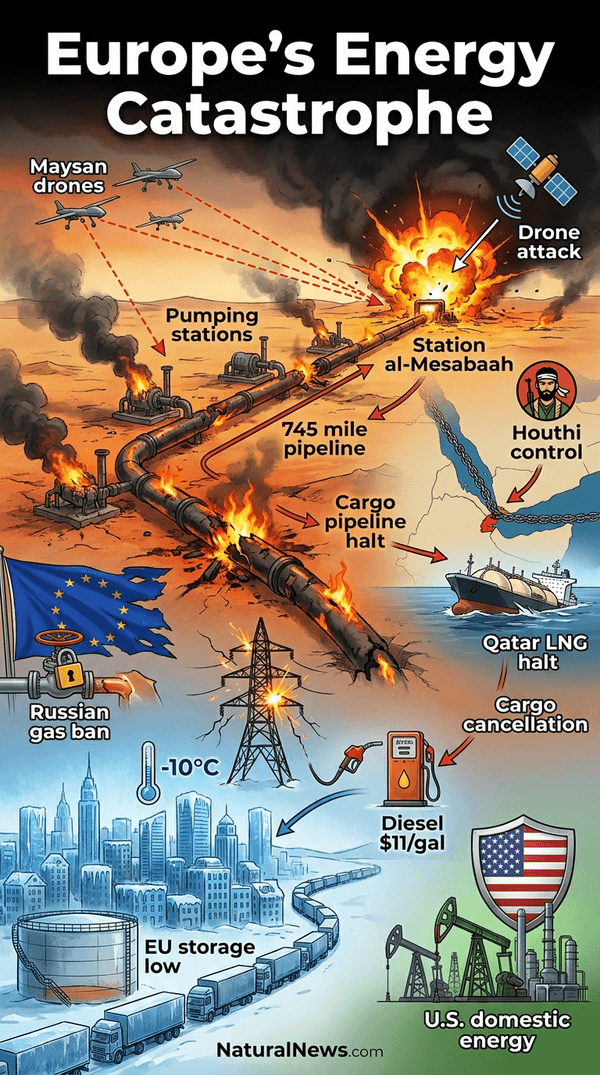
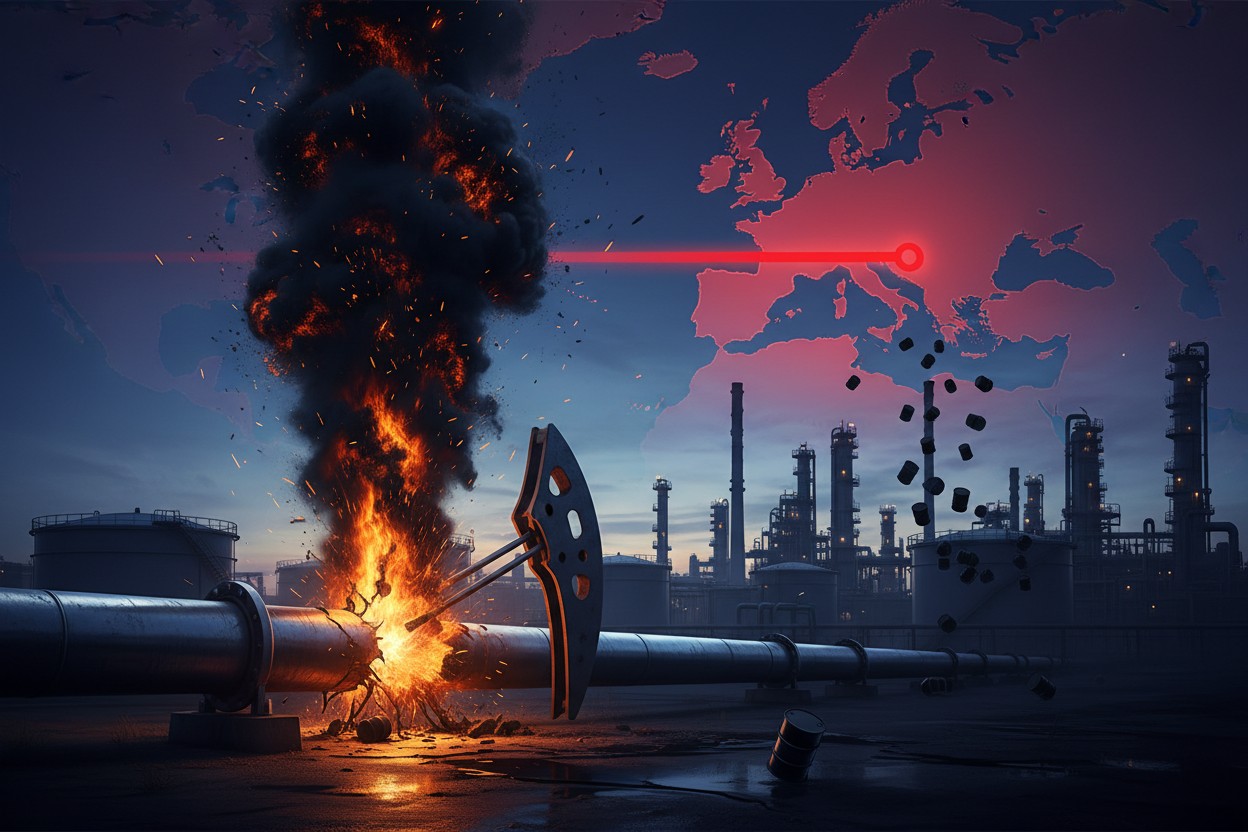
Western Europe is now staring into the worst energy crisis since World War II, and its leaders have no one to blame but themselves. On Friday, September 11, 2026, Saudi Arabia announced it had shut down its East-West Pipeline after multiple drone attacks, confirming the pipeline came under attack and that emergency crews responded to secure it [1]. Days later, Reuters reported that Riyadh had begun canceling crude cargoes scheduled for loading later in September for European customers and had suspended loadings at the Red Sea port of Yanbu [2]. This is not a minor disruption. It is a direct strike at Europe's remaining energy lifeline.
I have watched this disaster build for years. Europe cut itself off from Russian natural gas, then shut down its own domestic energy infrastructure to appease climate cultists, and then wagered its survival on fragile Middle Eastern supply routes that run through the Houthi-controlled Bab al-Mandeb Strait and a single 745-mile pipeline crossing the Arabian desert [3]. Anyone who understood energy understood the fragile nature of all this. Now the bill is coming due, and ordinary Europeans will pay it with cold homes, rationed fuel, and failed power grids.
Make no mistake about the scale of what just happened. Experts told BBC Verify that damage to the pipeline's pumping stations could take more than a month to repair and could cut supplies by as much as 3.6 million barrels per day [4]. Bernstein analysts warned of $150 crude [5]. This is what happens when ideologues run energy policy and treat Russian gas as an enemy while treating Saudi oil as a guarantee.
The Houthi Strike That Broke Saudi Oil
The East-West Pipeline and its desert pumping stations are incredibly easy targets for drones and missiles, and the evidence shows repairs keep getting blown up again. Satellite imagery released by Vantor showed massive damage at a pumping station in al-Mesabaah, southeast of Medina, with fires causing widespread destruction [6]. The attack on September 10 and 11 came from drones launched from Maysan province in southern Iraq, hitting stations near Riyadh and Medina [7]. With the Strait of Hormuz effectively closed, the pipeline had become Saudi Arabia's primary export route [3].
The buffer of oil sitting in Saudi Arabia's Red Sea port storage is nearly empty. As I warned in my previous reporting, Saudi Arabia may run out of oil stocks entirely if the pipeline is not restarted within days [3]. When exporters cannot move crude, production eventually has to stop, and idle oil wells do not simply wait patiently. They seize up over time due to paraffin buildup and water pollution, damaging long-term output well into 2027. This is basic petroleum engineering that every oilman knows, and it is precisely why the Houthis targeted the pumping stations rather than the pipe itself.
Meanwhile, the Saudi military in Yemen has effectively been defeated. The Houthis captured the strategic city of al-Makha, tightening their grip on Bab al-Mandeb [8], and they seized Perim Island outright on September 11 [9]. As Murad Sadygzade noted, the Houthis are locking down the western coast of Yemen and the military geography has changed within days [10].
The hyped Mecca defense pact between Riyadh, Islamabad, and Ankara proved to be a paper tiger; Pakistan openly said no military response was currently under discussion [11]. As for the United States riding to the rescue, President Trump declined Saudi Crown Prince Mohammed bin Salman's request for direct U.S. strikes, agreeing only to provide intelligence and targeting support [12]. He has since said the Houthis asked America not to intervene [13]. Our military is stretched thin and low on munitions. Nobody is coming to save the kingdom.
Western Europe's Perfect Energy Storm
The European Union has made Russian natural gas effectively illegal going into January, while European storage sits near record lows for this time of year. On top of that, diesel-dependent economies are being cut off from Saudi crude at exactly the worst moment when refining is already described as "super short" -- European consumers are paying between $9 and $11 per gallon for diesel amid a global refining crisis [14]. Winter heating, trucking, farming, and construction all run on the oil and refined products that are now being canceled.
This is not some distant market abstraction. Diesel fuel and jet fuel are the first products to disappear in any supply crisis, ahead of gasoline, and that pattern is already playing out with shortages and long fuel lines across Europe [15]. Qatari LNG shipments to Europe were already halted amid the Red Sea crisis months ago, and this was before Iran and the U.S. went to war in the Persian Gulf [16]. With Qatar's Ras Laffan and Mesaieed facilities knocked offline, the global gas market lost its swing supplier essentially overnight [17]. Europe has now lost both of its remaining Middle Eastern lifelines in a matter of months.
The result will be diesel rationing, scarce heating oil, and fragile power grids collapsing under winter demand. I have seen the same pattern repeatedly in my reporting -- analysts at the IEA and independent institutions now describe widespread energy shortages and rationing as structurally embedded in global markets regardless of any near-term resolution to the conflict [18].
This is not hypothetical. People in London, Berlin, Paris, and Madrid could genuinely freeze this winter because their leaders chose climate ideology over energy sovereignty.
The Political Earthquake Coming to Europe
European leaders are climate cultists who hate their own citizens. Their energy policies are deliberately destroying Western Europe, and the evidence is right in front of us. As I told audiences back in December 2024, climate policies imposed by these deranged leaders had already caused an energy lockdown in Europe -- a refusal to use domestic gas fields, combined with triple-priced American LNG imports, amounted to economic suicide [19]. That was before the war even began. Now Russia has redirected its energy exports eastward while Western Europe faces the possibility of freezing this winter.
The rise of AfD in Germany shows voters are waking up to the fact that their leaders would rather see them freeze than make peace. This is exactly the revolutionary dynamic I predicted would emerge when desperation turns to anger [20]. The fact that the Houthis executed a successful missile and drone strike on the Saudi Aramco refinery at Jazan on September 8 [21], injuring 73 civilians, should have been a wake-up call for European leaders. Instead, EU leaders doubled down on sanctions, war, and ideology. We should absolutely expect uprisings and a revolutionary spirit in Ireland, the UK, France, and beyond as ordinary families face cold homes.
It begs the question that no European politician wants to answer: how cold must it get before Europe rebuilds Nord Stream and begs Russia to sell them gas? Moscow has already rebuilt its customer base by redirecting seaborne oil to Asia -- two-thirds of Russian seaborne exports now go east, and that transition took only months [22]. Europe, by contrast, is running out of alternatives. The Trump administration's conflict with the City of London may be accelerating Europe's fall, but America is far better positioned to weather the storm because we still have domestic energy. Europe will suffer far beyond anything the U.S. is forced to endure in the coming year.
Why America Will Weather It Better -- But Not Painlessly
The United States has its own refining capacity and domestic energy production, so we will still have diesel and heating oil even if prices might hit $12 to $15 a gallon. This is the crucial asymmetry. America sits on enormous reserves of oil and gas that Europe chose to abandon. That does not make us immune to global price shocks -- Brent spiked as high as $108 a barrel after the attack [5] -- but it means we will not face absolute scarcity. We will not freeze.
That said, rationing may come to America too. Oil remains essential for diesel locomotives, heavy machinery, military jets, and commercial aviation, and if consumers snap up every gallon, shortages appear very quickly [23]. Families who have stocked fuel, food, water, and alternative heat sources will manage the crisis far better than those who assumed the government would save them. Food and beverage manufacturers are already facing supply chain collapse as Middle Eastern feedstocks dry up -- and roughly 70% of India's consumer packaging uses flexible plastics that are now threatened by shortages of petrochemical feedstocks, which will cascade into global food scarcity simply because of a lack of available packaging materials [24].
This relative American resilience is no excuse for complacency. Preparedness is still essential for every family. Stacking food, fuel, cash, gold, and silver before the crisis deepens is the single most valuable action any reader can take right now. The dollar devaluation I have warned about repeatedly will continue to erode savings during the same period energy prices are surging [25]. When government creates the crisis, the individual must prepare for the consequences.
Conclusion: Pray for Peace Before the Lights Go Out
I keep praying for peace in the Middle East and between Russia and Ukraine, and I hope you will join me. By February, the war in Ukraine will be five years old, with hundreds of thousands dead and incalculable suffering caused by Western powers who promised a fight they never intended to finish. Iran has already lost major energy infrastructure, Qatar has lost its LNG exports, and now Saudi Arabia has lost its last reliable export corridor. There is no scenario in which the current trajectory ends well for anyone.
Without peace, people will not be able to heat their homes, power their businesses, or keep society running. Every additional month of war compounds the damage and brings the world closer to the kind of rupture that no amount of government planning can mitigate. The path forward is obvious: peace, liberty, and an end to the ideological crusades that have destroyed Europe's energy security in the first place.
Stay informed, prepare yourself, and demand that your leaders choose peace and liberty before this energy crisis becomes a full civilizational collapse. For independent reporting that tells the truth about energy, finance, and geopolitics, visit NaturalNews.com, Brighteon.social for uncensored discussion, and BrightAnswers.ai for research that mainstream AI engines will not give you. Knowledge and preparation are your only real defenses, and the time to get moving on all this is right now.
References
- The Saudi Pipeline Is Gone: Why the Global Energy Shock Just Got Far Worse. - NaturalNews.com. September 14, 2026.
- Saudi Arabia cancels oil shipments to Europe after pipeline attack - Reuters. - RT. September 15, 2026.
- Saudi Arabia May Run Out of Oil Stocks if East-West Pipeline Not Restarted Within Days, Report Says. - NaturalNews.com. September 14, 2026.
- Satellite image reveals major damage that shut crucial oil pipeline. - BBC. September 15, 2026.
- Oil Surges As Saudi Pipeline Crisis Puts 4% Of Global Supply At Risk; Bernstein Warns Of $150 Crude. - ZeroHedge. September 14, 2026.
- Satellite images show Saudi pumping station damage southeast of Medina. - Middle East Eye. September 14, 2026.
- A Few Thousand Dollars of Drones Just Repriced the World's Oil. - ZeroHedge. September 15, 2026.
- Houthis claim control of strategic Bab al-Mandeb Strait (VIDEOS). - RT. September 12, 2026.
- Houthis Capture Strategic Island in Bab al-Mandab Strait. - NTD. September 12, 2026.
- A new strait crisis is brewing in the Red Sea. - RT. Murad Sadygzade. September 15, 2026.
- Pakistan says no military action planned over Houthi attacks on Saudi Arabia. - Middle East Eye. September 11, 2026.
- President Trump Rejects Saudi Call for U.S. Strikes as Houthis Threaten Red Sea Chokepoint. - 100percentfedup.com. September 11, 2026.
- Trump says Houthis asked US not to intervene in Yemen. - Middle East Eye. September 12, 2026.
- Saudis Cancel September Crude Cargoes To Europe As East-West Pipeline Shutdown Deepens Energy Crisis. - ZeroHedge. September 15, 2026.
- Bright Videos News - REDACTED Energy Lockdowns are Here. - Mike Adams - BrightVideos.com. March 28, 2026.
- Qatar halts LNG shipments to Europe amid Red Sea crisis. - NaturalNews.com. Patrick Lewis. March 13, 2026.
- Qatar's LNG Blackout: A Global Energy Catastrophe Unfolds. - NaturalNews.com. Mike Adams. March 5, 2026.
- Global Energy Shortages and Rationing Likely to Continue Beyond Current Conflict, Analysts Warn. - NaturalNews.com. April 11, 2026.
- Mike Adams interview with Coffee and a Mike Podcast. - Mike Adams. December 21, 2024.
- Health Ranger Report - Global energy and currency wars erupt. - Mike Adams - Brighteon.com. April 3, 2023.
- Saudi's Remaining Energy Lifeline To The World Under Threat After Successful Houthi Strikes. - The War Zone. September 8, 2026.
- ENERGY REDIRECTED: Two-thirds of Russian seaborne oil exports are now going to Asia. - NaturalNews.com. November 21, 2022.
- Bright Videos News - MINNESOTA ESCALATION. - Mike Adams - BrightVideos.com. January 8, 2026.
- Bright Videos News - MAIN EPISODE. - Mike Adams - BrightVideos.com. April 7, 2026.
- Brighteon Broadcast News. - Mike Adams - Brighteon.com.
Explainer Infographic








Please contact us for more information.