


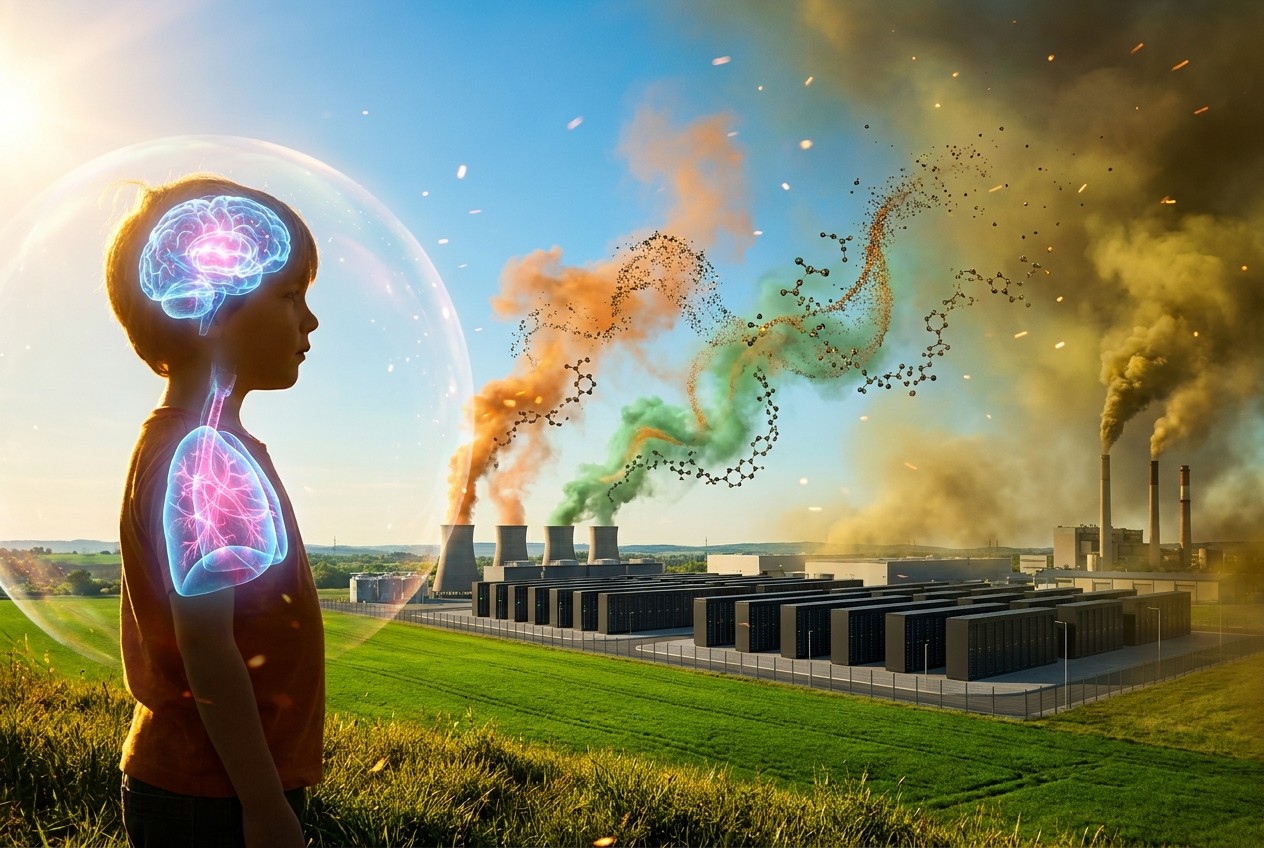
A report published by Children's Health Defense (CHD) states that air pollution from artificial intelligence (AI) data centers may affect children's developing brains and lungs, according to the organization.
The report focuses on data centers in the U.S. that power AI systems and require large amounts of electricity, the report states. CHD said the report examines emissions such as particulate matter and nitrogen oxides from data center operations. According to a NewsNation report, electricity plants being built to power AI data centers can emit toxic pollutants that harm public health [1].
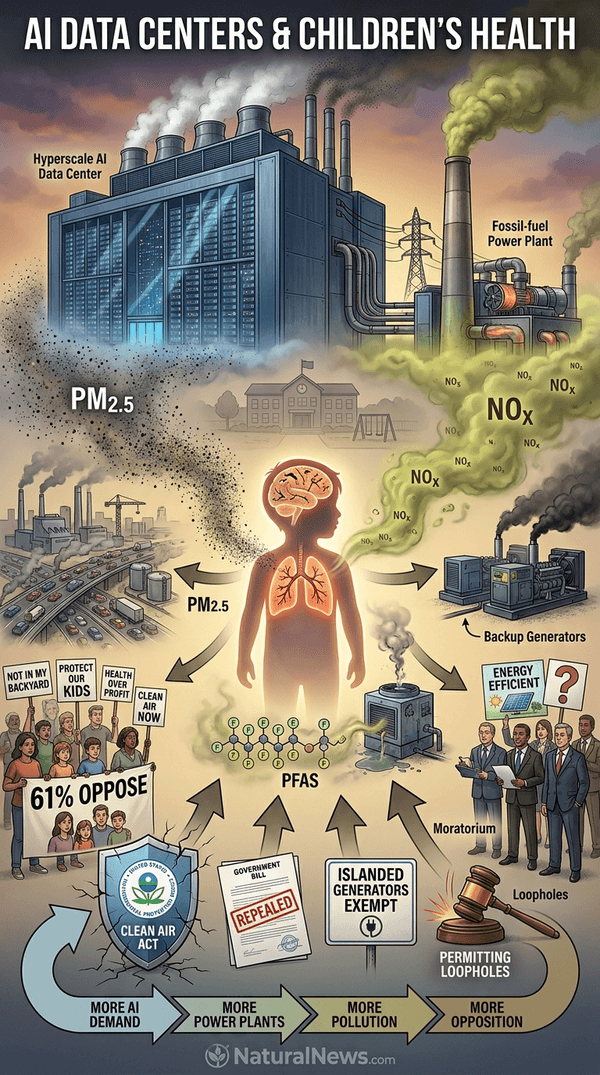
The findings arrive as opposition to data center construction has grown. A Heatmap News poll found that 61% of Americans said they "strongly oppose" data center construction where they live, according to YourNews [2]. A separate poll cited by ZeroHedge found that 70% of Americans oppose building AI data centers in their area, including 60% of Republicans [3].
Data Center Expansion and Emission Sources
AI data centers require continuous power and cooling, leading to increased demand on electric grids, according to industry reports. U.S. data centers are projected to consume about 18 billion cubic feet of natural gas per day by 2035, nearly double the amount BloombergNEF predicted nine months earlier, according to TechCrunch [4].
Backup diesel generators and natural gas turbines at data centers emit pollutants including fine particulate matter and nitrogen oxides, officials said. Texas has approved the largest U.S. air pollution permit for a 7.65-gigawatt natural gas and data center complex, with nearly 58 gigawatts of gas plant projects announced in the state in 2025 alone, according to NaturalNews [5].
Amazon is building a natural gas facility in Pecos County, Texas, that calls for 35 turbines generating more than 7 gigawatts of electricity, according to NaturalNews [6]. Meta has funded at least a dozen natural gas power plants and left the RE100 corporate renewable energy initiative after a decade of membership, according to TechCrunch [7].
The report states that many data centers are located near residential areas, potentially increasing children's exposure. At Dugway Proving Ground in Utah, a data center site sits roughly an hour's drive from the nearest community, and another parcel is a half-mile from civilian housing, according to Activist Post [8].
Industry representatives said data centers are subject to environmental permits and that operators are investing in renewable energy and efficiency. Environmental Protection Agency (EPA) Administrator Lee Zeldin has said the agency is committed to ensuring that the growth of AI does not come at the expense of human health or the environment, according to NewsNation [1].
Children's Vulnerability and Health Effects
Children's developing brains and lungs are more susceptible to air pollution than adults, according to public health researchers cited in the report. Exposure to fine particulate matter and nitrogen oxides has been associated with respiratory symptoms, reduced lung function, and neurodevelopmental effects, the report stated. The report claims that current air quality standards may not adequately protect children near data centers.
A spokesperson for CHD said, "Children living near these facilities deserve protection from preventable pollution." Pediatrician and environmental health researcher Dr. Aaron Bernstein, who is not affiliated with the report, expressed concern about children's proximity to data center emissions.
"Children are not little adults," Bernstein said. "Their lungs and brains are still developing, and exposure to air pollution during these critical windows can have lifelong consequences." [1]
An industry spokesperson responded, "Data centers are among the most energy-efficient buildings, and we comply with all applicable environmental regulations." The same industry representative pointed to a commitment to be a good neighbor and noted that data centers have helped fund new renewable energy projects. [1]
The report also points to industrial contamination beyond air emissions. PFAS, a class of thousands of synthetic chemicals known as "forever chemicals," are used in cooling systems for servers and in the fabrication of advanced microchips, according to a ChemSec report cited by NaturalNews [9].
A study on the economic-environmental modeling of point source pollution in Jefferson County, Alabama, examined how industrial point sources affect surrounding areas [10]. Research published in Environmental Geochemistry and Health described methods for predicting population blood lead levels from environmental exposure [11].
Regulatory Gaps and Calls for Oversight
The report says that many data centers rely on emergency generators that may operate during grid strain events, increasing emissions. The EPA said in a press statement that certain off-grid, or "islanded," electricity generators are not subject to the federal Acid Rain Program under the Clean Air Act, according to the Epoch Times [12]. The agency also finalized a rule repealing most carbon-emission limits for coal- and natural gas-fired power plants, according to ZeroHedge [13].
Environmental groups have called for stricter permitting and monitoring of data center emissions, according to public comments. The CHD report titled "Cheating the System" details how developers have exploited legal loopholes following a May 2023 Supreme Court ruling that limited Clean Water Act jurisdiction, allowing many data centers to fall outside EPA jurisdiction or qualify for streamlined permits, according to NaturalNews [14].
CHIPS Communities United and the Sierra Club, represented by Earthjustice, filed a petition alleging violations of the Toxic Substances Control Act and saying the EPA permitted chemicals to be used without adequately assessing risks to plant employees and surrounding communities, according to NaturalNews [15].
Some state officials said they are reviewing air quality rules as data center construction accelerates. New York became the first state to impose a moratorium on new hyperscale data centers requiring 50 megawatts or more of electricity, directing the New York State Department of Environmental Conservation to conduct a Generic Environmental Impact Statement to assess grid, water, and air impacts, according to NaturalNews [16]. Texas Attorney General Ken Paxton said he is drafting legislation to regulate data centers while keeping the U.S. competitive in AI, according to the Epoch Times [17].
The report recommends independent health impact assessments before new data centers are approved. Rep. Frank Pallone (D-NJ), ranking member of the House Committee on Energy and Commerce, sent a letter to SpaceXAI CEO Elon Musk demanding answers about the company's Colossus 1 and Colossus 2 data centers, saying communities across the nation are frustrated, according to 100PercentFedUp [18]. The book The Cutting Edge notes that since the beginning of the industrial age, the human race has come to rely heavily on the energy released by burning non-renewable fossil fuels, and that industrial processes produce pollution [19].
Ongoing Debate Over AI Infrastructure and Public Health
The report concludes that more research is needed on cumulative exposures from AI data centers, according to its authors. The authors stated that longer-term studies are needed to determine whether residents near data centers experience elevated rates of respiratory and neurological conditions. [1]
Industry groups said they will continue to work with regulators and communities to reduce emissions. "We take our responsibility to the communities where we operate seriously," the industry spokesperson said. "That means continuing to invest in efficiency, exploring cleaner power options, and engaging transparently with local officials." [1]
References
- NaturalNews.com. "Texas approves nation's largest power permit for AI driven gas plant and data center complex". NaturalNews.com. February 3, 2026.
- Allstetter and Schuyler (eds). "The cutting edge an encyclopedia of advanced technologies".
- TechCrunch. "US data centers could consume more natural gas than Germany and Japan combined by 2035". TechCrunch. September 15, 2026.
- NaturalNews.com. "AI Data Center Expansion Drives Increased PFAS Production, ChemSec Report Says". NaturalNews.com. September 17, 2026.
- Activist Post. "Pentagon Plans AI Data Centers at Military Bases Across Multiple Branches". Activist Post. September 10, 2026.
- YourNews. "From Miscarriages To Judgement Day: We Took A Look At All The AI Takes The Internet Has To Offer". YourNews. August 30, 2026.
- ZeroHedge. "'You Will Only Have Yourselves To Blame': Trump Warns Anti-Data-Center Crowd Not To 'Kill The Golden Goose'". ZeroHedge. August 31, 2026.
- ZeroHedge. "EPA Repeals Biden-Era Carbon Rules For Power Plants". ZeroHedge. September 15, 2026.
- The Epoch Times. "Paxton Unveils Plan to Regulate Texas Data Centers". The Epoch Times. August 24, 2026.
- NaturalNews.com. "The AI power crunch is forcing Big Tech to abandon its climate script". NaturalNews.com. September 15, 2026.
- 100PercentFedUp. "House Democrat Demands Records And Tour Of SpaceXAI Data Center Sites Accused Of Disregarding 'Health And Well-Being Of Local Communities'". 100PercentFedUp. July 31, 2026.
- NaturalNews.com. "AI Data Centers Exploit Permitting Loopholes, Investigations Find". NaturalNews.com. July 24, 2026.
- The Epoch Times. "EPA Says Some Data Center Power Generators Not Subject to Program Under Clean Air Act". The Epoch Times. July 28, 2026.
- NaturalNews.com. "New York Governor Imposes First Statewide Moratorium on Large-Scale Data Centers". NaturalNews.com. July 15, 2026.
- NaturalNews.com. "Environmental Groups Sue EPA Over Approval of Semiconductor Chemicals Used in AI Data Centers". NaturalNews.com. August 18, 2026.
- TechCrunch. "Meta drops out of a major clean energy pact as its natural gas buildout accelerates". TechCrunch. July 23, 2026.
- 100PercentFedUp. "Mississippi Mayor Allegedly Tells Resident To 'Consider Selling' Home Amid Noise Complaints About Plant Powering Nearby Data Centers". 100PercentFedUp. July 19, 2026.
- NewsNation. "AI data centers linked to massive air pollution: Report". NewsNation Now. August 6, 2026.
- Ellene Kebede, Dean F. Schreiner, and Gobena Huluka. "Economic-environmental modeling of point source pollution in Jefferson County, Alabama, USA". Journal of Environmental Management.
- Joshua T. Cohen. "The use of Monte Carlo simulation techniques to predict population blood lead levels". Environmental Geochemistry and Health.
Explainer Infographic











Please contact us for more information.