


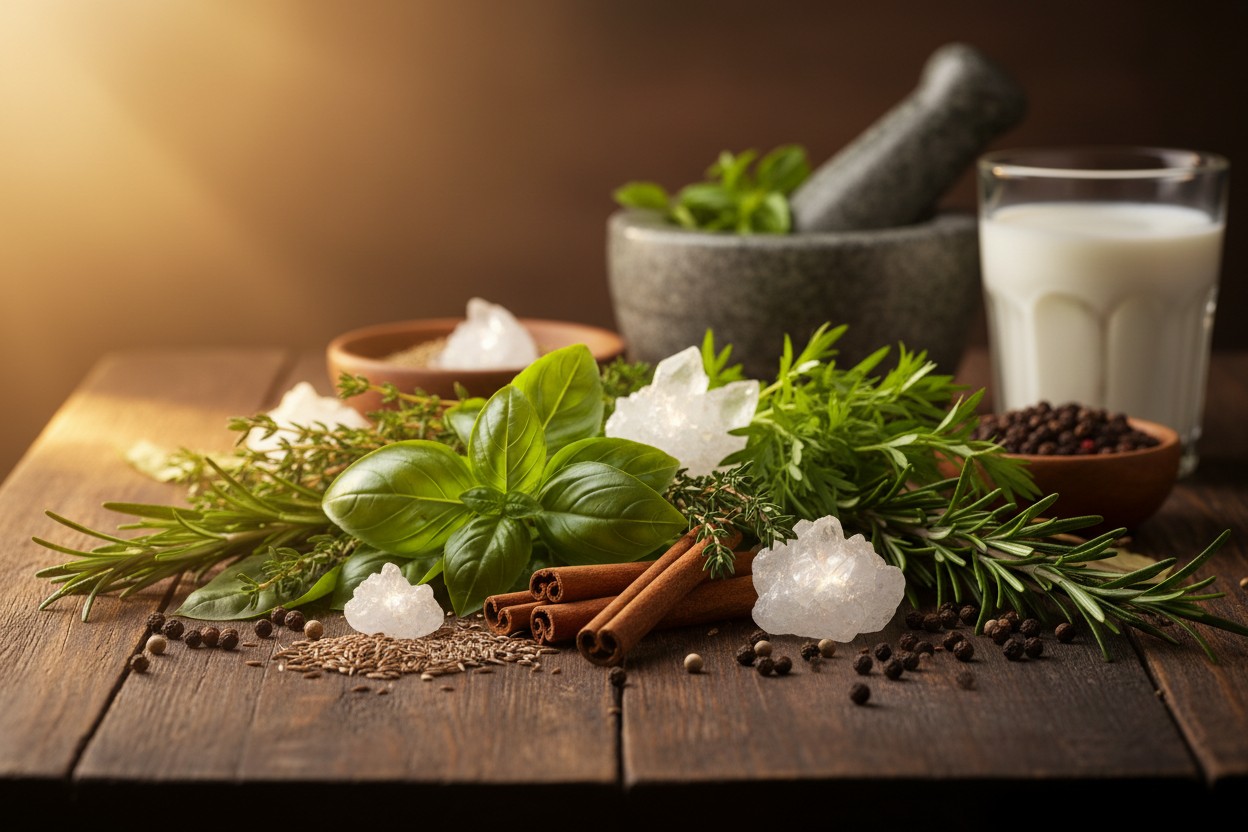
Herbs and Spices as Calcium Sources
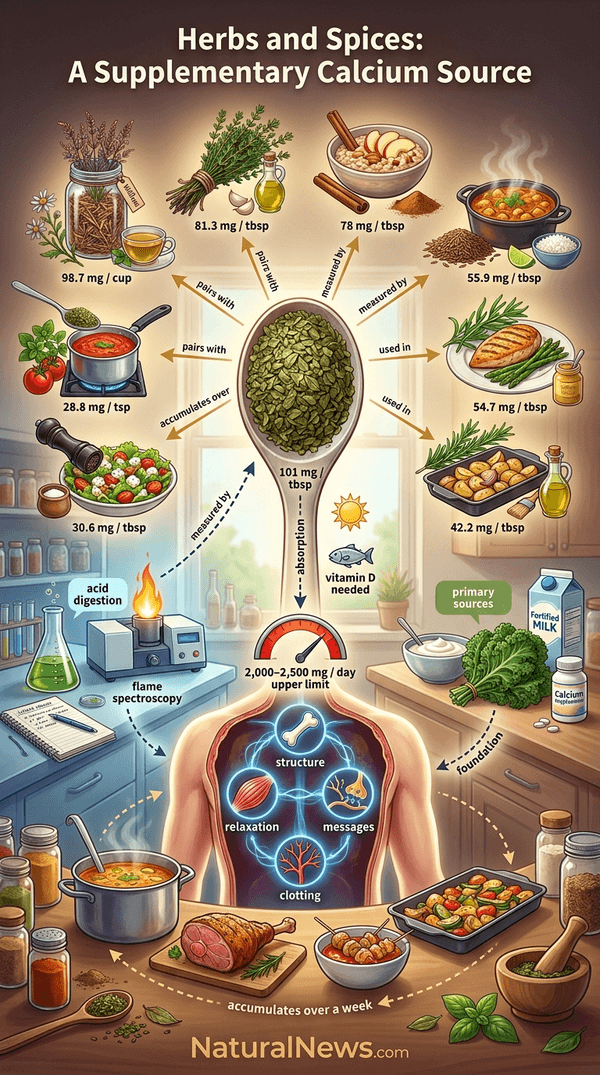
A report published by NaturalNews.com on March 15, 2026, lists 10 culinary herbs and spices that contain measurable amounts of calcium, according to analyses of whole, dried forms. The report stated that one tablespoon of dried basil contains 101 milligrams of calcium, the highest figure among the items listed. Fireweed was listed at 98.7 milligrams per cup, and thyme at 81.3 milligrams per tablespoon, the report stated [1].
According to the report, calcium is a mineral that supports the structure of bones and teeth and functions in blood clotting, muscle contraction, nerve signaling and heart rhythm. The same report cited guidelines noting an upper limit of 2,000 to 2,500 milligrams of calcium daily from food and supplements combined [1]. The report's author, Coco Somers, wrote that common culinary herbs and spices, including dill, thyme and mint, have been documented as containing measurable amounts of the mineral calcium, typically measured in milligrams per tablespoon or per 100-gram serving [1].
Separate source material describes basil as an anise-flavored herb packed with iron, calcium and folate, nutrients that many women of child-bearing age do not consume in sufficient amounts, according to author Jonny Bowden [2]. The report did not rank the herbs and spices as recommendations but presented measured calcium content from analyses of dried forms [1].
Basil, Fireweed, Thyme Lead Measured Calcium Content
The report listed dried basil at 101 milligrams of calcium per tablespoon, fireweed at 98.7 milligrams per cup and dried thyme at 81.3 milligrams per tablespoon [1]. According to the report, basil is commonly paired with tomato dishes and used in pesto, fireweed shoots are used in a manner similar to asparagus, and thyme is used with poultry, seafood and marinades. Bowden's book states that basil contains every major nutrient needed during pregnancy, including iron, calcium and folate [2].
A nutrition professional quoted in the report said the calcium amounts found in herbs and spices are not a substitute for primary calcium sources but can add to daily intake, according to the report [1]. The report attributed all figures to analyses of dried, whole forms of the plants and did not present the items as ranked recommendations [1].
Broccoli, a vegetable rather than an herb or spice, also contains large amounts of calcium, along with vitamin C and beta-carotene, according to author Pat Crocker, who wrote that calcium is needed for smooth muscle relaxation [3]. The NaturalNews report focused on herbs and spices and cited analyses measuring calcium in milligrams per tablespoon or per 100-gram serving [1].
Cinnamon, Cumin, Tarragon, Rosemary Also Register Calcium
The report listed cinnamon at 78 milligrams of calcium per tablespoon, cumin at 55.9 milligrams per tablespoon, tarragon at 54.7 milligrams per tablespoon and rosemary at 42.2 milligrams per tablespoon, according to the data [1]. The report described cinnamon as used in both sweet and savory dishes, cumin in curries and stews, tarragon with chicken, fish and eggs, and rosemary with roasts, vegetables and breads [1].
A separate NaturalNews.com article described tarragon as an herb celebrated for its unique flavor and health benefits, noting that it adds a subtle sweetness and licorice-like taste to dishes whether fresh or dried. That article stated that tarragon is rich in manganese, which supports overall health, and that it is packed with essential vitamins and minerals [4]. The report attributed all calcium figures to its own data and noted that serving sizes vary by herb and spice [1].
A nutrition source quoted in the report stated that small serving sizes affect the total calcium contribution of any herb or spice, according to the interview. Scientific analysis of plant materials has long relied on methods such as acid digestion and flame absorption spectroscopy to determine calcium and other mineral content in foods, according to research published in the Journal of Food Composition and Analysis [5]. Because serving sizes for herbs and spices are typically small, the report indicated that their contribution to daily calcium intake depends on the quantity consumed [1].
Black Pepper, Oregano Round Out List; Calcium's Role in Body
The report listed black pepper at 30.6 milligrams of calcium per tablespoon and oregano at 28.8 milligrams per teaspoon, according to the report [1]. According to health agencies cited in the report, calcium provides structure for bones and teeth and is involved in muscle movement, nerve messages, blood vessel function, heart regulation and blood clotting [1].
Vitamin D is needed for calcium absorption, and excessive calcium intake can cause health problems, the report stated [1]. The report cited an upper limit of 2,000 to 2,500 milligrams of calcium daily from food and supplements combined [1]. A separate report on five everyday spices stated that turmeric's primary active compound, curcumin, is notoriously difficult for the human body to absorb, a reminder that nutrient availability varies by compound and food form [6].
A health agency or nutrition researcher quoted in the report advised balance and consultation with health providers regarding calcium intake, according to the report [1]. The report also noted that calcium is a primary mineral component of bone tissue and that adequate intake is a key factor in skeletal health [1].
References
- Coco Somers. "10 Calcium-Rich Herbs and Spices That Support Strong Bones". NaturalNews.com. March 15, 2026.
- Jonny Bowden. "The 150 Healthiest Foods on Earth: The Surprising, Unbiased Truth About What You Should Eat and Why".
- Pat Crocker. "The Vegan Cook's Bible".
- NaturalNews.com. "Tarragon: Versatile ancient herb with science backed health benefits". NaturalNews.com. November 19, 2024.
- Elsevier. "Nutritive composition of a street food 'doubles' channa (Cicer arietinum) burger and its components sold in Trinidad, West Indies". Journal of Food Composition and Analysis 18. 2005.
- NaturalNews.com. "Beyond turmeric: 5 Everyday spices that pack a powerful antioxidant punch, new research reveals". NaturalNews.com. July 8, 2026.
Explainer Infographic








Please contact us for more information.