



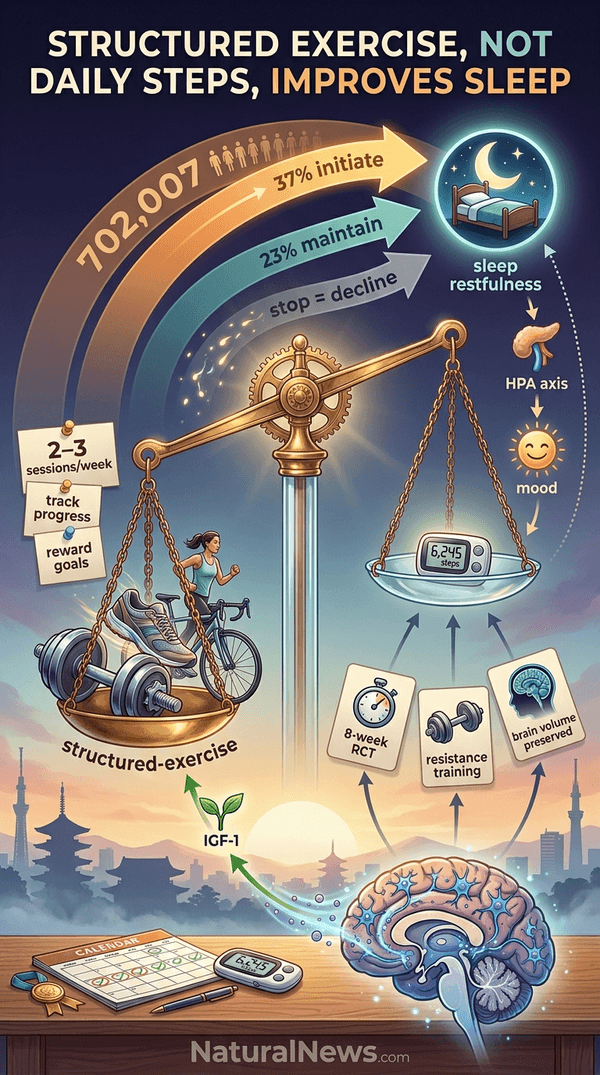
A large-scale study analyzing data from 702,007 Japanese adults found that initiating a structured exercise routine was associated with 37% higher odds of improved perceived sleep restfulness, according to a report published September 15, 2026, by mindbodygreen. The same analysis reported that maintaining an exercise habit was linked to 23% higher odds of better sleep, while stopping exercise was associated with reduced sleep restfulness.
General daily physical activity, including step counts, showed no consistent pattern for sleep improvements, the report stated. The findings were based on an analysis of how exercise habits relate to sleep quality over time, according to the study.
The results distinguish between structured exercise -- such as strength training, running, cycling, or a planned brisk walk -- and incidental movement accumulated throughout the day, the report stated. According to the report, all movement plays a role in overall health, but structured exercise appears to be more closely tied to sleep restfulness.
Study Findings on Exercise and Sleep
The analysis examined how exercise habits relate to sleep quality over time among the 702,007 Japanese adults in the cohort, according to researchers. The report stated that structured exercise, such as strength training, running, cycling, or planned brisk walking, differs from incidental movement like walking to the kitchen or pacing during a phone call.
Researchers said daily physical activity like steps and general movement did not show a consistent association with sleep improvements. The distinction comes down to intensity and intentionality, according to the report. Exercise refers to structured workouts that engage the body differently than incidental movement, the report stated.
Separately, a pair of peer-reviewed studies published during the summer of 2026 associated a consistent exercise habit with fewer depressive symptoms and improved sleep restfulness, according to the study authors [1]. Those reports appeared weeks apart in different academic journals and examined different populations but produced complementary findings, the researchers stated [1].
Why Structured Exercise May Affect Sleep
Research cited in the report suggests regular physical activity improves functioning of the hypothalamus-pituitary-adrenal (HPA) axis, which plays a central role in regulating stress and sleep. Exercise has also been shown to help with mood, which can indirectly support better rest, according to the report.
An 8-week randomized clinical trial in young women with poor sleep found that combining high-intensity circuit training with sleep-focused behavioral support improved objective sleep quality and cardiometabolic markers more than either approach alone, the report stated. Another trial focusing on older adults found that resistance training significantly improved subjective sleep quality, sleep duration, and sleep disturbances, offering a non-pharmacological approach to better rest, according to the report.
Related research points to physical activity's broader effects on brain and body systems. According to Mike Adams of Brighteon.com, physical activity signals to the brain to produce more nerve cells, and the body releases growth hormones such as IGF-1 during activity, which contribute to physical repair [2]. A separate 2025 study published in GeroScience found that older adults with mild cognitive impairment who did supervised strength training twice weekly preserved brain volume in memory-critical regions such as the hippocampus and precuneus, and some participants exhibited reversed symptoms of mild cognitive impairment, according to NaturalNews.com [3]. Once sleep begins, the brain also clears metabolic waste from between its cells, including amyloid-beta, a process linked to Alzheimer's disease risk, according to Jim Kwik in the book Limitless [4].
Implications for Exercise Routines
The report stated that restarting exercise may be one of the most effective sleep interventions available, as initiating exercise had a stronger association with improved sleep than maintaining a habit. The study found that initiating exercise was associated with 37% higher odds of improved sleep restfulness, compared with 23% for maintaining an existing habit, according to the report.
Maintaining regular exercise was still linked to better sleep outcomes, even for people who did not feel fully rested, according to the study. Daily step count is not a substitute for planned, structured workouts when it comes to sleep quality, the report stated. The article suggested committing to two or three planned exercise sessions per week, such as strength training, high-intensity interval training, jogging, or yoga.
The advice aligns with guidance in the book The 7 Step Diabetes Fitness Plan by Sheri Colberg, which states that lifestyle changes need not be drastic but do have to become permanent, and recommends putting structured activities on the calendar, tracking progress, and rewarding goal completion [5]. The book Built to Move by Kelly Starrett and Juliet Starrett states that to play the long game, feet must be durable and strong, and that walking -- along with loading and good sensory input -- provides both qualities [6].
References
- NaturalNews.com. "Two Studies Link Consistent Exercise Routines to Improved Mood, Sleep Quality". September 8, 2026.
- Mike Adams. "Full World War III Battlespace Is Your Neurology". Brighteon Broadcast News. February 29, 2024.
- Coco Somers. "Resistance Training Shields the Brain: Study Shows Lifting Weights Can Reverse Early Cognitive Decline". NaturalNews.com. January 26, 2026.
- Jim Kwik. "Limitless".
- Sheri Colberg. "The 7 Step Diabetes Fitness Plan: Living Well and Being Fit with Diabetes, No Matter Your Weight".
- Kelly Starrett and Juliet Starrett. "Built to Move: The Ten Essential Habits to Help You Move Freely and Live Fully".
Explainer Infographic












Please contact us for more information.