


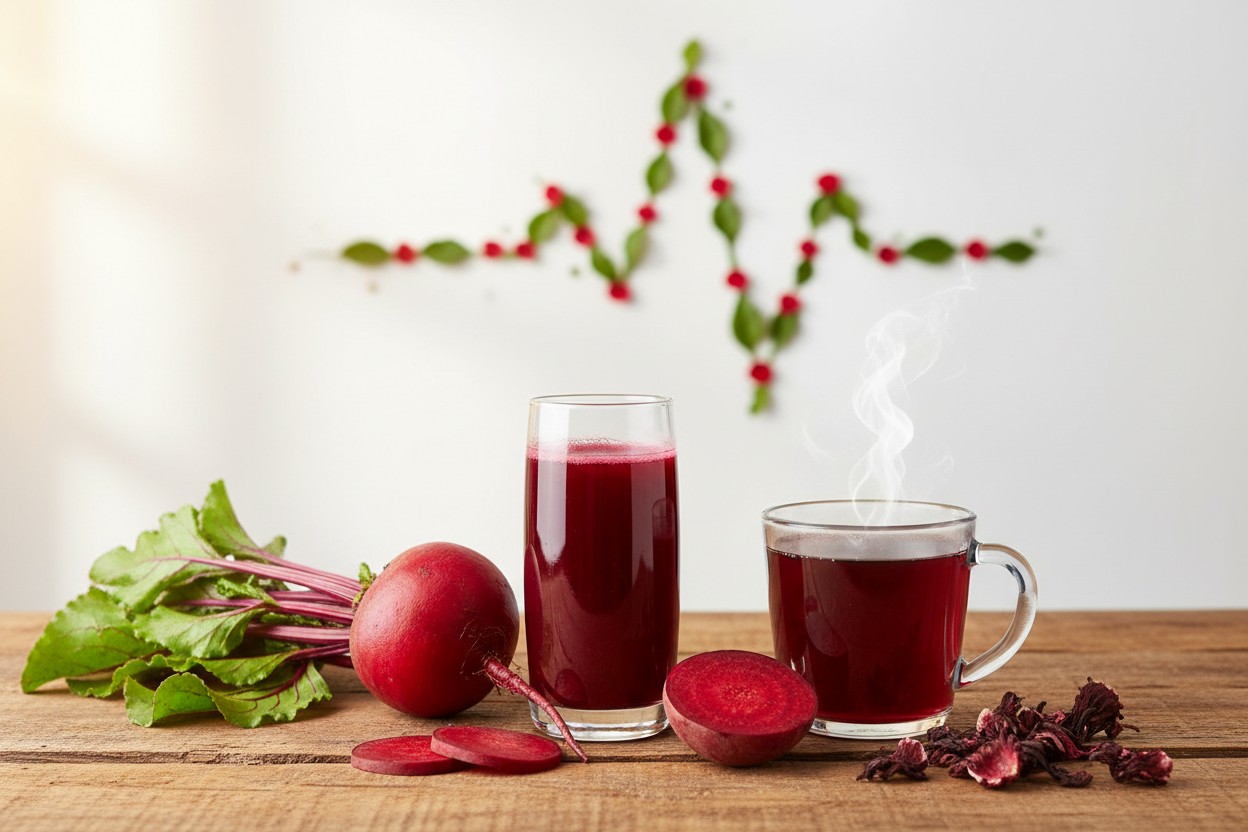
Three registered dietitians have independently identified beet juice as a morning beverage that may support healthy blood pressure, according to a report published by Health.com and summarized by NaturalNews.com [1]. The recommendation centers on the beverage's high nitrate content and its role in supporting nitric oxide production in the body.
Separate research has also examined hibiscus tea for its potential effects on blood pressure. Dietitians said both beverages may offer modest benefits when consumed as part of a broader heart-healthy eating pattern, but neither should be treated as a replacement for prescribed blood pressure medication or other established lifestyle interventions [1].
The findings add to a growing body of research on dietary approaches to cardiovascular health. According to the report, the benefits associated with beet juice and hibiscus tea are measured in small reductions in blood pressure readings, not in the elimination of hypertension.
Beet Juice and Nitrates
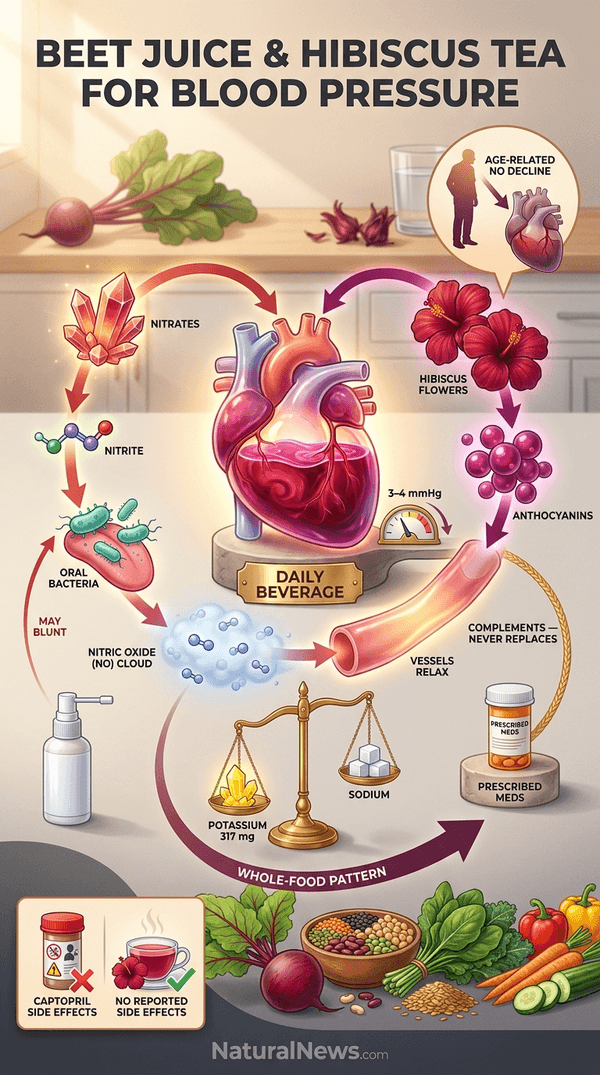
Beet juice is naturally rich in nitrates, which the body converts to nitric oxide, Avery Zenker, MAN, RD, told Health [1]. Nitric oxide helps support healthy blood vessels, which play a role in maintaining healthy blood pressure, Zenker said.
Studies in adults with hypertension found beetroot-derived nitrates lowered systolic blood pressure by an average of 3 to 4 millimeters of mercury over up to two months, Carlyne Remedios, RD, told Health.com [1]. A separate report on older adults found that beetroot juice significantly lowered blood pressure in that population by reshaping the oral microbiome and boosting beneficial nitrate-converting bacteria, correcting an age-related decline in natural nitric oxide production [2].
Beet juice also provides antioxidants and potassium. According to dietitians, potassium helps the body remove excess sodium and supports healthy blood pressure [1]. Research published by Mercola.com noted that a nitrate-rich diet can go a long way toward protecting the heart, while distinguishing plant-based nitrates from the nitrites found in processed meats [3]. Mercola.com also reported that leafy greens and beets are important dietary components for people with high blood pressure because they are good sources of naturally occurring nitrates that are converted into nitric oxide in the body [4].
Hibiscus Tea
Hibiscus tea, made from the Hibiscus sabdariffa plant, contains anthocyanins, Jennifer Pallian, BSc, RD, told Health [1]. Anthocyanins may help relax blood vessels and support healthy blood pressure, Pallian said.
In one clinical study, adults with mildly elevated blood pressure who drank three cups of hibiscus tea per day for six weeks had greater reductions in systolic blood pressure than those who drank a placebo beverage, according to the report [1]. Research described by NaturalNews.com noted that hibiscus tea has been studied as a natural way to help lower blood pressure, with Western medicine often advocating prescription drugs linked to harmful side effects [5].
According to the book "How Not to Die," hibiscus tea has also been studied for weight loss and cholesterol effects, though results for those outcomes were less consistent. After giving hibiscus tea to overweight individuals for months, researchers showed only about an extra half pound of weight loss per month over a placebo, and early cholesterol-lowering findings did not hold up when studies were pooled [6].
The same book noted that no side effects were reported for hibiscus tea in the reviewed research, unlike the prescription drug captopril, which can cause rash, cough, taste impairment and, in rare cases, fatal swelling of the throat [6]. Hibiscus tea is naturally caffeine-free and can be enjoyed hot or cold, according to dietitians [1].
Nutrition and Consumption
One cup of 100% beet juice provides 62 calories, 317 milligrams of potassium, 2.7 grams of fiber, and micronutrients including copper, folate, magnesium, and iron, according to nutrition data cited in the report [1].
Dietitians said beet juice can be consumed alone, added to smoothies, frozen in ice cube trays, or mixed with apple or citrus juice [1]. Mercola.com reported that beets are high in sugar, so fermented beet juice, also known as beet kvass, may be a preferable option because virtually all of the sugar is eliminated during fermentation [4]. The same source stated that including about 1 to 2 ounces of raw beets in a daily smoothie, in addition to taking a fermented beet root powder supplement, is a practical approach [4].
Consumers should look for 100% beet juice without added sugar and start with a small serving because larger amounts may cause digestive discomfort, according to dietitians [1]. The book "The Fasting Fix" emphasized that it is important to consume a lot of potassium and little sodium if you suffer from high blood pressure, noting that almost all plants are rich in potassium [7]. The Longevity Matrix reported that most Americans have a potassium-to-sodium ratio of less than 1:2, meaning they ingest more than twice as much sodium as potassium, while researchers recommend a dietary potassium-to-sodium ratio of greater than 5:1 to maintain health [8].
What Makes a Drink Good for Blood Pressure?
Dietitians said the best drinks for blood pressure are low in sodium, added sugar and saturated fat [1]. Some drinks also provide nutrients and plant compounds that may support healthy blood pressure, including nitrates, potassium, and antioxidants [1].
No single drink can manage high blood pressure on its own, dietitians said. Beet juice and hibiscus tea can be part of a balanced eating pattern that includes fruits, vegetables, whole grains, legumes, and other heart-healthy foods [1]. NaturalNews.com reported that daily intake of beans and other legumes is linked to significant improvements in key health markers, including cardiovascular and metabolic function [9].
Research published by Mercola.com also noted that more vegetables are associated with lower risk of heart disease, with different types of vegetables protecting the heart through various mechanisms [10]. According to the book "How Not to Die," flaxseeds dropped subjects' systolic and diastolic blood pressure by up to fifteen and seven points, respectively, compared with antihypertensive drugs such as calcium-channel blockers, which have been found to reduce blood pressure by only eight and three points [6].
References
- Coco Somers. "Dietitians Identify Beet Juice as Morning Beverage for Blood Pressure Support". NaturalNews.com. March 19, 2026.
- NaturalNews.com. "Beet Juice Fights High Blood Pressure in Older Adults, Study Finds". NaturalNews.com. March 3, 2026.
- Dr. Mercola. "Which Foods Are Best for Your Heart Health". Mercola.com. July 17, 2017.
- Dr. Mercola. "Can a Nap a Day Keep Blood Pressure at Bay". Mercola.com. March 28, 2019.
- NaturalNews.com. "Drink hibiscus tea to naturally lower your blood pressure". NaturalNews.com. November 12, 2018.
- Michael Greger, MD and Gene Stone. "How Not to Die: Discover the Foods Scientifically Proven to Prevent and Reverse Disease".
- Andreas Michalsen. "The Fasting Fix: Eat Smarter, Fast Better, Live Longer".
- Dr. Michael T. Murray. "The Longevity Matrix: How to Live Better, Stronger and Longer".
- Coco Somers. "Lentils in Daily Diet: Evidence on Nutrient Intake, Blood Sugar, Heart Health, and Weight Management". NaturalNews.com. September 10, 2026.
- Dr. Mercola. "Best Vegetables for Your Heart". Mercola.com. April 16, 2018
Explainer Infographic







Please contact us for more information.