


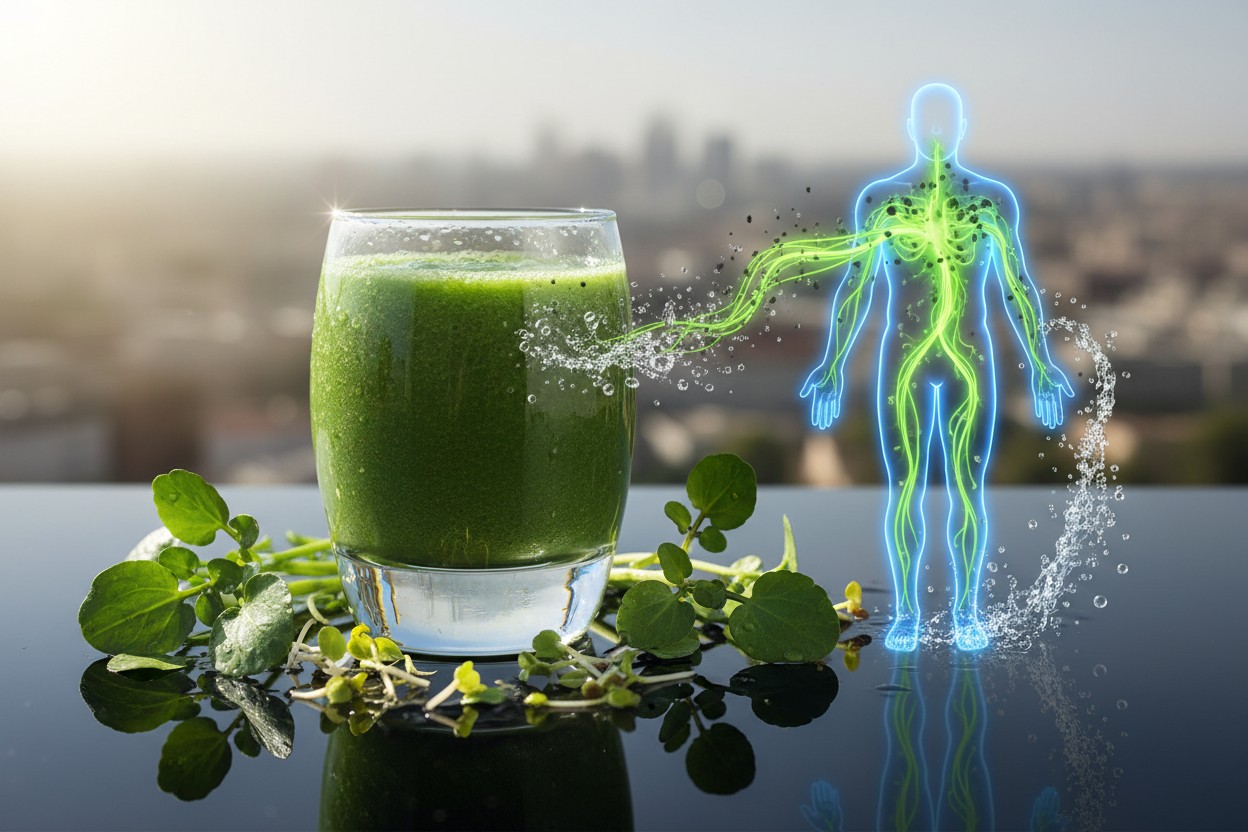
A randomized crossover trial conducted at the University of Minnesota examined whether a freeze-dried watercress beverage affected urinary mercapturic acids, the byproducts produced when the body processes environmental toxins, according to a NaturalHealth365 report dated Sept. 22.
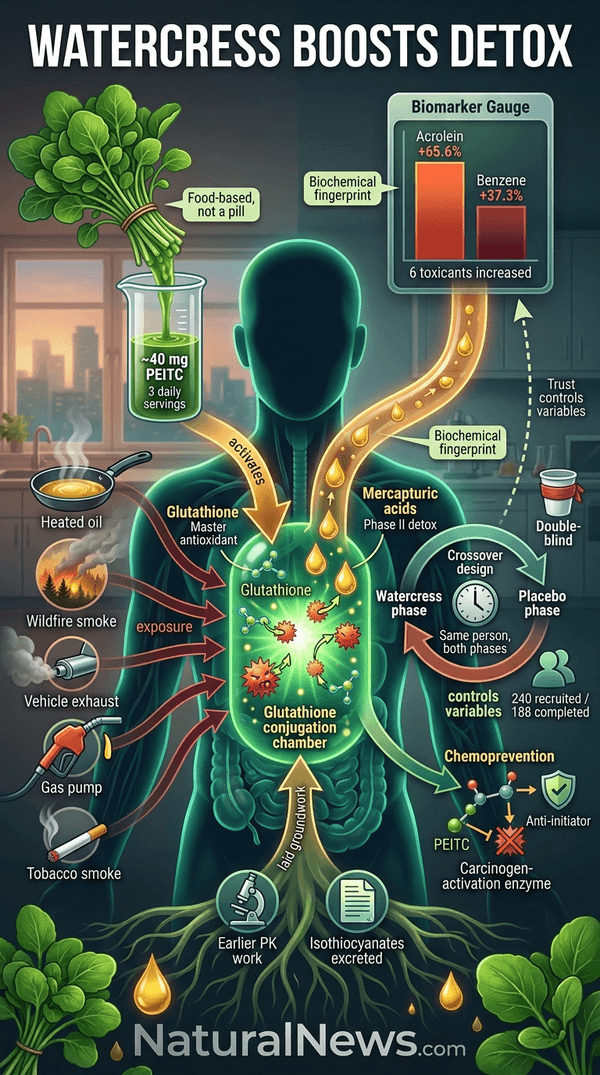
Researchers recruited 240 adults for the trial, and 188 participants completed it with full compliance, the report stated. Because the study used a crossover design, each participant served as their own control – eliminating differences in genetics, diet or lifestyle as explanations for the results.
Trial Design
Participants spent two weeks drinking the watercress beverage, then two weeks drinking a matched placebo, with a one-month break separating the two phases, according to the report. Researchers measured urinary mercapturic acids, which the report described as byproducts created when the body is exposed to environmental toxins. The crossover structure meant that only the presence or absence of watercress changed between phases, the report stated.
Earlier pharmacokinetic work on isothiocyanates, the compound class that includes watercress' active ingredient, established that these compounds are absorbed and excreted in measurable quantities. A study published in the journal Inflammation, Oxidative Stress and Cancer described how researchers fed healthy volunteers broccoli sprout preparations and analyzed blood and urine samples to confirm that a significant amount of isothiocyanates was excreted through the urine [1].
Results
Detoxification byproducts for six separate environmental toxicants rose significantly during the watercress phase compared with the placebo phase. Two increases stood out clearly, the report stated.
Acrolein detoxification rose 65.6%, and benzene detoxification rose 37.3%, both reaching strong statistical significance, according to the report. The report noted that neither chemical is obscure.
Heating oil past its smoke point releases acrolein directly into kitchen air, and the same compound comes from wildfire smoke and vehicle exhaust, according to the report. Benzene appears at gas pumps, in exhaust fumes and in tobacco smoke, the report stated. International health authorities classify both as carcinogenic or likely carcinogenic to humans, according to the report.
Mechanism and Exposure
Watercress contains a concentrated dose of a plant compound called phenethyl isothiocyanate (PEITC), and researchers believe PEITC drives the entire effect, according to the report. PEITC activates the glutathione detoxification pathway, one of the body's primary systems for neutralizing toxic compounds and flagging them for removal, the report stated.
Three daily servings of the watercress drink delivered roughly 40 milligrams of PEITC, an amount achievable through concentrated watercress rather than an extract or pill, according to the report. Research on PEITC has explored its role as a chemopreventive agent.
A clinical development plan published in the Journal of Cellular Biochemistry noted that PEITC appears to have specific application as an anti-initiator in situations where a presumed carcinogen requires metabolic activation, as in the case of smokers [2]. Separate research on isothiocyanates has described them as among the most effective chemopreventive agents known, with a wide variety of isothiocyanates preventing cancer in laboratory animal models [3].
Conclusion
The report states that exposure to environmental toxicants cannot be fully eliminated and that food-based strategies may support the body's own clearance systems.
The glutathione pathway targeted in the trial operates continuously, helping the body process and clear the low-level toxicant exposure most people encounter, the report stated. A food that can measurably strengthen this system works with the body's natural biology rather than against it, according to the report.
The report ultimately recommends adding raw organic watercress to salads several times a week, blending it into smoothies, and pairing it with other PEITC-containing vegetables like broccoli sprouts and arugula. It also suggests leaning on watercress more heavily around known exposure events, such as smoky days outdoors or long commutes.
References
- Inflammation Oxidative Stress and Cancer Dietary Approaches for Cancer Prevention.
- CLINICAL DEVELOPMENT PLAN: PHENETHYL ISOTHIOCYANATE. Journal of Cellular Biochemistry 26S:149-157. 1996.
- Stephen S. Hecht. Chemoprevention by Isothiocyanates. Journal of Cellular Biochemistry Supplement 22:195-209. 1995.
Explainer Infographic






Please contact us for more information.