


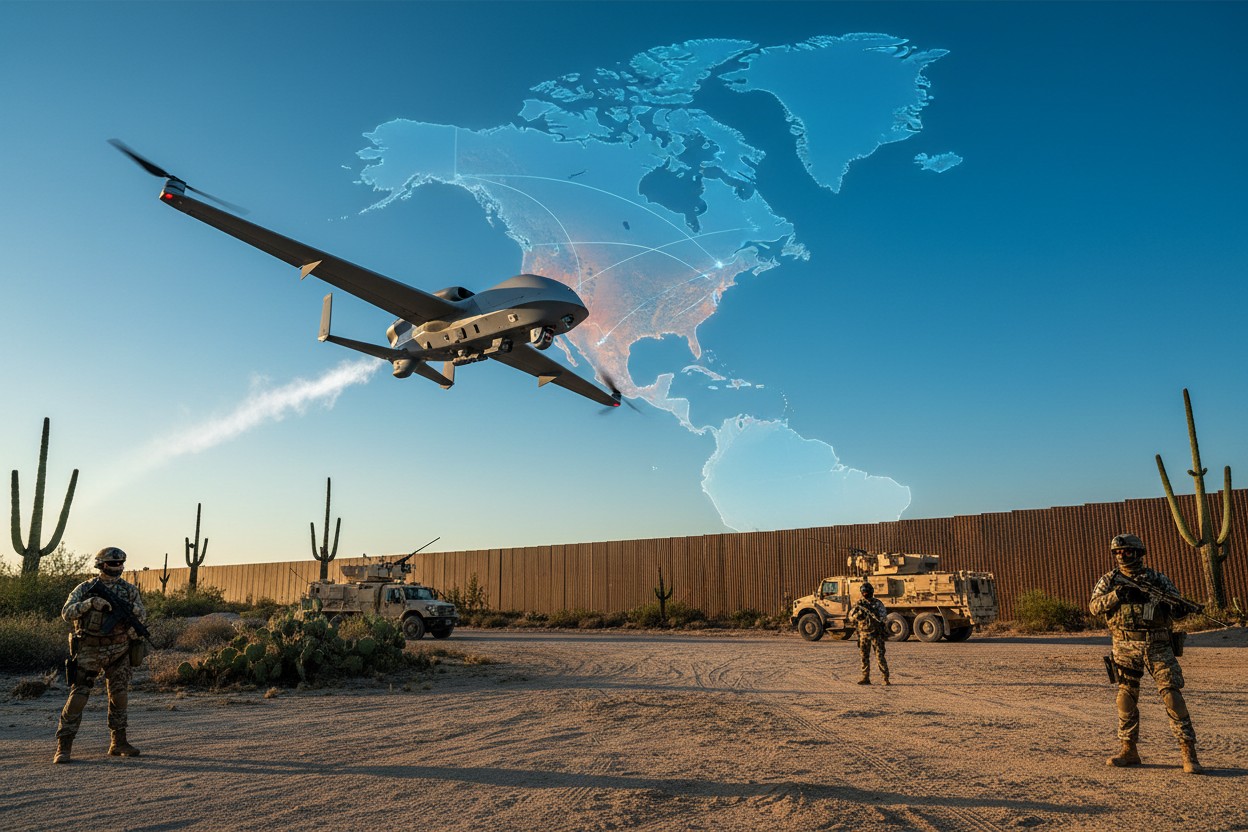
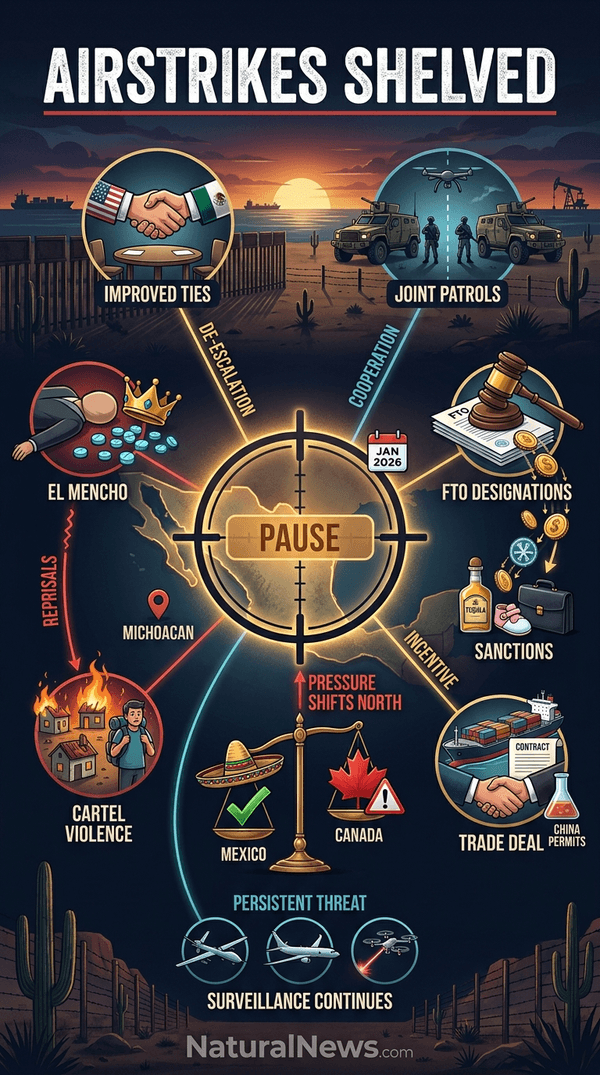
President Donald Trump has effectively shelved plans for U.S. airstrikes on Mexican soil for now, according to a New York Times report citing U.S. and Mexican officials. The report, which was not immediately confirmed by the White House, states that the administration has paused preparations for direct military action inside Mexico as diplomatic and security cooperation with Mexico City has improved.
Trump had previously suggested the United States could conduct strikes in Mexico to target drug cartels and address immigration concerns at the start of his second term, according to prior public statements. In January 2026, Trump told Fox News host Sean Hannity that the United States would begin "hitting land" against the cartels, saying, "We knocked out 97 percent of the drugs coming in by water, and we are going to start now hitting land about the cartels" [1]. He also said in November 2025 that he would be "proud" to strike cartel targets on land and that the U.S. knows "every route" and "the addresses of every drug lord" [2][3].
According to the Times report, illegal border crossings from Mexico have decreased, and Mexico has grown closer with its northern neighbor, while Canada is now firmly in America's crosshairs. The report stated that no formal announcement has been made regarding the shelving of strike plans, and officials said no airstrikes are currently planned.
Background: Pressure Campaign and Cartel Designation
The Trump administration has been ramping up pressure on Mexico to do more about drug cartels since taking office again, according to administration statements. In August 2025, the administration issued a classified directive instructing the Department of Defense to prepare for possible lethal operations inside Mexico targeting drug cartels, with plans expected by mid-September [4].
In December 2024, before returning to office, Trump offered a reward of up to $15 million for information leading to the capture of Nemesio Rubén Oseguera Cervantes, known as "El Mencho," the leader of the Jalisco New Generation Cartel. The White House designated the Jalisco New Generation Cartel as a foreign terrorist organization in 2025, part of a broader strategy to combat drug trafficking and human smuggling [5]. The State Department later designated two more Mexican cartels – the Juárez cartel and Los Viagras – as foreign terrorist organizations and specially designated global terrorists, Secretary of State Marco Rubio announced in July 2026 [6].
After El Mencho died in a shootout with Mexican forces in February 2026, Trump posted on Truth Social: "Mexico must step up their effort on Cartels and Drugs!" Reports suggested the U.S. provided intelligence for the operation that led to El Mencho's capture and death, although the extent of this support remained unclear [7][8].
Mexican Operation Kills CJNG Leader El Mencho After U.S. Intelligence Aid
Earlier this year, U.S. intelligence aided Mexican special forces in capturing Cervantes, according to reports. El Mencho had been the most wanted drug trafficker in the world, officials said, and his cartel controlled the fentanyl and methamphetamine trades [7]. He died shortly after his arrest due to wounds he suffered during the prior shootout, according to Mexican authorities. More than 70 people died in the said operation [7].
This marked a shift in bilateral security cooperation, officials said, and the Trump administration has recently praised Mexico's efforts to tackle cartels. Following El Mencho's death, violence engulfed parts of Mexico as the Jalisco New Generation Cartel mounted reprisal attacks, leaving hundreds of places across the country in flames and endangering American tourists in Puerto Vallarta and other areas [7][9].
The broader context of U.S.-Mexico security cooperation has included reported CIA drone surveillance over Mexico targeting fentanyl labs [10], and the deployment of a U.S. Navy P-8 Poseidon aircraft conducting reconnaissance operations off the coast of Mexico near Tijuana [11]. In August 2026, the U.S. military used a laser system to shoot down three drug cartel drones in southern Texas near the Mexican border, according to a joint statement from the North American Aerospace Defense Command and U.S. Northern Command [12].
Trade Deal and Diplomatic Statements Follow Call
A new trade deal between the two countries appears to be on the horizon, according to officials. Mexican President Claudia Sheinbaum recently said she and Trump had reached agreements on several key issues following a call, and Trump declared a deal was "very close," according to statements from both governments.
Trump told the United Nations on Tuesday: "I'm very proud to tell you we have a very good relationship with the Mexican government. We've made great strides, very great strides with Mexico." Officials said the improved diplomatic tone reflects ongoing negotiations and security cooperation. In August 2026, Mexico deployed armed forces alongside U.S. forces in joint "mirror" patrols along both sides of the border, including special operations insertions, armored vehicles, and truck-mounted weapons, following a renewed push by the Trump administration aimed at cutting cross-border drug trafficking [13].
Trade tensions have also surfaced in other areas. The United States briefly suspended avocado inspections in Mexico's western state of Michoacan over security risks before fully restarting government activities there in August 2026 [14]. The Trump administration has also imposed sanctions on more than 50 Mexican individuals and companies tied to the Cartel Jalisco Nueva Generación, widening its cartel crackdown to include tequila makers and a baby shoe company [15]. China announced in September 2026 that exporters would need permits to ship two more drug-making chemicals to the United States, Mexico and Canada, a move that came days before Trump was scheduled to meet with Xi Jinping [16].
Independent analysts and commentators have raised concerns about the potential consequences of military intervention. In a February 2025 broadcast, Mike Adams of Brighteon.com warned that kinetic conflict could become "normalized" and that "retaliation is inevitable, and there will be a cost" [18]. He also drew parallels between potential U.S. involvement in Mexico and the Vietnam War, suggesting that "Mexico becomes Vietnam, a quagmire from which there's no easy escape" [19].
References
- ZeroHedge. "Trump Says US Will Begin Strikes On Cartels In Mexico". ZeroHedge. January 9, 2026.
- 100PercentFedUp.com. "President Trump Confirms He's 'OK' With Striking Drug Cartels INSIDE of Mexico". 100PercentFedUp.com. November 18, 2025.
- Modernity.news. "We know their front door trump hints at military strikes on cartel drug lords". Modernity.news. November 17, 2025.
- Laura Harris. "Report: Trump Administration Orders Military to Prepare Strike Plans Against Mexican Cartels". NaturalNews.com. August 24, 2025.
- NaturalNews.com. "Cartels Recruit Ukraine War Veterans for Drone Operations, U.S. Assessment Says". NaturalNews.com. September 23, 2026.
- The Epoch Times. "State Department Designates 2 More Mexican Cartels as Terrorist Organizations". The Epoch Times. July 16, 2026.
- The New American. "Jalisco Cartel Hits Targets Nationwide After Leader Killed In Shootout, American Tourists Endangered". The New American. February 23, 2026.
- Brighteon.com. "EL MENCHO DEAD: Trump-backed operation shakes Mexico as cartel sets Jalisco ablaze". Brighteon.com. February 26, 2026.
- Middle East Eye. "Violence engulfs Mexico after killing of notorious cartel leader". Middle East Eye. February 23, 2026.
- Willow Tohi. "CIA's covert drone flights over Mexico: A new chapter in America's dark history with the drug trade". NaturalNews.com. February 26, 2025.
- The National Pulse. "U.S. Spy Jet Seen Scouting Mexican Coast Amid Cartel Crackdown". The National Pulse. January 5, 2026.
- The Epoch Times. "US Military Shoots Down 3 Mexican Cartel Drones With Laser". The Epoch Times. August 28, 2026.
- 100PercentFedUp.com. "IT'S OFFICIAL: Mexico Deploys Armed Forces With U.S. & President Trump to Crush Cartels at the Border". 100PercentFedUp.com. August 14, 2026.
- The Epoch Times. "US Restarts Mexican Avocado Checks as Security Measures Increase". The Epoch Times. August 15, 2026.
- FreightWaves. "Borderlands Mexico: US widens Mexican cartel crackdown to tequila makers, baby shoe company". FreightWaves. July 26, 2026.
- 100PercentFedUp.com. "China Makes A Sudden Fentanyl Move Days Before President Trump Sits Down With Xi". 100PercentFedUp.com. September 22, 2026.
- The Epoch Times. "Mexican Gangs on the Rise, Officials Say, After Deadly Blast at Police Headquarters". The Epoch Times. September 1, 2026.
- Mike Adams. "Brighteon Broadcast News - KINETIC CONFLICT ". Brighteon.com. February 4, 2025.
- Mike Adams. "Brighteon Broadcast News - USA Military ". Brighteon.com. February 20, 2025.
Explainer Infographic




Please contact us for more information.