


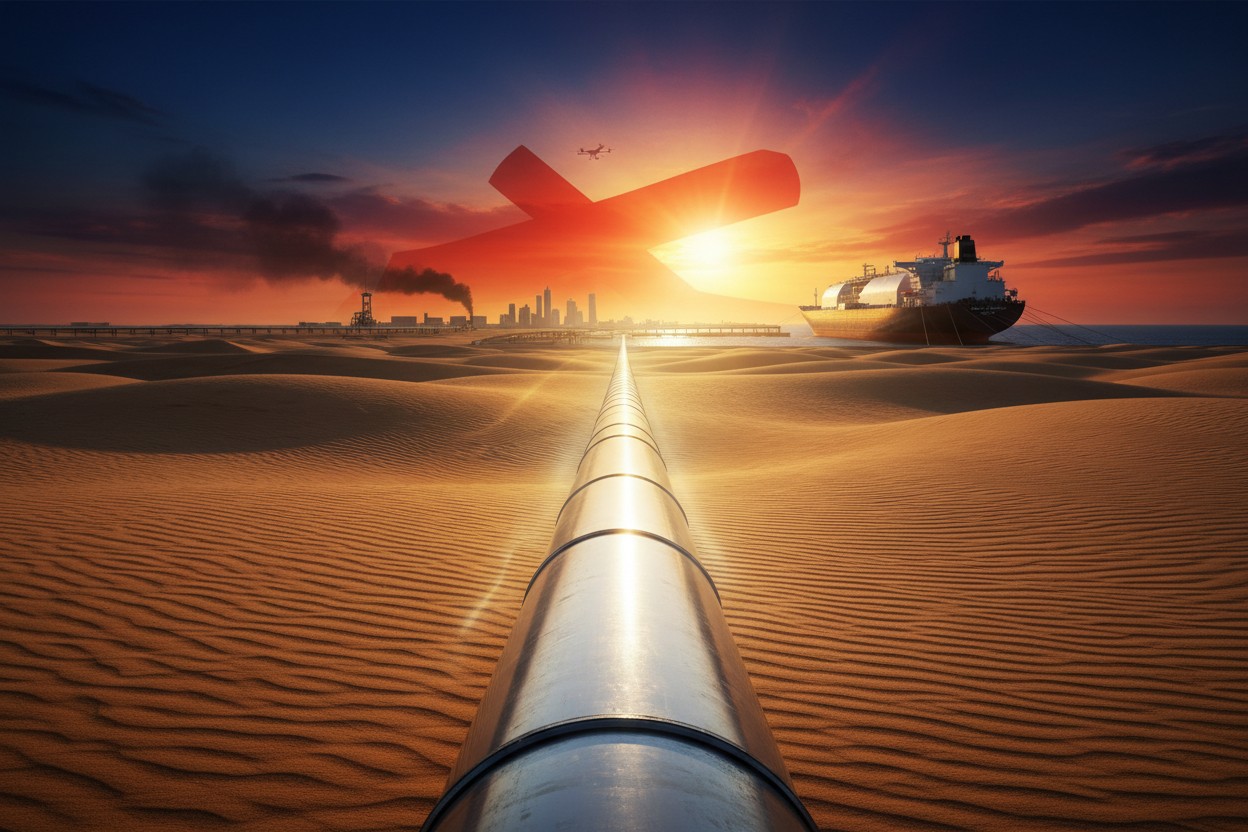
Saudi Arabia has resumed oil exports through its East-West pipeline, restoring access to Red Sea loading facilities that bypass the Strait of Hormuz, according to a Bloomberg report cited by ZeroHedge [1]. The restart coincides with Kpler data from late last week showing that Hormuz oil flows have recovered to about two-thirds of prewar levels, suggesting a partial recovery in Gulf energy flows and an erosion of Tehran's leverage, the report stated [1].
Overseas shipments have restarted, Bloomberg reported, citing a person with direct knowledge of the operation [1]. Saudi Aramco began testing the pipeline and rebuilding pressure last week, aiming to resume meaningful flows by the weekend, the person said [1]. In a separate report last Wednesday, Bloomberg reported that Saudi Aramco was working quickly to repair the damaged section of the pipeline after a drone attack destroyed a pumping station [1].
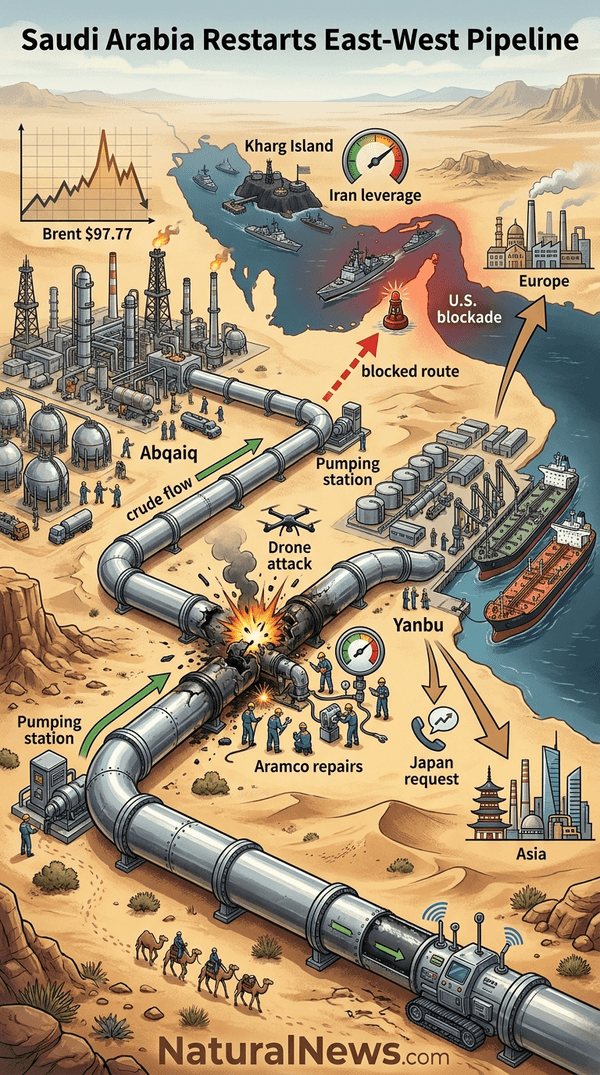
The East-West pipeline had functioned as Saudi Arabia's primary export route since the effective closure of the Strait of Hormuz during the ongoing U.S.-Iran conflict, according to a NaturalNews.com report [2]. The pipeline spans approximately 745 miles across the Arabian Peninsula, connecting the Abqaiq oil field in eastern Saudi Arabia to the Red Sea port of Yanbu, the report stated [3].
Pipeline Repair and Capacity
Saudi Aramco worked to repair the damaged section of the East-West pipeline after a drone attack destroyed a pumping station, Bloomberg reported [1]. The attack, which occurred on September 10 and 11, involved drones launched from Maysan province in southern Iraq that hit pumping stations near Riyadh and Medina, according to a ZeroHedge report [4]. Satellite imagery released by Vantor on September 13 showed damage at a pumping station in al-Mesabaah, southeast of Medina, the report stated [5]. Saudi Arabia said the attack originated from Iraq, which is home to Shia-dominated militias aligned with Iran, according to officials [5].
The East-West pipeline can carry 7 million barrels of crude per day to Yanbu on the Red Sea, Bloomberg reported [1]. The pipeline's route bypasses the Strait of Hormuz, a chokepoint for global oil shipments [1]. Satellite imagery showed the most significant damage was at a pumping station along the East-West Pipeline, which Saudi Arabia has increasingly relied on to export crude oil via the Red Sea rather than through the Strait of Hormuz, according to BBC Verify [6]. Experts told BBC Verify the damage could take more than a month to repair and force oil prices even higher [6].
Industry analysts had estimated the pipeline could remain out of service for weeks after the drone attack, according to The Epoch Times [3]. The pipeline is owned by Saudi Aramco and carries crude from the Abqaiq oil field to Yanbu, allowing the kingdom to export oil while bypassing the Strait of Hormuz, the report stated [3]. The Kingdom may need five to six weeks to repair damage from the drone attack, according to a Middle East Eye report [7].
Market and Buyer Impact
A successful restart of the pipeline would likely provide relief for Europe, which had crude cargoes for this month canceled because of the disruptions, Bloomberg reported [1]. Saudi Aramco had told European refiners there would be no crude allocations next month after the pipeline attack, according to a NaturalNews.com report [8]. The decision applied to all European buyers, the people said, speaking on condition of anonymity because the information is not public [8]. European customers normally receive Saudi crude under term contracts that provide monthly supply, according to the people [8].
The Saudis have already indicated a near-term resumption of crude loadings for Asian buyers, Bloomberg reported [1]. Japan's Prime Minister Sanae Takaichi had formally requested that Saudi Arabia expand energy deliveries to Japan during a telephone call with Saudi Crown Prince Mohammed bin Salman on April 23, 2026, according to a NaturalNews.com report [9]. The request was in response to the severe supply crunch caused by ongoing disruption of maritime traffic through the Strait of Hormuz, the report stated [9]. Several Asian nations faced acute oil shortages due to low reserves, according to a separate NaturalNews.com report [10].
Diplomatic Developments
President Trump told reporters on the White House lawn over the weekend that he had rejected an Iranian proposal for a seven-day ceasefire and was open to resuming attacks on the Islamic Republic after the midterms, according to remarks reported by Clash Report [1]. Trump said, "I'm rejecting their deal. They want to make a deal where they open the Strait immediately because they're losing so badly. They want to make a deal, and I think that's fine. I like making a deal, too, but that deal would…" according to the report [1].
The key question, the report stated, is what happens to Iran's oil export hub, Kharg Island, after the midterms [1]. The United States had stepped up military activity around the Strait of Hormuz, with reconnaissance aircraft spotted near Iranian territory and additional fighter jets reportedly deployed to the region, according to RIA Novosti [13]. U.S. reconnaissance aircraft were observed overnight near the Iranian islands of Qeshm and Hengam, while aircraft and small drones were also seen over Kermanshah Province in western Iran, according to people familiar with the matter [13].
Qatar's Prime Minister and Foreign Minister Sheikh Mohammed bin Abdulrahman Al Thani said Gulf states need good relations with Iran as part of a new security framework, according to a Middle East Eye report [14]. However, Qatar's energy minister said the U.S. is wrong to think the Strait of Hormuz can be made irrelevant, adding there are no plans for a gas pipeline, the report stated [14]. The war has entered a critical phase, with the Iran-aligned Houthi group calling the shots, according to a Middle East Eye opinion piece [15].
References
- ZeroHedge. "Saudi Arabia Restarts Critical Hormuz Bypass Pipeline". ZeroHedge. September 28, 2026.
- NaturalNews.com. "Saudi Arabia May Run Out of Oil Stocks if East-West Pipeline Not Restarted Within Days, Report Says". NaturalNews.com. September 14, 2026.
- The Epoch Times. "Analysts Estimate Saudi Pipeline Outage May Last Weeks, as Houthi Attacks Escalate". The Epoch Times. September 15, 2026.
- ZeroHedge. "A Few Thousand Dollars of Drones Just Repriced the World's Oil". ZeroHedge. September 15, 2026.
- NaturalNews.com. "Drone Attack Damages Saudi East-West Pipeline, May Cut 4% of Global Oil Supply". NaturalNews.com. September 16, 2026.
- BBC. "Satellite image reveals major damage that shut crucial oil pipeline". BBC. September 15, 2026.
- Middle East Eye. "Attack on Saudi Arabian pipeline may cut four percent of world's oil supply". Middle East Eye. September 14, 2026.
- NaturalNews.com. "Saudi Aramco Tells European Refiners No Crude Allocations Next Month After Pipeline Attack". NaturalNews.com. September 22, 2026.
- Sterling Ashworth. "Japan Requests Additional Oil Supply from Saudi Arabia Amid Strait of Hormuz Disruption". NaturalNews.com. April 24, 2026.
- Cassie B. "US oil boom buffers nation from Hormuz crisis as Asia faces shortages". NaturalNews.com. March 19, 2026.
- ZeroHedge. "Developments Can't Be Ignored As Brent Tumbles On Iran Talks, Saudi Pipeline Restart Hopes: UBS". ZeroHedge. September 23, 2026.
- NaturalNews.com. "Oil Prices Surge Past 100 After Trump Announces Strait of Hormuz Blockade". NaturalNews.com. April 13, 2026.
- RT. "US steps up military activity near Iran – media". RT. September 24, 2026.
- Middle East Eye. "Gulf states need 'good relations' with Iran as part of new security framework, Qatar's PM says". Middle East Eye. September 21, 2026.
- Joe Gill. "Yemen's Houthis are upending the Gulf order. The Saudis are the biggest losers". Middle East Eye. September 21, 2026.
- Cassie B. "Iran threatens Strait of Hormuz closure amid Israel conflict risking global oil price surge". NaturalNews.com. June 20, 2025.
- NaturalNews.com. "Houthis strike Saudi capital in escalating campaign, threatening global oil markets". NaturalNews.com. September 26, 2026.
- The Epoch Times. "French Troops to Protect Saudi Arabian Port on Red Sea Oil Route, Macron Says". The Epoch Times. September 25, 2026.
- RT. "UK makes military pledge to Saudi Arabia". RT. September 23, 2026.
- Mike Adams. "Bright Videos News - Interview with Alex Jones vs Mike transcript". BrightVideos.com. May 08, 2026.
Explainer Infographic











Please contact us for more information.