


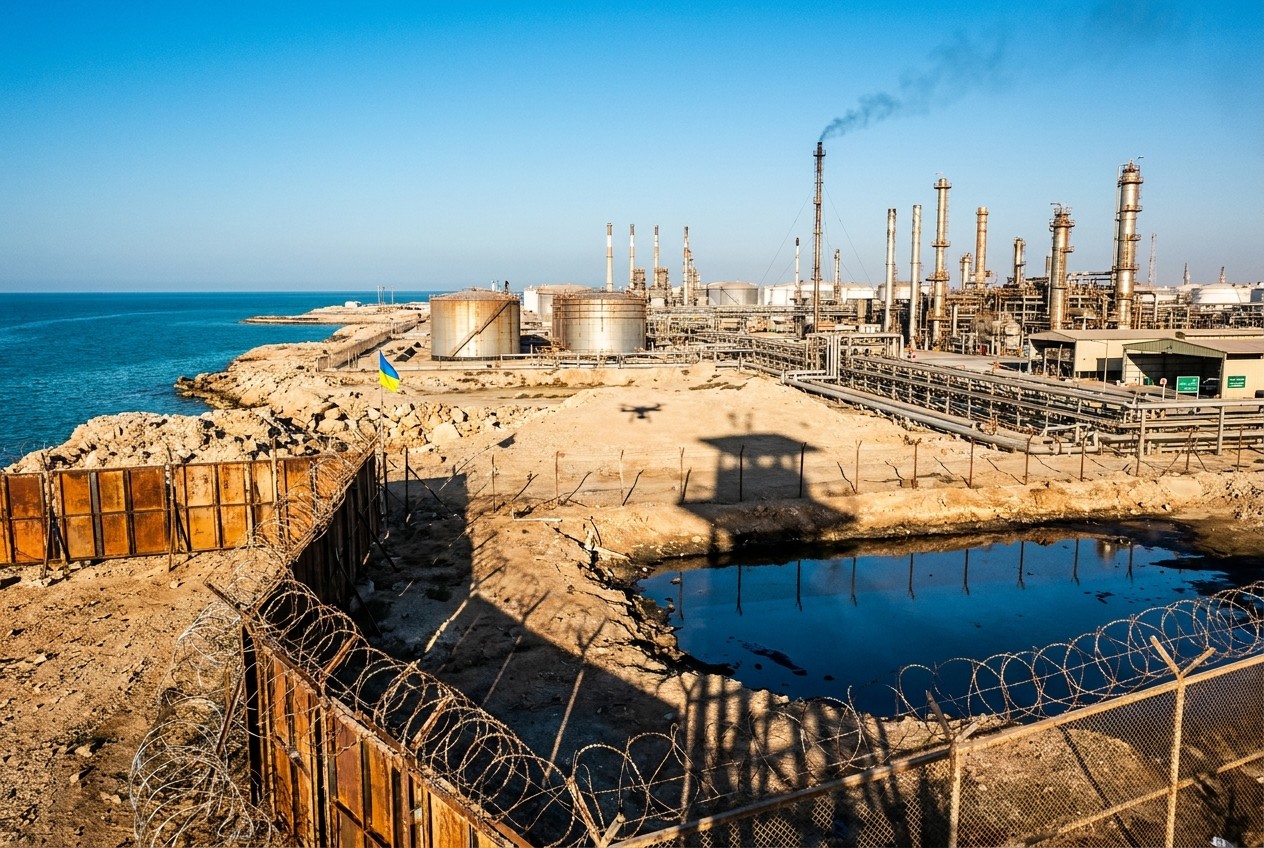
The Iraqi government has detained Ukrainian nationals allegedly involved in a plot targeting oil infrastructure, according to a report by The Cradle.
The outlet reported that the detainees were held on suspicion of planning an attack on Gulf oil facilities, a report that emerged amid Iraq-Saudi tensions following what the publication described as mysterious drone strikes on Saudi oil sites [1].
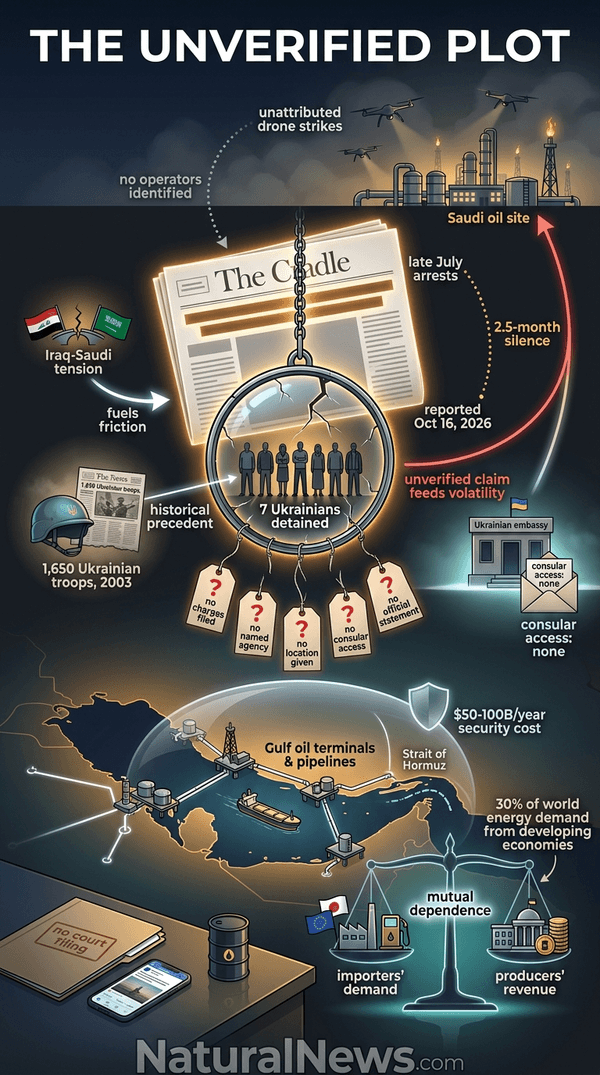
The Cradle's report did not specify the exact dates of the detentions beyond stating they occurred in late July, nor did it identify the specific facilities that were allegedly targeted. The outlet did not publish the names of the detainees or state whether any of them had been charged. The report was also promoted on the outlet's social media account, which posted the headline on Oct. 16, 2026 [2].
Neither the Iraqi government nor Ukrainian authorities had issued a formal public statement confirming the detentions as of the report's publication. The report did not indicate whether the suspects remained in custody, whether consular access had been granted, or whether any judicial process had begun. Independent confirmation of the detentions was not immediately available, and the allegations described in the report have not been substantiated in any public court filing.
Detention Details and Official Accounts
According to The Cradle's account, the seven Ukrainian nationals were detained by Iraqi security services on suspicion of involvement in a plan to target oil facilities in Persian Gulf states [3]. The outlet described the arrests as having taken place in late July, roughly two and a half months before the report was published. The report characterized the detentions as an exclusive, indicating the information had not been previously disclosed by other outlets.
The report linked the detentions to a period of friction between Iraq and Saudi Arabia following drone strikes on Saudi oil sites that the publication described as mysterious [1]. The outlet did not identify the source of the drone strikes, did not state whether the Ukrainian detainees were suspected of any connection to those strikes, and did not provide evidence of operational planning. No charges were announced in the report, and no timeline was provided for when the detentions might be followed by formal legal proceedings.
The report did not include an on-the-record statement from any named Iraqi security official, nor did it quote any representative of the Ukrainian government. The report did not indicate which Iraqi security service conducted the arrests or in which part of the country they occurred.
Alleged Plot and Oil Infrastructure Concerns
The reported plot centers on petroleum infrastructure in the Persian Gulf, a waterway that has served for millennia as one of two main sea routes carrying trade between Egypt, the Middle East and India, linked to the open Indian Ocean through the Strait of Hormuz [5]. Gulf oil exports move through a network of terminals, pipelines and ports, and the region's output is central to the energy security calculations of major importing economies.
Research on oil import diversification has found that for importers such as Japan, the Middle East remains the most cost-effective oil-rich region from which to source supply, given the expense of transporting oil from West Africa, Central Asia and South America [6]. However, the security of Gulf oil assets carries substantial costs.
One peer-reviewed estimate cited in Energy Policy calculated that the costs of military forces in the Persian Gulf needed to protect oil assets and infrastructure range from $50 billion to $100 billion per year [7]. The same paper noted that the United States has estimated the costs of its oil dependence in excess of $500 billion for 2008 alone [7]. Those figures underline the scale of the infrastructure that regional governments and outside powers seek to protect.
The report stated that Iraqi security forces arrested seven Ukrainian citizens in late July on suspicion of planning attacks on oil facilities in Persian Gulf states [3]. The Cradle did not state that any attack had been carried out or attempted. Oil infrastructure in the region is subject to heavy security measures, and assessments of potential threats to the energy sector are routine. Independent energy-security scholarship has documented that terrorist groups have historically studied petroleum-related targets, including materials published under titles such as "The Laws of Targeting Petroleum-Related Interests" [8].
Regional Security and Diplomatic Responses
Gulf states depend on oil exports for government revenue, and disruptions to infrastructure can affect international energy markets. The World Energy Council-type observation that Western European countries must maintain uninterrupted and adequate supplies of energy, largely in the form of crude oil and natural gas, reflects the broader stake that importing economies hold in Gulf stability [9]. Developing countries now account for almost 30% of world primary energy and were responsible for over 70% of the rise in oil consumption between 1971 and 2000, according to a review published in Energy Policy [10].
Iraq has experienced repeated periods of instability since the 2003 invasion. Historical records note that in October 2003 a car bomb exploded near a police station in Fallujah, killing at least four people, while seven Ukrainian peacekeepers were wounded in southern Iraq when militants attacked their patrol; 1,650 Ukrainian troops served in the Polish-led multinational division at the time [11]. In March 2005, guerrillas launched a series of attacks across Iraq that left 33 people dead and dozens wounded [11]. Those episodes illustrate the long record of violence against both Iraqi and foreign personnel in the country.
The reported detentions come amid ongoing diplomatic relations between Iraq and Ukraine, though neither government has linked the case to broader bilateral issues. The Cradle's report did not describe any diplomatic protest, recall of ambassadors or formal request for consular access. The outlet did not state whether the Ukrainian embassy in Baghdad had been notified of the arrests or whether Ukrainian officials had sought information about the detainees.
References
- EXCLUSIVE - Iraq detains Ukrainian nationals on suspicion of plotting .... https://thecradle.co/articles-id/40567
- The Cradle on X: EXCLUSIVE - Iraq detains Ukrainian nationals on .... https://x.com/TheCradleMedia/status/2111194376143561139
- Iraq detains Ukrainian nationals on suspicion of plotting .... https://thecradle.co/articles/exclusive-iraq-detains-ukrainian-nationals-on-suspicion-of-plotting-attack-on-gulf-oil-facilities
- News Desk. https://thecradle.co/authors/news-desk-9
- Origins How the Earth Shaped Human History by Lewis Dartnell
- Diversification of oil import sources and energy security: A key strategy or an elusive objective? by Vlado Vivoda. Energy Policy 2009
- Seven suppositions about energy security in the United States by Benjamin K. Sovacool. Energy Policy 39 (5) 2011
- Unknown. by Peter Toft; Arash Duero; Arunas Bieliauskas. Energy Policy 38(1)]2010
- Crude-Oil and Natural-Gas Stocks in Western Europe by Acrobat 3.0 Capture Plug-in. Applied Energy 0306-2619/93/$06.00 (1993)
- Thirty years of world energy policy: lessons learned and future challenges by 3B2 Total Publishing System 8.07f/W. Energy Policy 2005
- history 409 handbook of our world history1 by Pages
Explainer Infographic






Please contact us for more information.