


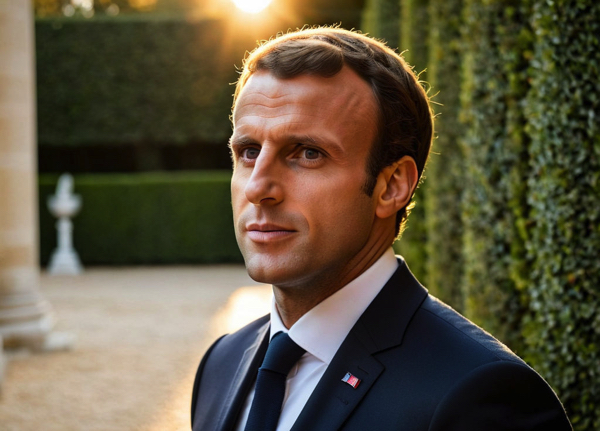
- French President Macron has banned "illegitimate" protests nationwide after last weekend's riots resulted in approximately 2,500 arrests and 1,000 police injuries.
- The unrest began over teacher shortages and school conditions before escalating into broader protests against soaring living costs and austerity measures.
- Macron blamed ultra-left groups for orchestrating violence and looting aimed at "bringing down the Republic."
- Cities including Lyon, Marseille, Nice and Toulon have imposed protest bans, while Paris diverted one march and banned another.
- The crisis comes six months before France's presidential election, with opposition leaders accusing Macron of losing control.
French President Emmanuel Macron announced a sweeping crackdown on public demonstrations Thursday, banning what he termed "illegitimate" gatherings and restricting even authorized marches as France struggles to contain its worst civil unrest in years. The emergency measures follow a weekend that saw nearly 2,500 arrests, approximately 1,000 police officers and gendarmes injured, and widespread looting and arson across multiple cities.
Speaking after an emergency security meeting with intelligence chiefs and senior ministers at the Élysée Palace, Macron declared that local authorities would prohibit demonstrations organized by individuals or groups deemed to lack legitimate authority. Even protests organized by recognized entities such as trade unions would face new restrictions, potentially requiring alternative routes.
"The general recommendation is that there should be no demonstrations in the coming days," Macron stated, insisting the measures were necessary to restore calm and protect businesses and public buildings.
Origins of the unrest
The protests began in September at a high school in Créteil, southeast of Paris, over staff shortages and dilapidated school buildings. The demonstrations quickly spread nationwide, with high school students conducting strikes, blockades and rallies. The movement has since morphed into broader protests against soaring living costs, inequality and deteriorating public services.
On October 17, the situation escalated dramatically when what began as demonstrations over the education system and austerity measures turned into some of France's worst urban violence in years. Masked rioters clashed with police, looted shops, and set cars and buildings ablaze. The historic Limoges city hall, a 19th-century landmark, was set on fire and partially collapsed. Two people have been arrested in connection with that attack.
Labor unions argue that taxes on the wealthy should replace budget cuts that target public services and the working class. Despite deploying approximately 40,000 police officers during the initial wave of protests, authorities were unable to prevent violence from erupting across the country. The U.S. State Department has since issued an urgent security alert, warning Americans to avoid protest zones due to the risk of violent clashes and transportation disruptions.
Crackdown and legal challenges
Macron accused organized radicals of orchestrating the worst of the violence. "Last Saturday we had political and seditious acts by ultra-left groups whose aim is to bring down the Republic," he claimed, blaming ultra-left groups for the looting and destruction.
The announcement significantly tightens restrictions on mass gatherings in a country where the right to protest is constitutionally protected. Under French law, authorities can prohibit demonstrations if they are believed to pose a threat to public order, though such decisions must be proportionate and can be challenged in court.
A Paris administrative court demonstrated the limits of executive power Thursday by overturning a police ban on a student demonstration, allowing thousands of protesters to gather despite official objections. The rally proceeded peacefully under heavy police presence.
Authorities have already prohibited Saturday's demonstrations in central Lyon, where hundreds of businesses were ransacked last weekend. Similar restrictions have been imposed in Marseille, Nice and Toulon. In Paris, one authorized march has been diverted away from the city center, while another involving students and members of the Yellow Vest movement has been banned outright.
Opposition and police unions turn against Macron
Opposition leaders have blamed Macron's policies and failure to maintain order for the crisis. National Rally leader Marine Le Pen described him as a president "without credibility or authority" who has "lost all touch with reality." Left-wing leader Jean-Luc Mélenchon accused the government of undermining public services over the past decade.
Even police unions have turned against the administration. Alliance Police Nationale has announced plans to sue the state, accusing officials of abandoning officers during the riots and failing to provide adequate equipment and clear instructions.
The crisis has also drawn international attention and condemnation. Macron has clashed with U.S. President Donald Trump, who blamed France's turmoil on uncontrolled immigration and radical groups. The French leader dismissed comments by foreign politicians about the unrest as "stupid" and "unacceptable."
Suppressed is NOT resolved
This crisis echoes France's long history of revolutionary upheaval, from the 1789 French Revolution to the 1968 student-worker protests that nearly toppled the government. More recently, the Yellow Vest movement of 2018-2019 saw similar clashes over fuel taxes and economic inequality, though without the widespread looting and arson now occurring.
What distinguishes the current situation is the breadth of grievances—education funding, cost of living, public service cuts—combined with the government's diminished authority. Macron, who cannot run for re-election in next year's presidential vote, faces a fractured political landscape with opponents on both the far-right and far-left gaining momentum.
The president is expected to chair another emergency defense council meeting Friday to decide whether further restrictions are needed ahead of Saturday's protests. With over 550,000 people having joined demonstrations last weekend, and authorities already implementing partial night-time curfews in parts of several cities including Paris, France stands at a precipice. The question is whether Macron's crackdown will restore order or further inflame a population that has lost faith in its leadership.
Sources for this article include:







Please contact us for more information.