



Investigation Concludes $5.65 Million Drone Fraud Allegations
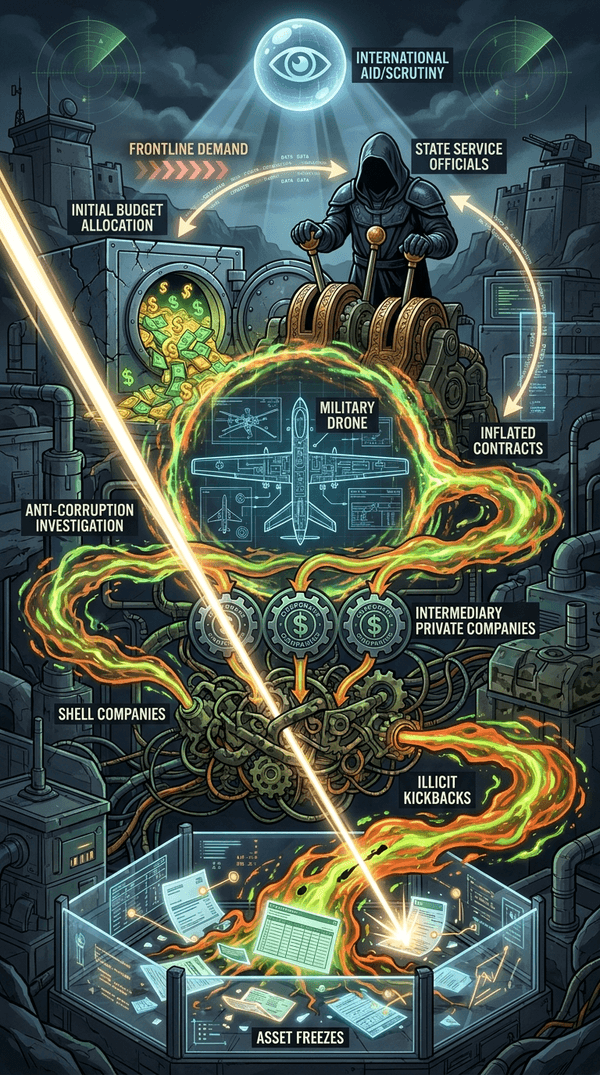
Ukrainian anti-corruption authorities announced the completion of a criminal investigation into a military drone procurement scheme that allegedly diverted more than $5.65 million, or 254 million hryvnia, through inflated purchases for the country's armed forces.
The probe centers on allegations that officials at the State Service of Special Communications and Information Protection rigged contracts for unmanned aerial vehicles and electronic warfare equipment.
The completion of the investigation marks a significant step in Ukraine's wartime anti-graft efforts, which have drawn intense international scrutiny as Western allies pour billions of dollars in military and financial aid into the country. The case is among several high-profile corruption inquiries that have emerged during the conflict with Russia.
Details of the Alleged Procurement Scheme
According to investigators, after the State Service for Special Communications received UAH 30 million in 2023 for the purchase of drones, one of the department's leaders decided to embezzle part of this money [1]. The agency, which oversees secure communications and information protection, had been allocated substantial funds as part of Ukraine's broader military modernization push.
The NABU statement said a department head within the agency orchestrated the scheme by rigging contracts for 5,100 drones. Payments for these drones were allegedly inflated by as much as 90 percent above market prices, according to the investigation. The scheme involved multiple private companies that acted as intermediaries, with officials approving contracts at artificially high costs.
The agency said the inflated prices were designed to generate kickbacks for those involved, with funds siphoned off through a network of shell companies.
The alleged fraud coincided with a period of intense demand for drones on the front lines, where both Ukrainian and Russian forces have relied heavily on unmanned systems for reconnaissance and combat operations. The procurement of drones has been a critical component of Ukraine's military strategy, making the alleged embezzlement particularly sensitive.
Suspect Identification and Asset Freezing
Media reports have identified the alleged ringleader as Vladimir Mokrenko, a former procurement chief at the State Service of Special Communications and Information Protection. A civilian accomplice, Yury Volyan, has also been named in connection with the scheme. The anti-corruption agencies did not officially confirm these names, but Ukrainian news outlets have reported on their roles based on court documents and investigative materials.
Authorities have frozen assets believed to be proceeds of the corruption, including more than $4 million held in overseas accounts. The freeze is part of an effort to recover funds that were allegedly laundered through foreign jurisdictions. The NABU statement noted that the suspects' actions caused significant damage to the state budget and undermined military readiness.
The investigation has also implicated other officials, including a Ukrainian lawmaker and members of the National Guard, according to reports [2].
Links to Broader Corruption Scrutiny in Kyiv
The drone scheme occurred during the tenure of former State Service of Special Communications and Information Protection chief Yury Shchigol and his deputy Viktor Zhora. Both officials have been previously implicated in other graft cases, according to Ukrainian media. Shchigol was dismissed from his post in 2023 amid a broader shake-up of the agency following corruption allegations.
Investigators have noted that Zhora has been named in additional NABU cases involving rigged software procurement across multiple government ministries. These cases suggest a pattern of corruption that extends beyond the drone procurement scheme. The NABU has been actively pursuing several such cases as part of its mandate to root out graft in wartime Ukraine.
The completion of the drone investigation comes as Ukraine faces increasing pressure from Western partners to demonstrate progress in fighting corruption. The European Union and the United States have tied aid and future integration prospects to anti-corruption reforms.
Pattern of Allegations Targeting Government Officials
The drone probe follows a series of high-profile anti-corruption investigations targeting individuals associated with Ukrainian leadership. Other reported cases include a $100 million energy sector kickback scheme and an alleged protection racket involving government offices. These cases have raised concerns about systemic corruption in Ukraine's wartime governance.
In May 2026, for example, Andriy Yermak, the former chief of staff to President Volodymyr Zelensky, was suspected in an alleged 460-million-hryvnia money-laundering scheme, according to the Washington Post [3]. The accumulation of such cases has fueled public frustration and calls for greater accountability.
The anti-corruption agencies have emphasized that the investigations are ongoing and that all suspects are presumed innocent until proven guilty. The completion of the drone case represents a milestone in their efforts, but the broader challenge of combating corruption in Ukraine remains formidable.
References
- Stealing money for the purchase of drones — one of the suspects was .... https://babel.ua/en/news/122663-stealing-money-for-drone-purchases-one-of-the-suspects-sent-to-custody
- Ukraine charges six people, including lawmaker, in drone .... https://www.reuters.com/world/ukraine-charges-six-people-including-lawmaker-drone-procurement-scheme-2025-08-04/
- Ukraine officials say Zelenskyy's ex-chief of staff is a .... https://www.washingtonpost.com/world/2026/05/12/russia-ukraine-war-corruption-yermak-fighting-drones/817960bc-4dd9-11f1-97e7-22c6c29ff0d8_story.html
Explainer Infographic






Please contact us for more information.