


U.S. President Donald Trump has revealed that Google CEO Sundar Pichai declined his proposal to rename the Atlantic Ocean on Google Maps, according to a report by the New York Post [1].
The account, as relayed by the president, casts the leader of one of the world's most powerful technology companies as the effective gatekeeper for how a global body of water appears on the world's most widely used mapping service. Trump said Pichai argued that oceans are different from other geographical features, since a name change would affect many nations rather than a single country [2][3].
Neither Google nor the White House issued an immediate statement elaborating on the exchange beyond what Trump described on stage. Trump's remarks came after Google Maps began displaying names the president has favored for two other North American bodies of water – the Gulf of America and Lake America – for users in the United States [4].
Trump Recounts Conversation with Pichai
The contrast between Google's compliance with those changes and its reported refusal on the Atlantic Ocean forms the backdrop to Trump's account, which he delivered as an anecdote rather than as a policy announcement. Trump told the crowd during a rally in South Carolina on Wednesday, Oct. 21, that he personally approached Pichai about the Atlantic Ocean, according to the Post's account of the rally [1].
The president's tone, as described in the report, was lighthearted. He presented the exchange as evidence that even the largest technology companies would not go along with every naming proposal he has floated.
Google Maps Adopted Gulf of America and Lake America
The company continued showing the original names, Gulf of Mexico and Lake Ontario, to users outside the United States, according to the same reports. The dual-labeling approach reflects the complications that arise when a private mapping platform operates across borders while responding to the directives of a single government. The president's recounting places the Gulf and Lake episodes at the center of his story about the Atlantic, suggesting that the earlier changes set an expectation that further requests would be honored.
MapQuest and Others Decline to Follow
The refusal marked a contrast with Google's approach and indicated that not every mapping service was prepared to adopt the administration's preferred names. MapQuest, another mapping service, declared that it won't be following suit in a statement from late August.
The proposals have circulated in public comments rather than through formal directives, and their status varies. The spread of naming suggestions beyond a single body of water underscores how the issue extends across the president's public statements.
Summary of Events
Trump said Pichai rejected the Atlantic Ocean renaming idea, citing the global nature of oceans, according to the Post [1]. The mixed responses show that technology platforms are handling the naming requests unevenly, with some complying for domestic audiences and others refusing outright. Neither company nor the administration has confirmed additional details about the conversation or indicated whether the Atlantic Ocean proposal will be revisited.
References
- Google CEO Sundar Pichai stopped Trump from renaming. https://nypost.com/2026/10/22/business/trump-says-google-ceo-sundar-pichai-turned-down-idea-of-renaming-atlantic-ocean/
- "Sundar Pichai Said No": Donald Trump Says Google Rejected. https://www.news18.com/world/donald-trump-atlantic-ocean-renaming-sundar-pichai-google-maps-ws-l-10392163.html
- Trump wanted the Atlantic Ocean renamed 'Trump Ocean'. https://www.businesstoday.in/world/story/trump-wanted-the-atlantic-ocean-renamed-trump-ocean-sundar-pichai-explained-why-google-could-not-do-it-563152-2026-10-22
- Trump: Google's Pichai Rejected Atlantic Ocean Name Change. https://www.newsmax.com/us/donald-trump-sundar-pichai-atlantic-ocean/2026/10/22/id/1273699/
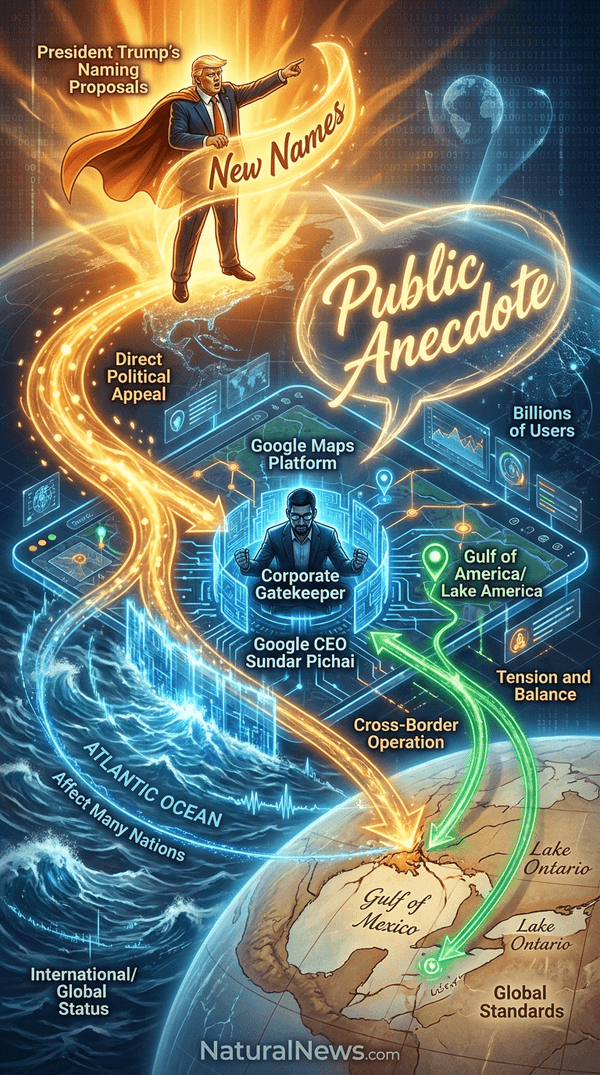
Explainer Infographic









Please contact us for more information.