


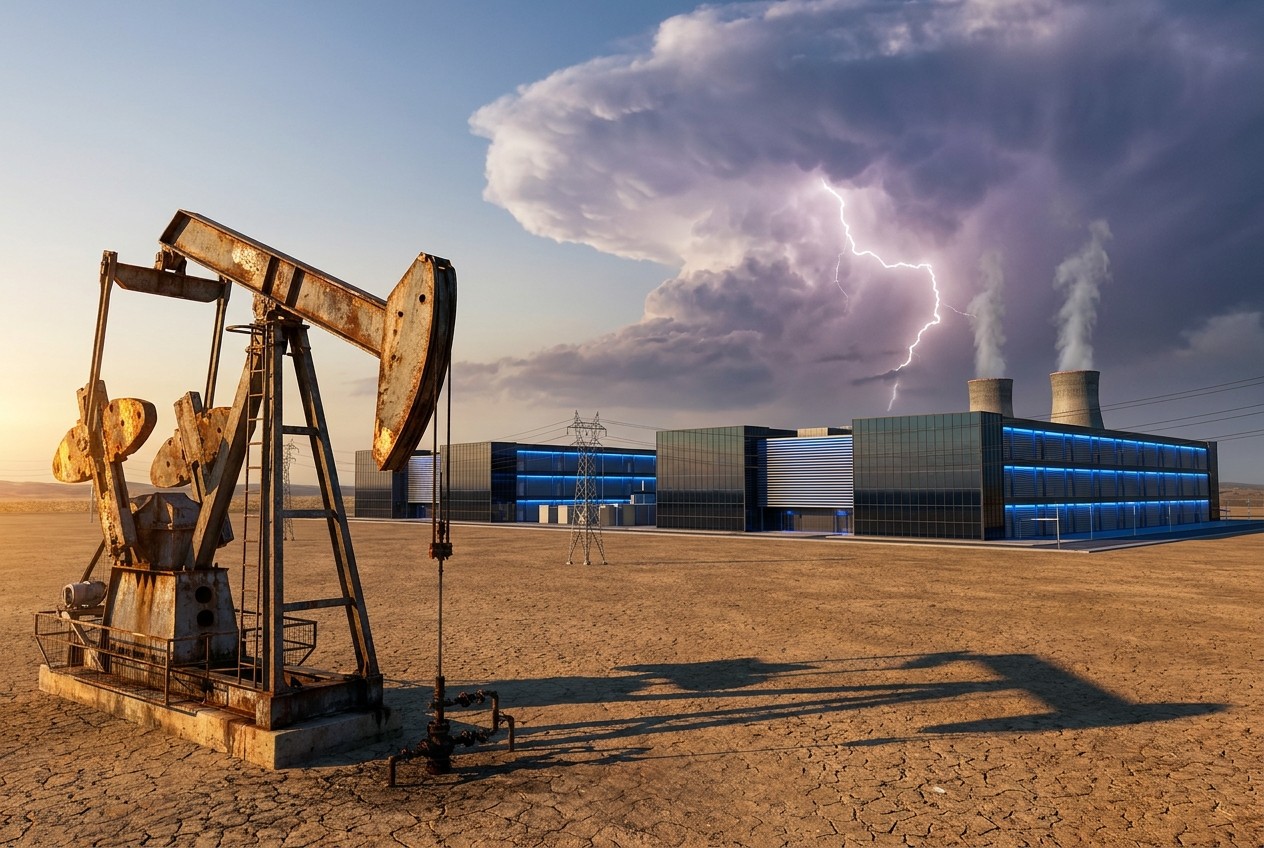
A report published Oct. 22, 2026, by Climate Depot stated that net zero policies are encountering global demand for fossil fuels, arguing that the climate narrative is collapsing because countries continue to rely on the fuels the policies were designed to displace.
The report stated that the central conflict is between climate ambitions and a world that continues to depend on fossil fuels.
Climate Depot presented the claim as its lead item and attributed it to Röst and Clintel throughout. The opening of the report did not present independent verification of the argument, and this article attributes the assertions to the report and its cited sources without independently assessing them.
Report Cites UN Estimate on U.S. Emissions Policy
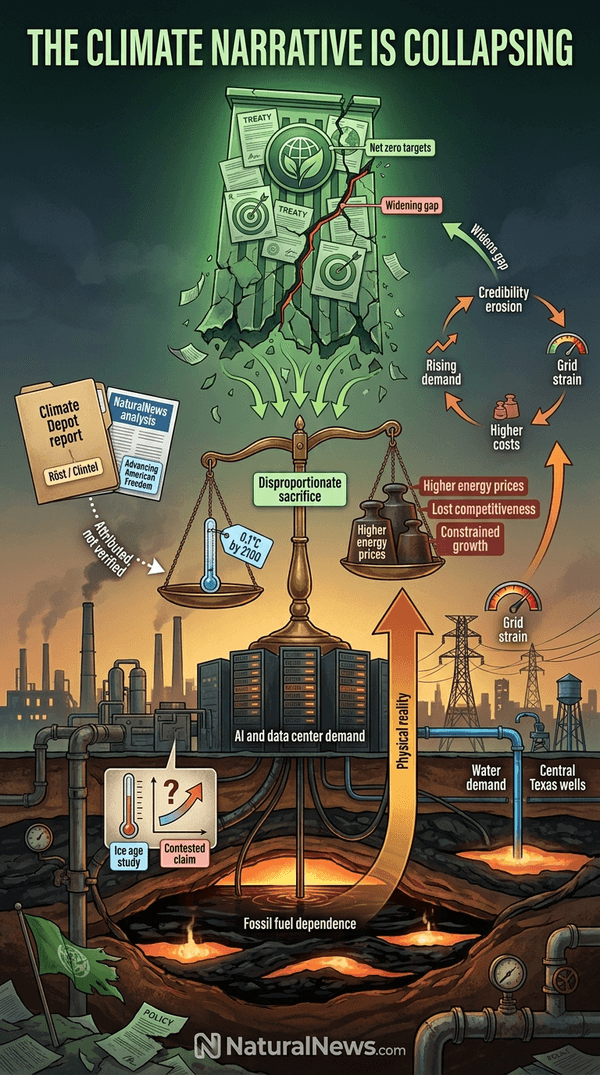
The report cited a United Nations estimate that U.S. abandonment of emissions-cut policies would affect warming by 0.1°C by 2100, according to the report. The report stated that the figure is not close to a measurable difference.
The report’s treatment of the estimate places it inside a broader case about the costs and benefits of emissions policy. A separate analysis published by NaturalNews.com in September 2026, conducted by Advancing American Freedom and described as using the United Nations’ own climate models, stated that eliminating every ton of carbon dioxide from U.S. fossil fuel use would yield a temperature reduction too small to be observed or measured [1].
The report’s own framing of the U.S. figure was direct. The estimate is presented as the report’s evidence that national policy shifts move global temperature only marginally, a claim the report uses to question the scale of sacrifices associated with net zero targets.
Study on Ice Age and Fossil Fuels Presented as Supporting Evidence
The report referenced a study stating that a new ice age was beginning and that human burning of fossil fuels caused global warming to rapidly reverse course beginning in the 1960s.
The report used the study as evidence that fossil fuels have affected climate in ways that challenge the dominant climate narrative. In that framing, fossil fuel use is credited with averting a cooling trajectory rather than being treated solely as a source of risk. The report did not present the study as settled science, and the claims it attributes to the study are contested in the broader climate literature.
The report’s presentation of the study follows a pattern in which it assembles sources that question net zero assumptions. This article attributes the ice age study’s claims to the report and does not independently evaluate them.
Energy Demand and AI Data Centers Cited in Net Zero Debate
The report stated that the climate change narrative has been used to reduce domestic energy production and harm competitiveness in energy-intensive sectors such as AI and data centers. In that account, policies justified by climate concerns constrain the power supply that computation and industrial operations require. The report’s position is that fossil fuels remain necessary for economic and technological operations [2].
Industry officials said energy demand from data centers is rising, according to the report. Reporting on data center water use has also described growing concerns among well drillers in Central Texas about the facilities’ demands on local supplies [3].
The report’s position that fossil fuels remain necessary for economic and technological operations is presented alongside those observations about rising demand. Competing perspectives are noted through attribution to officials and to the report. The report did not resolve whether alternative supplies could meet the demand on a different timetable, and this article does not assert one.
Debate Over Net Zero Continues
The report concluded that net zero is running into a world that cannot do without fossil fuels. It stated that the climate narrative has never had substance and that the policy edifice built on it is now meeting the material requirements of economies that depend on the fuels it targets [4].
The article summarizes the report’s claims, the cited UN estimate and the ice age study without resolving the dispute. Officials and the report offered perspectives; no final determination was stated. The report’s conclusion is an argument about feasibility and cost, not a finding that net zero targets have been formally withdrawn by the governments that adopted them.
References
- The zero-return climate policy: How trillions in U.S. spending achieves immeasurable temperature change. https://www.naturalnews.com/2026-09-02-how-us-spending-achieves-immeasurable-temperature-change.html
- ‘The Climate Narrative Is Collapsing’: ‘Net Zero is running into a world that cannot do without fossil fuels’. https://www.climatedepot.com/2026/10/22/the-climate-narrative-is-collapsing-net-zero-is-running-into-a-world-that-cannot-do-without-fossil-fuels/?utm_source=rss&utm_medium=rss&utm_campaign=the-climate-narrative-is-collapsing-net-zero-is-running-into-a-world-that-cannot-do-without-fossil-fuels
- Bright Videos News - DATA CENTERS ACCELERATE LOOMING WATER COLLAPSE transcript - Mike Adams - BrightVideos.com, May 18, 2026.
- The Climate Narrative is Collapsing. https://wattsupwiththat.com/2026/10/22/the-climate-narrative-is-collapsing/
Explainer Infographic






Please contact us for more information.