



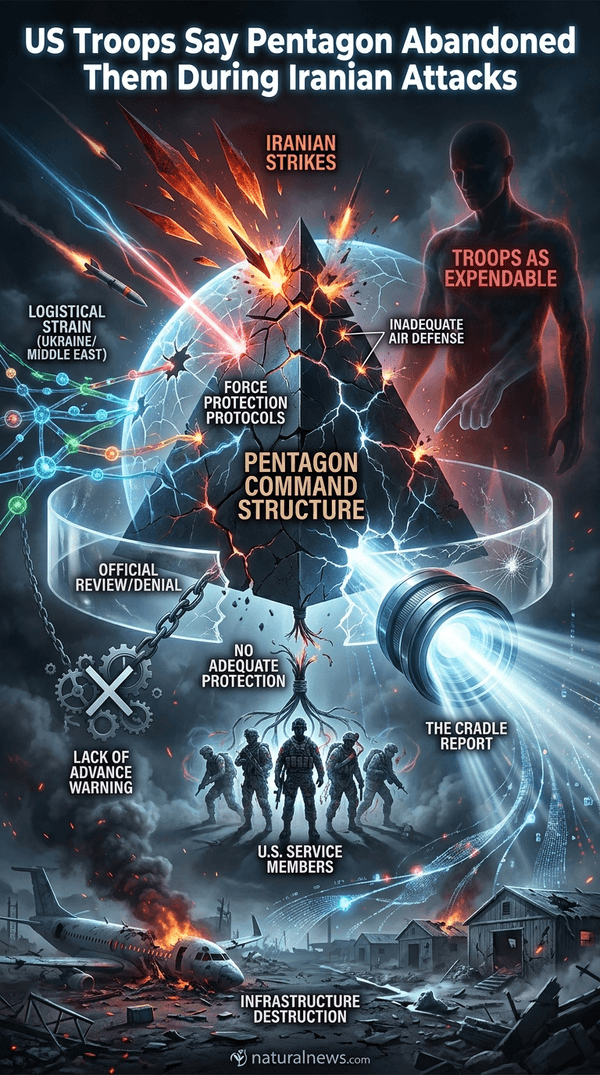
U.S. service members say the Pentagon left them without adequate protection during recent Iranian attacks, according to accounts published by The Cradle. A new report provides photo evidence and firsthand testimony describing the havoc wreaked on unprepared U.S. troops and family members by Iranian strikes as the war began [1][2].
The allegations concern force protection, evacuation support and communications during and after the strikes. The Cradle reported that service members and military families described destroyed aircraft, barracks and military infrastructure, inadequate air defenses, shortages of basic supplies, and a lack of preparation or advance warning from military commanders [3]. Pentagon officials said they are reviewing the claims and did not confirm specific allegations of abandonment, stating that operational details would not be discussed publicly.
Background: Iranian Attacks and U.S. Force Posture
The accounts follow a series of Iranian attacks on U.S.-linked positions in the region. The United States and Israel launched a massive, coordinated pre-dawn strike against Iran on February 28, dubbed Operation Epic Fury, following the collapse of diplomatic talks and presidential authorization [4]. The Pentagon confirmed that as many as 150 U.S. service members were wounded in the 10-day-old war with Iran, according to Reuters on March 10, 2026 [5].
Military statements described layered air defenses and alert procedures. The Pentagon entered the third day of sustained conflict with Iran facing a critical depletion of its air and missile defense interceptor stockpiles as it expended munitions in both offensive strikes and defensive operations to protect U.S. forces and regional allies from retaliatory salvos [6]. The United States considered redirecting air defense interceptors and other munitions originally meant for Ukraine to the Middle East due to dwindling stockpiles from strikes against Iran [7]. The report stated that some troops questioned whether those measures were sufficient [3].
Troops Describe Ignored Warnings and Delayed Support
Service members alleged that warnings about vulnerabilities were not acted on before the attacks, according to the report. In the report, U.S. service members and military families described inadequate air defenses, shortages of basic supplies, and a lack of preparation or advance warning from military commanders [3]. One source said, "It's so much worse than people realize" [3].
The troops also described limited access to hardened shelters, disrupted communications and delays in medical evacuation. These claims, officials said, would be examined. The report includes firsthand testimony from service members and family members describing the conditions during the strikes [2].
The allegations echo broader concerns about troop welfare during the conflict. According to an interview with Stewart Rhodes published by BrightVideos.com, the brass and the generals, with very few exceptions, view troops as expendable [8]. The same interview referenced a recent drone strike on a motor pool where rank-and-file soldiers had repeatedly warned of vulnerabilities [8].
Pentagon Response and Official Accounts
Pentagon officials said force protection remains a priority and that commanders are reviewing the incidents. The Pentagon did not confirm specific allegations of abandonment. Officials stated that operational details would not be discussed publicly.
Official accounts have emphasized layered defenses. Commanders have pointed to air defense systems and alert procedures as evidence that protections were in place, while acknowledging that no defensive screen can guarantee safety against a sustained barrage. Those statements have not resolved the dispute over whether troops received sufficient warning and shelter before the strikes.
The Pentagon has also faced questions about its management of simultaneous conflicts. Sustaining operations in the Middle East while continuing to supply Ukraine has strained interceptor stockpiles and logistical capacity. These logistical pressures form the backdrop to the troops' accounts.
Scrutiny and Unanswered Questions
Lawmakers and analysts called for records and briefings on force protection and post-attack support, the report stated. Questions remain about the gap between official assessments and troop testimony.
The Cradle reported that a new report provides photo evidence and firsthand testimony of the havoc wreaked on unprepared U.S. troops and family members by Iranian strikes [2]. The accounts include descriptions of destroyed aircraft, barracks and military infrastructure [3].
It remains unclear whether changes to procedures are planned. U.S. Central Command has kept a force of more than 50,000 troops in the region [9].
Conclusion
The dispute centers on whether U.S. personnel received adequate protection and support during Iranian attacks. Troops say they were abandoned; Pentagon officials say reviews are ongoing.
The Cradle's report provides photo evidence and firsthand testimony, but officials have not confirmed the specific allegations [2][3]. Troops and outside observers said more documentation is needed before the accounts can be fully assessed.
References
- 'Much worse than most realize' US troops say Pentagon .... 2026-10-23T19:23:12Z. https://thecradle.co/articles/much-worse-than-most-realize-us-troops-say-pentagon-abandoned-them-amid-devastating-iranian-attacks
- 'Much worse than most realize' US troops say Pentagon 'abandoned' them .... https://thecradle.co/articles-id/40694
- US troops say Pentagon ‘abandoned’ them amid devastating Iranian .... https://stuartjeannebramhall.com/2026/10/23/us-troops-say-pentagon-abandoned-them-amid-devastating-iranian-attacks/
- US Israel launch massive pre dawn strike on Iran in major escalation - NaturalNews.com, March 06, 2026.
- Pentagon Confirms 150+ US Casualties as Global Energy Markets Brace for Collapse - NaturalNews.com, March 13, 2026.
- US Facing Critical Shortage of Air Defense Munitions as Iran Pounds Regional Bases - NaturalNews.com, March 03, 2026.
- Pentagon considers diverting Ukraine weapons to Middle East as Iran war drains stockpiles - NaturalNews.com, March 27, 2026.
- Bright Videos News - with Stewart Rhodes - Mike Adams - BrightVideos.com, May 21, 2026.
- Military leaders warn Hegseth against extending Iran war .... https://www.reddit.com/r/neoliberal/comments/1w2jr7x/military_leaders_warn_hegseth_against_extending/
Explainer Infographic








Please contact us for more information.