


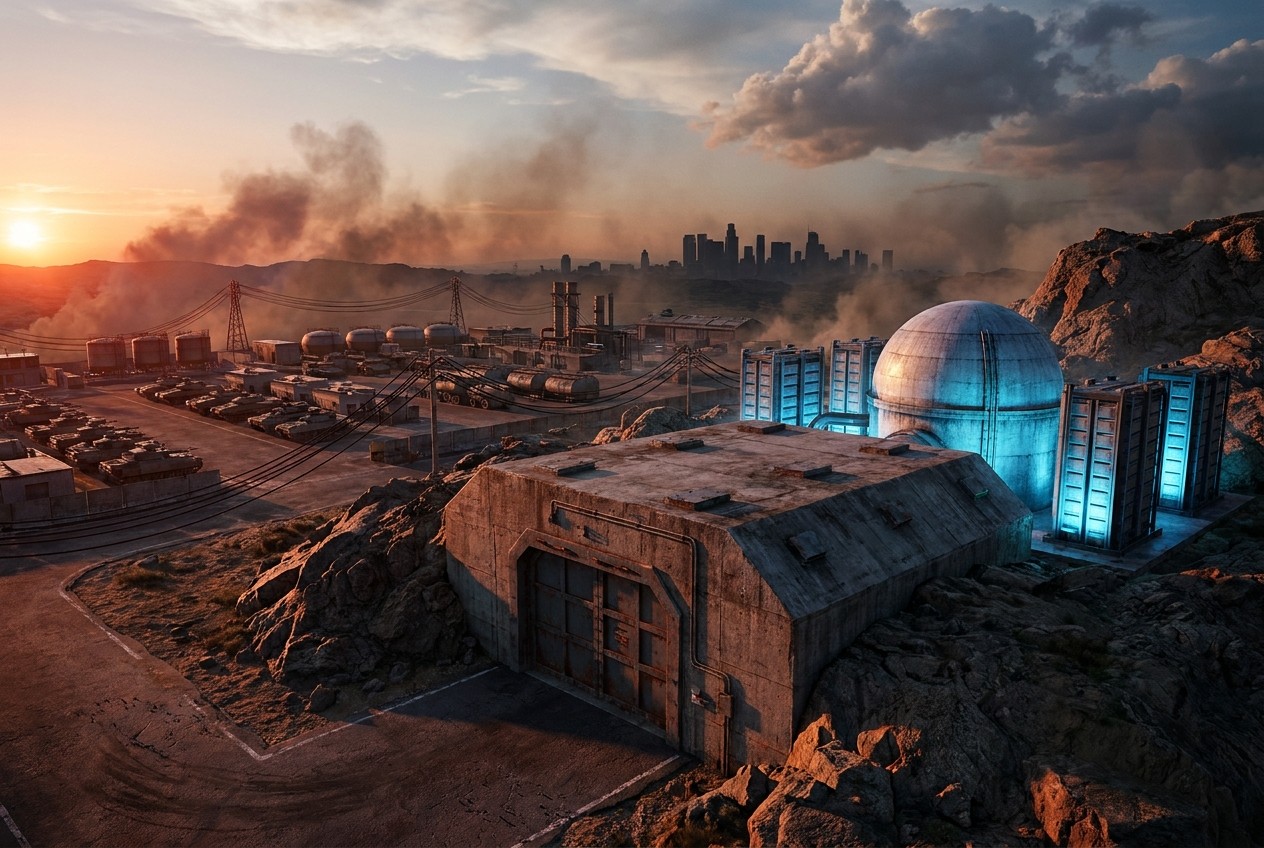
The Department of War is preparing a contingency plan known as FORTRESS America designed to keep U.S. military bases operating without support from civilian power grids, supply chains and other infrastructure, according to documents reviewed by Fox News [1][2].
The plan calls for measures allowing the U.S. military to continue fighting for at least 90 days if a war reaches U.S. territory and civilian infrastructure collapses, the report stated [2]. War Department chief spokesperson Sean Parnell said the military cannot rely on standard civilian municipal infrastructure to run national defense, calling it an intolerable risk.
"We cannot assume that the same systems that deliver electricity and supplies to American homes will be available to the warfighter," Parnell said, according to the report [1]. The initiative represents a shift in planning assumptions. Rather than treating homeland infrastructure as a given, the War Department is preparing to operate as if it may not be there.
The documents describe a scenario in which adversaries could reach the U.S. homeland, a departure from decades of defense planning that treated the two oceans as a buffer. FORTRESS America is intended to ensure that military operations do not halt simply because the civilian grid goes dark or commercial logistics seize up.
Plan Outlines Alternative Supply Chains and Strategic Reserves
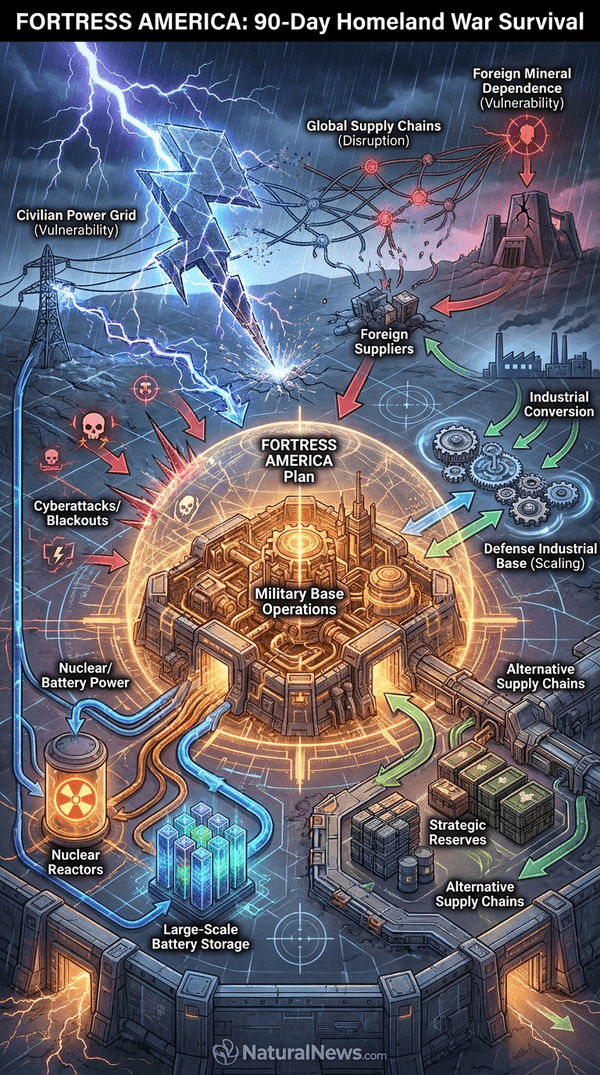
The agency wants to establish alternative supply chains and strategic reserves to keep weapons, fuel and other essential materials flowing during a conflict, according to the documents. The strategy anticipates major disruptions to global supply chains the U.S. relies on for weapons, equipment and critical materials, the report stated.
Parnell said the next conflict will likely be fought on multiple fronts and that global supply chains will break when that happens. The plan calls for reserves of munitions, fuel, critical minerals, electronics, spare parts and medical supplies, according to the documents reviewed by Fox News [1]. Stockpiling these items in advance is meant to buy time while domestic production ramps up.
The emphasis on reserves reflects concern that the U.S. defense industrial base is not sized for a prolonged war. The documents indicate that planners are working from the assumption that commercial shipping lanes and foreign suppliers could be cut off or severely disrupted, leaving the military to draw on pre-positioned stocks and domestic sources.
Nuclear Reactors and Battery Storage Proposed for Base Power
A key part of FORTRESS America calls for establishing nuclear reactors and large-scale battery storage near military bases to power them if the civilian power grid fails, according to the report. The proposal would create dedicated power sources that operate independently of the commercial grid, reducing the risk that a blackout or cyberattack could disable a base.
Parnell said power is combat now and that without electricity the military loses communications, water, logistics, assembly lines and basic command structures. "Electricity is not a convenience in modern warfare; it is the foundation of every capability we field," he said, according to the report. The documents state that the War Department's planning reflects an assessment that adversaries could reach the U.S. homeland.
Parnell said much of the existing approach to homeland defense was built around the assumption that two oceans would protect the United States. FORTRESS America, by contrast, treats the homeland as a potential battlespace where military installations must be able to sustain themselves.
Industrial Mobilization and Critical Minerals Under Consideration
FORTRESS America calls for preparing civilian factories to shift to defense production during a war on U.S. soil, according to the documents reviewed by Fox News. The War Department plans to identify in advance which commercial factories can shift to military production, the report stated, so that conversion can begin quickly rather than being improvised during a crisis.
Parnell said decisions about industrial conversion should not be made in the middle of a global multi-front conflict. The plan's industrial component is intended to map out which plants can produce munitions, vehicles, electronics or other military goods, and what tooling and workforce would be required.
The report noted that President Donald Trump's recent trade actions with China revealed vulnerability from U.S. reliance on Beijing for critical minerals used in advanced weapons and electronics. That dependence has become a central planning concern, and FORTRESS America treats securing domestic and allied sources of those minerals as part of the same survival strategy.
Budget Request and Golden Dome Overlap With FORTRESS Goals
The FORTRESS America program comes amid Trump's request earlier this year for a $1.5 trillion military budget for 2027, according to the report [2]. The $350 billion in additional defense funding requested by the president includes expanding the U.S. defense industrial base and increasing access to critical munitions, two objectives that overlap with FORTRESS, the documents stated [2].
The budget also emphasizes homeland missile defense through Golden Dome, Trump's proposed multilayered missile-defense system, which is expected to cost $1.2 trillion over 20 years, according to the report [2]. Parnell said Trump understands that the previous world is gone and has paved the way for new thinking including Golden Dome, a renewed focus on the Western Hemisphere, Greenland and Panama.
The overlapping priorities suggest that FORTRESS America is not an isolated program but part of a reorientation toward homeland defense. The documents indicate that the industrial-base funding and missile-defense spending are being planned in coordination with the survival measures outlined in FORTRESS, though the report did not specify a timeline for full implementation.
References
- Inside the Pentagon's doomsday plan to keep America fighting if global war erupts. https://www.foxnews.com/politics/inside-pentagons-doomsday-plan-keep-america-fighting-global-war-erupts
- US military prepares for 'doomsday' war on US soil with 90-day survival plan: Report. https://thecradle.co/articles/us-military-prepares-for-doomsday-war-on-us-soil-with-90-day-survival-plan-report
Explainer Infographic






Please contact us for more information.