


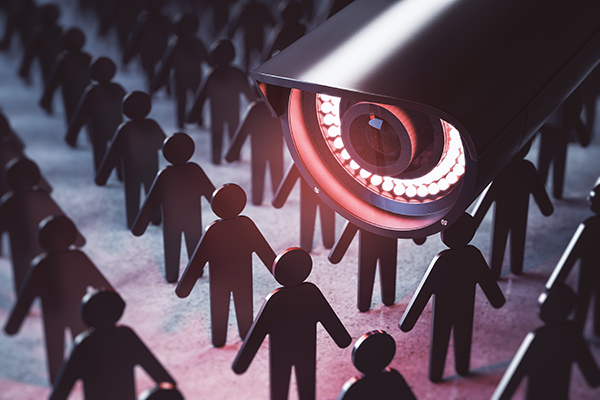
- Facial recognition systems in UK stores are falsely accusing innocent shoppers of shoplifting.
- Victims are publicly humiliated and forced to navigate bureaucratic mazes to clear their names.
- Clearing a false accusation often requires surrendering more personal data to the same companies.
- Similar flawed facial recognition technology is already being deployed in U.S. police departments.
- Companies offer vouchers to silence victims while blaming human error for wrongful accusations.
Imagine walking into your local discount store for vitamins, only to be escorted out as a suspected shoplifter. Your crime? An algorithm decided you looked like someone else.
This isn’t a dystopian novel. It’s happening now in British retail stores, and American shoppers should pay close attention because the same technology is already creeping into U.S. police departments and venues.
Across the United Kingdom, artificial intelligence-driven facial recognition systems are falsely tagging ordinary customers as criminals, leaving them humiliated, scared to shop, and trapped in a bureaucratic maze to clear their names.
One vitamin run, one false accusation, one shattered sense of safety
Take the case of a woman given the pseudonym Mary, whose husband’s errand to pick up vitamins at a Home Bargains discount store turned into a public ordeal. Tagged as a shoplifter by the store’s facial recognition system, he was escorted out.
“I was scared to go into a shop,” the man told TechRadar.
Another innocent shopper found himself “shaking from head to toe” after his wife was removed from a Budgens store when she was accused of stealing “loads of meat” days earlier. Only one problem: They hadn’t visited the store in months.
Ian Clayton, a retired health and safety professional from Chester, experienced the same shock. When he stopped by Home Bargains around lunchtime in February, a stern employee ordered him to “put everything down and leave the shop now.” When he asked why, the answer was chilling: “You’ve come up on our system called Facewatch as a shoplifter.”
Clearing your name means handing over more personal data
Here’s where it gets worse. Proving your innocence typically means filing a Subject Access Request, a legal demand to see the data a company holds on you — a process that can force you to surrender even more personal information to the same companies that falsely accused you.
Jack Coulson, head of advocacy at the civil liberties group Big Brother Watch, described it bluntly to TechRadar as “the stuff of Kafkaesque nightmares to be trapped in a maze of bureaucracy and forced to hand over even more personal data just to be told the accusation.”
For Clayton, the process revealed he had been wrongly tied to a theft during one of his earlier visits. Home Bargains offered him a £100 voucher on the condition that he keep the details confidential. He refused. “I just thought: ‘Really, you’re trying to buy my silence?’” he said.
Other victims fared no better. Warren Rajah, a data strategist in south London, was told to leave his local Sainsbury’s after being flagged. Eventually, he discovered staff had simply misidentified him; he wasn’t even in the Facewatch database. His apology? A £75 voucher.
Similar flawed technology is already on American streets
Comparable facial recognition systems are being deployed in U.S. police departments with similarly devastating results.
Robert Dillon, a Florida man wrongfully arrested for allegedly trying to lure a child, spent a night in jail and months fighting charges, despite living more than 300 miles from the crime scene. The ACLU, which filed a federal lawsuit on his behalf, argues that police let an “error-prone artificial intelligence system stand in for an investigation.”
Machine or clerk, the accused are left to prove their innocence
Whether you’re buying vitamins in Britain or driving to your mother’s house in Georgia — as Randal Reid was doing when he was falsely arrested for stealing luxury purses in a state he’d never visited — the story is the same. Algorithms are making errors, and human beings are paying the price.
Facewatch, the company behind the British retail systems, claims 99.98% accuracy, blames in-store human error rather than its software, and insists these are “extremely rare cases” among more than 500,000 annual alerts. But for the victims, it hardly matters whether a machine or a clerk got it wrong when you’re being publicly marched out of a store for a crime you didn’t commit.
As civil rights advocates continue to sound the alarm, one question lingers: In a world where computers act as judge and jury, how do you prove your innocence to a machine that’s already made up its digital mind?
Sources for this article include:








Please contact us for more information.