


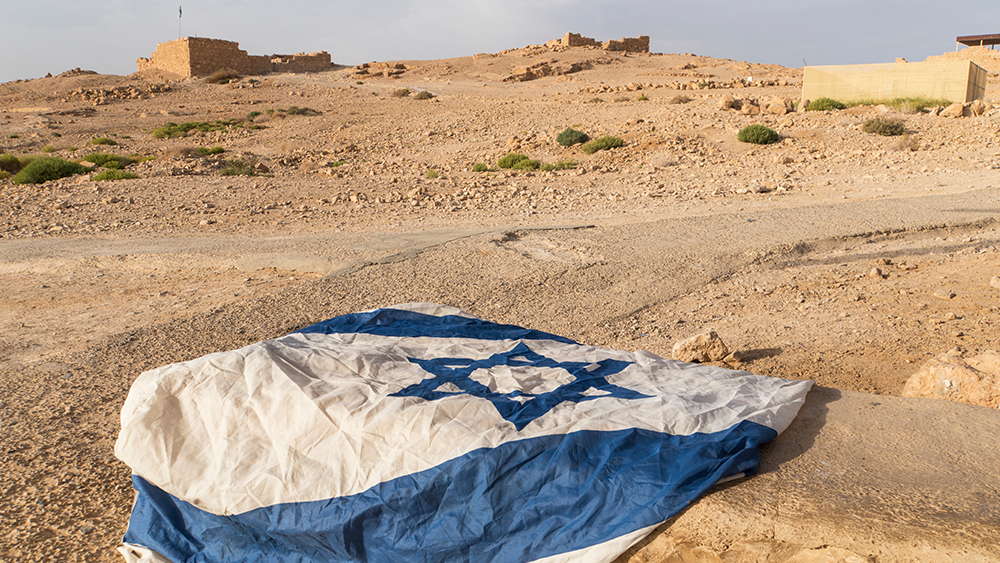
In a nation where the line between security and survival is razor-thin, Benjamin Netanyahu’s leadership has become a litmus test for Israel’s future. Once hailed as a shrewd tactician, the prime minister now faces a damning critique from within his own security establishment: that his reliance on perpetual war is eroding the very state he claims to protect. Yair Golan, a former IDF deputy chief of staff and leader of the Democrats party, has sounded the alarm.
“Israel’s security must not become a tool in Netanyahu’s political survival struggle,” he warned, a statement that cuts to the heart of a deeper crisis. As military campaigns in Gaza, Lebanon, and against Iran spiral into quagmires, the question is no longer whether Netanyahu can lead Israel through another war, but whether his leadership has already made the country less secure.
Talking points:
- Netanyahu’s leadership has led to strategic overextension, diplomatic isolation, and internal division.
- Military campaigns in Gaza, Lebanon, and against Iran lack credible political endgames, risking long-term instability.
- Israel’s security is increasingly tied to U.S. military and diplomatic support, a fragile and unsustainable model.
- Golan and opposition leaders argue for a government prioritizing diplomacy over perpetual conflict.
- Netanyahu’s political survival has become inseparable from war, undermining Israel’s democratic legitimacy.
The Gaza quagmire: The military wins, the human loss, and the political fallout
Netanyahu’s response to the October 7 Hamas attack epitomizes the paradox of his leadership. While Israel’s military prowess decimated Hamas infrastructure and eliminated key commanders, the absence of a humanitarian political strategy has left Gaza in ruins without a viable replacement governance model.
According to a 2025 Institute for National Security Studies (INSS) report, Hamas’s decentralized guerrilla tactics have rendered total annihilation impossible, yet Netanyahu’s government has persisted in open-ended operations that have put innocents in the crosshairs. The result? A humanitarian catastrophe that alienates global allies and fuels Hamas’s recruitment and perpetual hatred toward the Israeli state.
Former IDF intelligence chief Tamir Hayman, in an August 2025 policy assessment, warned that the war’s “military fatigue, domestic polarization, and declining international standing” could outlast any tactical victories. Instead of leveraging Israel’s military dominance to broker a technocratic Palestinian administration with regional backing, Netanyahu has allowed the conflict to metastasize into a cycle of retaliation and occupation. The absence of a postwar plan, Golan argues, is not a strategic oversight: it is a failure of leadership, the consequence of an authoritarian approach that cared not of human rights or due process.
Lebanon and Iran – Escalation without resolution
The pattern repeats in Lebanon. Despite inflicting heavy damage on Hezbollah, Israel’s northern border remains unstable. A 2026 Carnegie Endowment analysis highlighted the risks of treating Hezbollah’s “unconditional surrender” as a goal, noting that such an approach only strengthens the resistance narrative. Netanyahu’s refusal to engage in meaningful negotiations with Lebanon’s government or regional partners has left Israel vulnerable to perpetual skirmishes, with no end in sight.
The same strategic myopia applies to Iran. While Israeli and U.S. strikes have damaged Iranian nuclear facilities, the lack of a coherent diplomatic framework means Iran continues to rebuild. A December 2025 INSS report noted that Iran’s “technical knowledge and political motivation” remain intact, rendering military destruction a temporary fix. Netanyahu’s fixation on “maximum pressure” campaigns—without a plan to isolate Iran diplomatically or economically—risks turning the region into a nuclear arms race.
The cost of perpetual war
The human and strategic toll of Netanyahu’s policies is staggering. The IDF, once a symbol of Israeli resilience, now faces manpower shortages and internal dissent, exacerbated by the draft of Orthodox Jews previously exempt from service. A 2026 Middle East Institute report warned that Israel’s reliance on U.S. military and diplomatic support is unsustainable, as American public patience wanes and regional alliances fray.
Golan’s call for an alternative government (one that includes Arab parties and prioritizes diplomacy over perpetual conflict) reflects a growing recognition that Netanyahu’s leadership has made Israel a pariah in global politics. The collapse of the two-state solution, the erosion of democratic norms, and the militarization of everyday life have left the Jewish state in a precarious position.
Netanyahu’s legacy is not one of triumph, but of strategic drift. His wars have bought temporary security at the cost of long-term stability, and his political survival has become entangled with the very conflicts he claims to resolve. As Golan and others argue, Israel’s future depends not on bombing its way to peace, but on the courage to seek it. The question is whether a nation so deeply entrenched in war can find its way back to diplomacy, and whether Netanyahu’s rivals can unite to lead it there.
Sources include:




Please contact us for more information.