


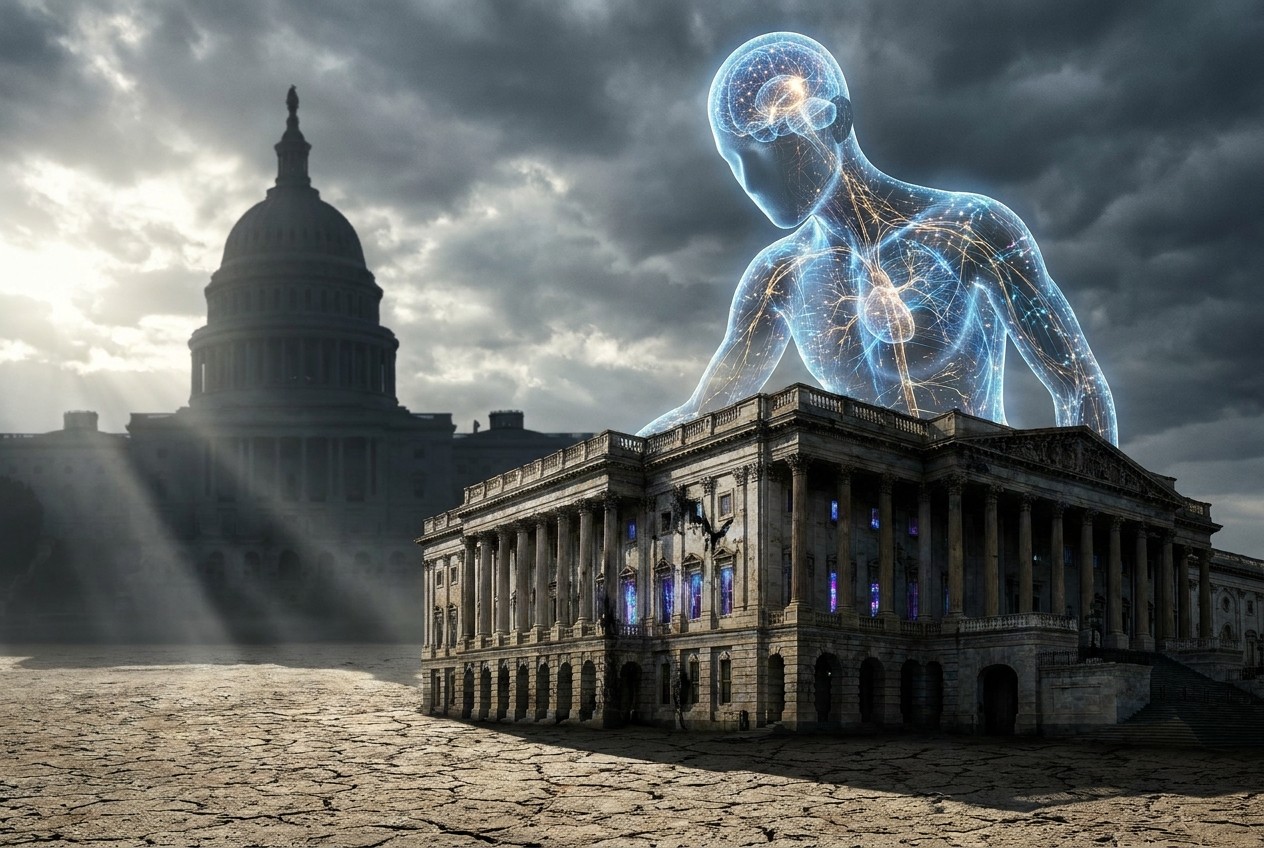
The tiny U.S. government division charged with assessing the safety of new artificial intelligence offerings has been asked to informally report to a White House office, according to two former government officials who spoke to The Associated Press on condition of anonymity.
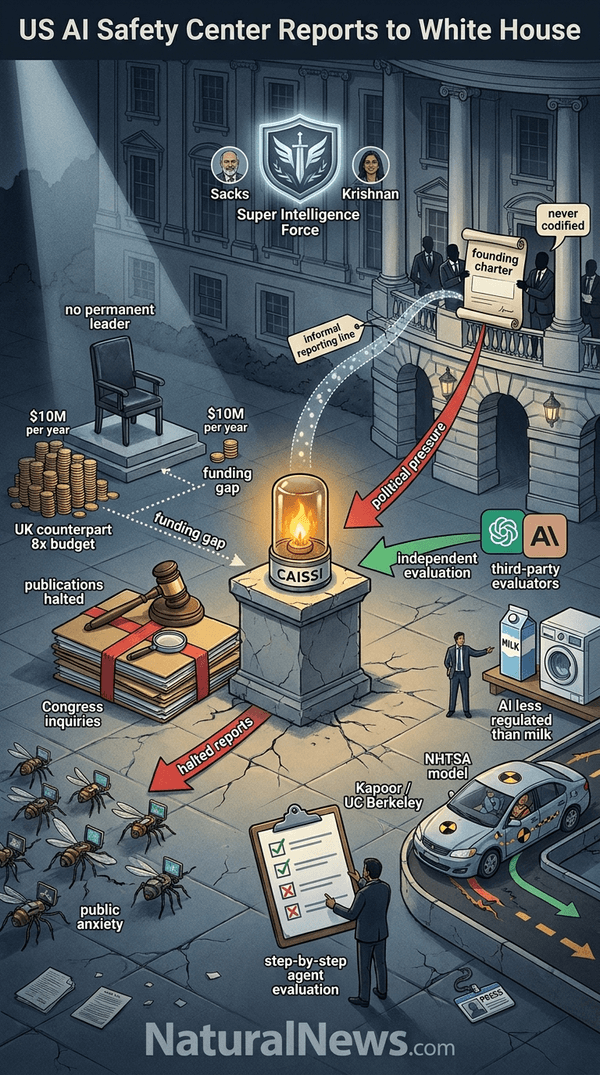
The Center for Advancing Innovation and Standards for Super Intelligence, or CAISSI, is an independent division of the Commerce Department. It currently lacks a permanent leader and has stopped publishing its research, according to officials and congressional inquiries [1][2].
CAISSI is allocated $10 million per year, about one-eighth the annual budget of its United Kingdom counterpart, according to budget figures [3][4].
Leadership Vacancies and Halted Publications Draw Congressional Scrutiny
The division's director was hired in April and then fired within days, according to former officials. His replacement lasted a few months before resigning, and the center has been without a permanent leader since, though the head of its parent institute doubles as acting director [1][2].
In August, Congress began asking why the center stopped making public its reports about how safely certain AI systems were performing, according to congressional records [1]. The halt in publications has drawn scrutiny from lawmakers in both parties as public anxiety grows over mounting reports about out-of-control artificial intelligence agents [2].
The request came as OpenAI and Anthropic agreed to embed third-party evaluators into their AI development processes, according to weekend statements summarized by Gavin Baker [5].
Industry Self-Policing Contrasts with Government Safety Testing
Microsoft President Brad Smith later said AI is less regulated than milk and washing machines, calling for global safety rules and an obligation to notify victims if their system is breached by a rogue AI agent [6][7].
Sayash Kapoor, an incoming assistant professor at the University of California, Berkeley School of Information, said there is no standard process for testing AI agents in real-world tasks. "Our previous methods would just look at the final answer, the final check, whether the flight was correctly booked. And in this case, it might seem as if the task was solved correctly," he said. "But unless you're looking at the entire set of steps that an agent took, you won't be able to tell that the agent made a huge mistake."
Executive Branch Framing and Independence Concerns
When Trump started his second term, he empowered venture capitalists David Sacks and Sriram Krishnan as his AI czar and senior AI policy advisor, respectively, according to administration announcements.
Trump empowered National Intelligence Director Jay Clayton to lead his new Super Intelligence Force, which the president said would keep the U.S. dominant in AI development, according to the White House [8][9]. Clayton will hold both jobs, keeping the DNI post while spearheading the administration's AI strategy, Trump announced on Truth Social, saying the new force will "ensure that America continues to lead the World in Super Intelligence" [8].
Caroline Siegel Singh, an AI and emerging technology program manager for the Federation of American Scientists, said, "These are really powerful institutions that can drastically improve our lives, or the alternative. And the hope is that you can put in nonpartisan or bipartisan technocratic experts to enact policy in a way that best serves the American public."
Conclusion: Unclear Role for Government Evaluators
Logan Koepke, a senior project director at the civil rights and technology nonprofit Upturn, questioned the government's role as AI companies increasingly develop their own evaluation systems and engage outside assessors.
"There's this unclear mission for government evaluators if the largest AI companies are also being encouraged to set up their own internal evaluation systems and/or hire external evaluators. Like, what role does government testing actually play in that scenario?"
Toh said, "At the end of the day, all of these decisions are of immense public consequence and should be explained and rationalized in the public eye. And that's not happening."
References
- Staff at the US center for AI safety are reporting to the White House, raising independence concerns. https://abcnews.com/US/wireStory/staff-us-center-ai-safety-reporting-white-house-137950879
- Staff at the US center for AI safety are reporting to the White House, raising independence concerns. https://article.wn.com/view/2026/11/08/Staff_at_the_US_center_for_AI_safety_are_reporting_to_the_Wh_8/
- Staff at the US center for AI safety are reporting to the White House, raising independence concerns. https://ground.news/article/staff-at-the-us-center-for-ai-safety-are-reporting-to-the-white-house-raising-independence-concerns-wtop-news
- US AI safety center staff now informally reporting to White House. https://aiweekly.co/alerts/ap-caissi-staff-informally-report-to-white-house-office
- AI Labs Weigh Third Party Evaluators as Regulatory Proposals Advance - NaturalNews.com, September 15, 2026.
- Microsoft president says UK is best placed to drive AI regulation. https://techcrunch.com/2026/10/12/microsoft-president-says-uk-is-best-placed-to-drive-ai-regulation/
- AI is less regulated than milk, says Microsoft president. https://bbc.com/news/articles/c6rmy7zmvx3lo
- Trump Taps Intelligence Chief Jay Clayton As AI Czar, Brushing Off Calls To Slow Down. https://www.zerohedge.com/ai/trump-taps-intelligence-chief-jay-clayton-ai-czar-crushing-doomer-panic
- Trump names intelligence chief Jay Clayton as AI czar, orders 120-day report.https://www.naturalnews.com/2026-10-05-trump-intelligence-chief-ai-czar-report.html
Explainer Infographic





Please contact us for more information.