



- Nvidia shares surged over 31% after Jensen Huang's reinstatement as CEO, but bond investors are increasingly concerned that the AI industry's massive spending is being financed by unsustainable debt.
- Man Group's Dan Taylor noted that while Anthropic's IPO was successful, heavy spenders like Oracle and Alphabet have dropped 25% to 45% since June, while Apple, which avoided the AI arms race, rose nearly 20%.
- Bond markets are showing more bearishness than equity investors, with companies like Oracle and SpaceX rated BBB now trading like single B junk bonds, partly due to credit quality and debt supply fears.
- PIMCO expects the largest AI companies to issue around $250 billion in bonds this year, with total AI-related borrowing potentially reaching $300 billion to $570 billion, outpacing cash generation at major firms.
- Analysts warn of a fundamental conflict: Nvidia needs tech giants to keep spending heavily on AI, but those same companies may need to cut spending to rebuild free cash flow, echoing the dot-com bubble's risks.
Jensen Huang's dramatic reinstatement as Nvidia CEO on Monday, Nov. 23, sent shares of the semiconductor giant soaring more than 31% and ignited a broad rally across technology stocks. But the euphoria has done little to quiet growing alarm among bond investors that the artificial intelligence (AI) industry's breakneck spending is building on a mountain of debt that may soon become unsustainable.
The rebound, which came after last week's sharp sell-off failed to lift the broader sector even with Anthropic's landmark initial public offering (IPO), has exposed a deepening conflict. The very companies that must spend billions to fuel Nvidia's growth are themselves facing mounting pressure from debt markets to prove their investments will actually pay off.
Behind Nvidia's Monday surge – shares later closed 5.9% lower on Tuesday, Nov. 24 – investors are starting to ask harder questions about the bill for the AI build-out, according to Dan Taylor, deputy chief investment officer and CIO equities, systematic at Man Group. "As investors get choosier about where all this capital is going and when it might pay off, we think the market is likely to fragment well beyond the simple 'buy chipmakers, sell software' trade of the past two years," he remarked.
Taylor noted that Anthropic, which went public Nov. 19 in the largest ever stock market debut, is already bringing in cash and nearing break-even on free cash flow. In contrast, heavy spenders and debt issuers – including Oracle, Google owner Alphabet and certain chip manufacturers – plunged by 25% to 45% between their June peak and Nov. 20, according to Man analysis. Apple, which has sat out the AI arms race, rose nearly 20% in the same period.
The disconnect is especially stark in bond markets, where lenders have been consistently more bearish on Big Tech than equity investors, said Matthew Rees, head of global bond strategies at L&G Asset Management. Rees pointed to companies like Oracle and SpaceX – rated BBB, the lowest rung of investment grade – that are now trading more like single B junk bonds.
"Partly because of concerns over fundamental credit quality, but also very much concerns about supply," Rees told CNBC's "Squawk Box Europe" on Tuesday. The sheer volume of new debt is staggering: PIMCO, citing Goldman Sachs data, expects the biggest AI companies to tap about $250 billion through bond sales this year. Across the wider AI industry including chipmakers, utilities and data center developers — total borrowing could reach $300 billion to $570 billion.
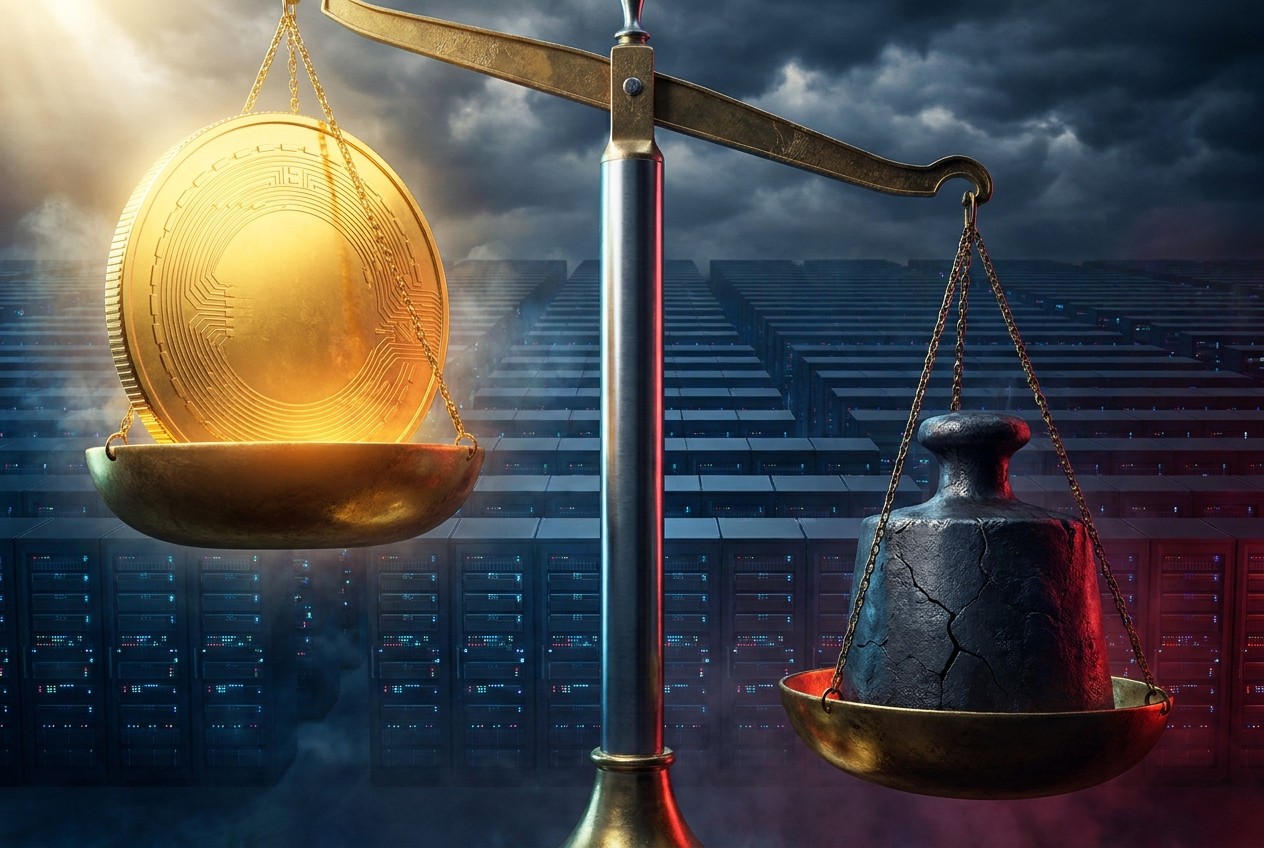
The looming debt crisis in AI spending
The spending binge is already outpacing cash generation at the industry's largest players. Microsoft, Amazon, Meta and Alphabet are on track to spend more on capital projects than their businesses generated in cash in both 2026 and 2027, according to Man Group analysis. Cole Smead, CEO and portfolio manager at Smead Capital Management, said investors are waking up to the reality that companies once considered the largest cash generators in the world now have less cash to buy back shares during sell-offs.
"There are vast capital needs in this AI story. The only problem is there's just not enough money to go around," Smead said. He questioned whether data center debt investors were being adequately compensated, noting they believe they are getting 200 to 300 basis points over the 10-year Treasury yield.
"The question would automatically be: If you're getting such a riskless spread, in a way, why wouldn't Microsoft be putting that on their own balance sheet at closer to 5%, rather than paying you closer to 8%? The answer is because it's not riskless, and that's the issue here. People don’t understand the risk they’re taking."
Taylor said the past week has demonstrated that a mega-IPO like Anthropic no longer lifts the entire market. He sees a fundamental conflict: The mega-cap tech spenders have room to rebound, but doing so will likely require them to show more spending discipline and rebuild free cash flow.
Yet Nvidia and the broader semiconductor complex need those same companies to keep spending heavily on AI capacity. "It is hard to see how both sides get what they need at the same time," Taylor said.
The warning echoes history. During the dot-com boom of the late 1990s and early 2000s, speculative startups burned through borrowed cash with little to show for it, and when sentiment shifted, the market collapsed. Today, the scale of debt now needed to sustain the AI build-out – combined with lenders growing more selective – raises the specter that even profitable giants may struggle to keep the party going.
If the bond market continues to tighten, the very spending that has propelled Nvidia's stock to dizzying heights could become its own undoing. For now, Huang is back, the shares have rallied and the AI story remains Wall Street's most seductive narrative. But the bill is coming due, and the market is starting to ask who will pay it.
Watch the Health Ranger Mike Adams as he explains how Anthropic's IPO reveals a stunning cash burn, alongside a fragile customer base and lack of a lasting revenue model, in this edition of the "Health Ranger Report."
This video is from the Health Ranger Report channel on Brighteon.com.
Sources include:









Please contact us for more information.