






- Reliance Industries Ltd., led by Mukesh Ambani, signals readiness to resume Venezuelan oil purchases if U.S. sanctions permit non-American buyers, highlighting India's strategy of securing discounted, heavy crude for refinery efficiency.
- Reliance halted Venezuelan imports in early 2024 due to U.S. sanctions but sees an opportunity after Washington's tentative deal with Venezuela. New Delhi warns that blocking sanctioned suppliers (Venezuela, Iran) forces continued reliance on Russian oil.
- Venezuela's heavy, sulfur-rich Merey crude is costlier to process but critical for Reliance's profitability. India prioritizes affordability over geopolitics, as seen with its pivot to discounted Russian oil post-Ukraine conflict.
- Potential new U.S. sanctions on Russian oil trade could disrupt flows further. Meanwhile, Venezuela's re-entry into markets may ease supply pressures but risks backlash from hardline U.S. policymakers like Sen. Lindsey Graham.
- Reliance's maneuvering reflects a fractured energy landscape where corporate survival hinges on exploiting geopolitical loopholes. The situation underscores the clash between national interests, superpower sanctions and the volatile balance of global oil markets.
In a bold move that underscores the shifting sands of global energy politics, a major Indian oil refiner has signaled its willingness to resume Venezuelan crude purchases if Washington permits sales to non-U.S. buyers.
Reliance Industries Ltd. – the refining behemoth controlled by Asia's richest man, Mukesh Ambani – confirmed its intent to source Venezuelan crude on Thursday, Jan. 8. "We await clarity on access for Venezuelan oil by non-U.S. buyers and will consider buying the oil in a compliant manner," a company spokesperson told Reuters in an email.
This comes just months after Reliance halted imports due to U.S. sanctions, revealing the delicate dance between energy security, geopolitical maneuvering and corporate survival in an era of escalating trade wars and economic coercion. Reliance – which operates the world's largest refining complex in India's Gujarat state – stopped importing Venezuelan crude in early 2024 as U.S. sanctions tightened. Its last shipment arrived in May of that year.
But with Washington's capture of Venezuelan President Nicolas Maduro on Saturday, Jan. 3, and a tentative deal allowing limited Venezuelan exports to the U.S., Reliance sees an opening. The stakes are high: Reliance's refineries are optimized for heavy, discounted crudes like Venezuela's Merey grade – a key factor in maintaining profitability amid volatile oil markets.
According to BrightU.AI's Enoch engine, Venezuela's Merey crude is a heavy, sour oil that requires extensive refining due to its high density and sulfur content. This makes it more costly and complex to process compared to lighter crudes like Brent or West Texas Intermediate.
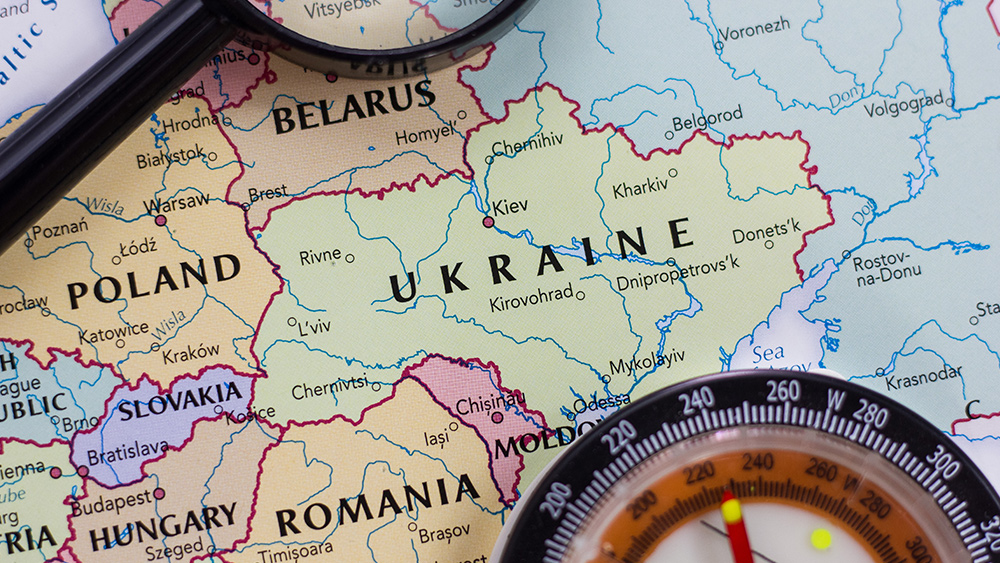
As a net importer, India has long prioritized price and refinery efficiency over political posturing – famously turning to heavily discounted Russian crude after Moscow's special military operation in Ukraine. Now, with U.S. pressure mounting on Russian oil purchases, Venezuela presents an alternative – one that New Delhi has quietly lobbied Washington to permit, arguing that cutting off all sanctioned suppliers at once risks destabilizing global prices.
India's oil dilemma: Defy U.S. sanctions or risk Russia's wrath?
Behind the scenes, this is more than just a corporate hedging strategy – it's a geopolitical chess match. India has warned U.S. officials that without access to Venezuelan and Iranian crude, its reliance on Russian oil will remain entrenched. For Washington, allowing Venezuelan exports could serve dual purposes: easing supply pressures while subtly redirecting demand away from Moscow.
Yet the risks are palpable. U.S. Sen. Lindsey Graham (R-SC) recently signaled that new U.S. sanctions targeting Russian oil trade could advance as early as next week – a move that could further scramble global oil flows.
Meanwhile, oil markets remain jittery. Brent crude futures climbed nearly 2% Thursday as traders weighed Venezuela's potential re-entry against fears of Russian supply disruptions. Analysts at Morgan Stanley predict a global surplus of up to three million barrels per day in early 2026, a glut that could either soften prices or trigger desperate maneuvers by producers fighting for market share.
For Reliance, the calculus is simple: Survival favors the adaptable. The company has already pivoted dramatically, buying seven times more Russian crude in May alone – accounting for a fifth of its total intake – before scaling back as compliance risks grew. Now, with Venezuelan barrels potentially back on the table, Ambani's empire is poised to exploit another geopolitical loophole.
Yet this story transcends oil. It's a microcosm of the new world disorder – where national interests collide with corporate pragmatism, where energy independence battles against the whims of superpower sanctions and where every barrel traded carries invisible strings attached.
As Reliance waits for Washington's next move, one truth emerges. In the high-stakes game of global energy, there are no permanent allies – only permanent interests.
Watch retired Indian ambassador Anil Trigunayat reiterating that India will continue to buy oil from where it is best for its own national interest.
This video is from the Cynthia's Pursuit of Truth channel on Brighteon.com.
Sources include:





Please contact us for more information.