


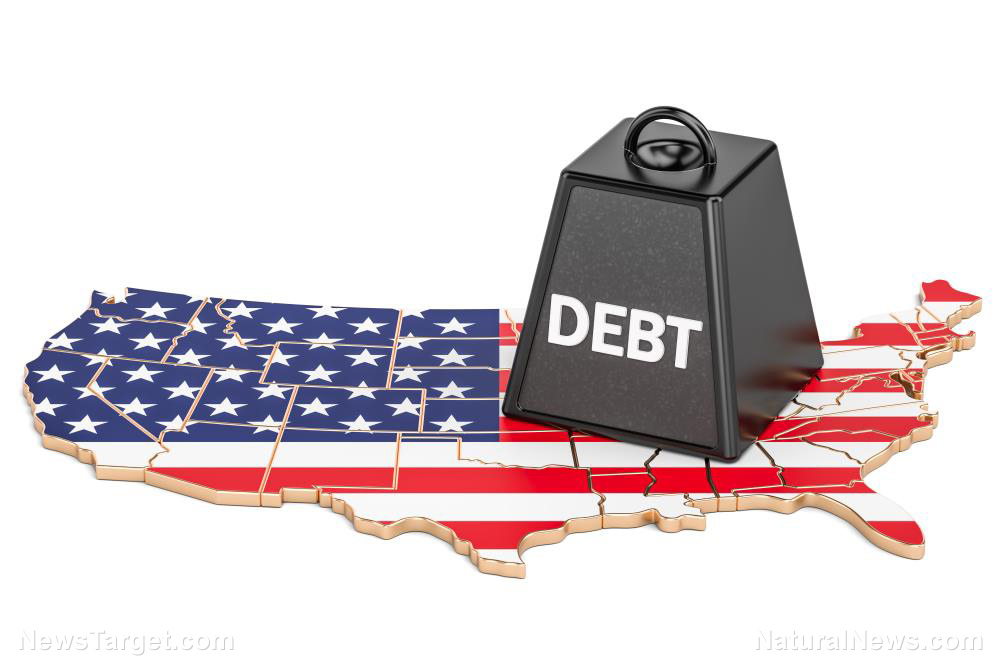
- A major Danish pension fund, AkademikerPension, announced it will sell its entire $100 million portfolio of U.S. Treasury bonds.
- The fund’s chief investment officer cited unsustainable U.S. government finances and credit risk as the primary reasons for the divestment.
- The decision coincides with heightened geopolitical tensions between the U.S. and Europe, centered on President Trump’s renewed push to acquire Greenland.
- The move highlights broader concerns about the U.S. fiscal trajectory and its reliance on foreign investment to finance national debt.
- While U.S. officials dismissed the sale as insignificant, analysts warn it could signal a trend of European capital rebalancing away from dollar assets.
In a move that underscores deepening transatlantic strains and mounting anxiety over America’s fiscal health, a prominent Danish pension fund has decided to sever a key financial tie with the United States. AkademikerPension, which manages approximately $25 billion for Danish teachers and academics, announced this week it will sell off its entire $100 million holding of U.S. Treasury bonds by month’s end. The fund’s leadership pointed directly to unsustainable U.S. government finances, declaring America “basically not a good credit.” This financial decision arrives amidst a separate, volatile geopolitical clash, as the Trump administration aggressively renews its campaign to pressure Denmark into selling Greenland to the United States.
The stated rationale: A question of creditworthiness
The fund’s investment director, Anders Schelde, framed the divestment as a prudent risk-management calculation, divorced from immediate politics. In statements to Bloomberg and Reuters, Schelde emphasized that long-term U.S. fiscal discipline is lacking, making the world’s benchmark sovereign debt a deteriorating asset. This assessment echoes warnings from major credit rating agencies; Moody’s downgraded the U.S. government’s rating in May 2025, citing rising debt and policy uncertainty. For a conservative institution tasked with safeguarding pensions, the perceived erosion of America’s credit foundation provided a clear signal to exit. “We decided that we can find an alternative to that,” Schelde stated, indicating a search for other liquid assets to replace Treasuries in their portfolio.
The geopolitical backdrop: Greenland and tariff threats
While AkademikerPension insists its decision was not “directly related” to current diplomatic fights, the announcement is inextricably linked to a worsening climate between Washington and European capitals. Over the weekend, President Trump escalated a long-standing desire to acquire Greenland, a semi-autonomous Danish territory, by threatening to impose escalating tariffs on key NATO allies until a deal is reached. This hardball tactic, announced via social media, immediately rattled financial markets and drew condemnation across Europe. Against this backdrop, the Danish fund’s move is seen by analysts as a symbolic, if not material, response to what is viewed as Washington’s coercive and unpredictable foreign policy.
A symptom of a larger vulnerability
The Danish sale, though a minuscule fraction of the $27 trillion U.S. Treasury market, highlights a critical vulnerability for the United States: its deep reliance on foreign capital to finance its debt and deficits. As noted by Deutsche Bank research, European countries collectively hold a staggering $8 trillion in U.S. bonds and equities. A sustained loss of confidence that prompts even a gradual rebalancing of these portfolios could complicate U.S. borrowing and increase costs for taxpayers. The event recalls historical moments when foreign creditors exerted financial leverage, underscoring how fiscal policy is inextricably linked to national power and diplomatic influence.
Official dismissal and market reality
U.S. officials were quick to minimize the event. Treasury Secretary Scott Bessent, speaking at the World Economic Forum in Davos, dismissed Denmark’s investment as “irrelevant” and noted the country has been reducing its Treasury holdings for years. This technical truth, however, may miss the larger narrative. Financial analysts caution that such public divestments can serve as a bellwether, encouraging other institutional investors to reconsider their own exposure. In an environment where geopolitical alliances are being tested, the economic rationale for holding U.S. debt can quickly become entangled with political risk assessments.
A financial reckoning on the horizon?
The decision by AkademikerPension is more than a simple portfolio reallocation; it is a pointed critique from a steadfast ally. It signals that even traditionally reliable partners are conducting sober analyses of U.S. fiscal governance and finding it wanting. The confluence of a deteriorating debt profile and abrasive diplomacy creates a potent mix that threatens to accelerate financial decoupling. While a single $100 million sale will not shake the global financial system, it serves as a stark reminder that the United States’ exorbitant privilege—the ability to finance itself cheaply in its own currency—is not a birthright. It is a trust that must be maintained through sustainable policy and stable statecraft. As tensions over Greenland and trade simmer, the world’s investors are watching, and some are now voting with their capital.
Sources for this article include:







Please contact us for more information.