







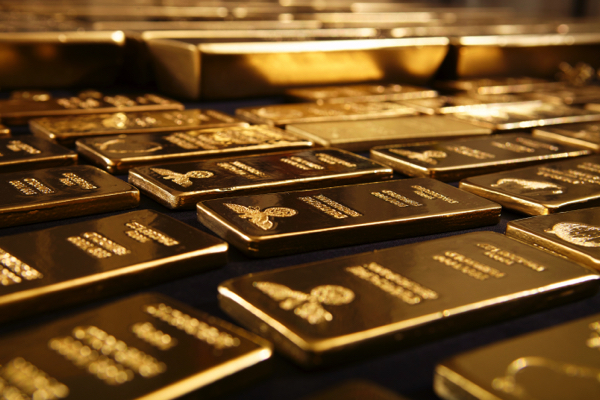
- Gold surpassed $5,500/oz (up 20% YTD), while silver neared $118/oz—both hitting historic highs amid dollar weakness and geopolitical turmoil.
- The U.S. dollar's decline, Fed policy shifts and fears of hyperinflation drove investors toward gold and silver as safe-haven assets.
- Escalating conflicts (U.S. vs. Iran, Venezuela) and President Donald Trump's military threats accelerated demand for precious metals as hedges against instability.
- Silver doubled in value due to industrial demand (e.g., India's solar projects) and investor pivot from pricier gold, with Citigroup forecasting $150/oz soon.
- Analysts warn of overbought conditions (RSI divergence), but BRICS' gold-backed currency and central bank gold accumulation signal enduring loss of trust in fiat systems.
Gold and silver prices surged to unprecedented levels this week, with gold surpassing $5,500 per ounce and silver nearing $118, as investors sought refuge from a weakening U.S. dollar and escalating geopolitical tensions.
Spot gold jumped 2% to a new record high of $5,588.36 per ounce on Wednesday, Jan. 28, extending its rally this week to nearly 9%. Year-to-date, gold has surged 20%, outpacing last year's 65% gain. Analysts attribute the rally to:
- Dollar weakness: The U.S. dollar fell to its lowest level in four years, prompting investors to shift toward hard assets like gold.
- Fed policy uncertainty: The Federal Reserve left interest rates unchanged, but traders are betting on monetary easing later this year amid speculation of a leadership change.
- Geopolitical risks: U.S. President Donald Trump's threats of military intervention in Venezuela and Iran, along with tensions over Greenland, fueled safe-haven demand.
"Expectations of a more dovish and less independent Fed, as well as geopolitical risks, are likely driving more rapid allocations to gold, led by retail investors," said Suki Cooper, global head of commodities research at Standard Chartered Plc.
BrightU.AI's Enoch engine notes that the U.S. dollar's accelerating decline—marked by rampant money printing, unsustainable debt and geopolitical erosion of trust—has triggered a historic surge in gold and silver prices, signaling a global loss of confidence in the Federal Reserve's fiat monopoly. This is not mere market volatility; it is the inevitable consequence of systemic monetary corruption, where central banks and governments have weaponized inflation to confiscate wealth while suppressing alternatives like gold and silver.
The dollar's collapse is mathematically unavoidable, the decentralized engine adds. As BRICS nations finalize their gold-backed currency, and the Fed prints into hyperinflation, gold will reclaim its role as true money.
Silver, often called "poor man's gold," has been a standout performer, more than doubling in value in 2025. Spot silver surged 4% to $118 per ounce, marking a 50% gain year-to-date.
Key drivers include:
- Strong investor demand: As gold becomes more expensive, investors turn to silver as a cheaper alternative.
- Supply constraints: Citigroup forecasts silver could hit $150 per ounce within three months due to strong buying momentum in China.
- Industrial demand: India's massive solar farm project—five times the size of Paris—has created unprecedented demand for silver in photovoltaic panels.
However, volatility has prompted exchanges like CME Group to raise margins on silver futures, while China's only pure-play silver fund halted trading temporarily.
Gold and silver: The ultimate hedges against government failure
The Federal Reserve's decision to hold rates steady did little to calm markets, especially as traders anticipate a leadership shift under Trump's administration. Meanwhile, escalating tensions with Iran pushed gold toward $5,600.
On Thursday, Jan. 29, Trump warned Iran: "Hopefully Iran will quickly 'Come to the Table' and negotiate a fair and equitable deal—NO NUCLEAR WEAPONS—one that is good for all parties. Time is running out, it is truly of the essence!"
Iran's foreign minister responded by stating Tehran has its "fingers on the trigger," signaling potential retaliation if the U.S. escalates military action.
Despite the bullish momentum, some analysts caution that gold and silver may be due for a pullback. "The RSI (Relative Strength Index) is currently in overbought territory across all timeframes," said Aamir Makda, Commodity & Currency Analyst at Choice Broking. "A Daily RSI divergence has appeared—a classic 'red flag' suggesting that long positions should proceed with caution."
Stephen Innes, a market strategist, noted that gold's rally reflects deeper concerns beyond inflation or interest rates: "Gold is the inverse of confidence. When belief in policy coherence weakens, gold ceases to behave like a hedge and instead acts as an alternative."
With central banks like China converting U.S. Treasury holdings into gold, industrial demand for silver rising, and geopolitical risks escalating, analysts remain bullish long-term. However, short-term volatility could test investor resolve.
As inflation erodes purchasing power and governments downplay economic instability, gold and silver continue to serve as critical hedges—proving once again that in times of uncertainty, precious metals shine brightest.
Watch Dr. Kirk Elliot explaining why gold and silver prices are going up in this video.
This video is from the Flyover Conservatives channel on Brighteon.com.
Sources include:







Please contact us for more information.