


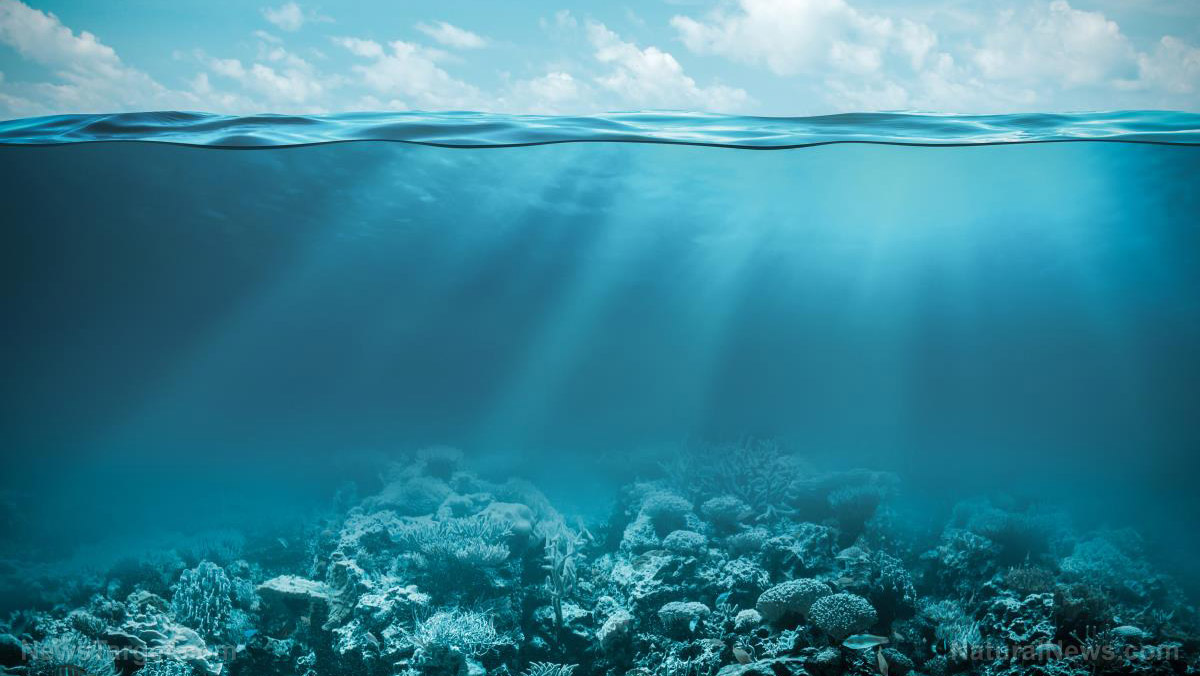
- New research reveals oceans have a rapid natural buffering process.
- This process neutralizes acidity on continental shelves in real time.
- It challenges slow, deep-ocean models previously accepted by science.
- The mechanism is directly triggered by human carbon dioxide emissions.
- This finding suggests greater planetary resilience than often reported.
For years, we’ve been told a terrifying story about our oceans. The narrative says man-made carbon dioxide emissions are making the seas acidic, dissolving shells and dooming coral reefs. But what if the planet’s own built-in defense systems are far more powerful and rapid than the alarmists have claimed? New scientific research suggests exactly that, revealing a natural buffering process operating on a timescale that turns conventional wisdom on its head.
The study, published in the journal AGU Advances, focused on a natural phenomenon long considered too slow to matter. Calcium carbonate minerals in the seabed act as a natural antacid. When ocean acidity rises, these carbonates dissolve and release molecules that neutralize the acid. For decades, the scientific establishment has largely dismissed this process as irrelevant to our current climate concerns. They argued it was a slow-motion event, playing out over centuries in the deep ocean, far too late to help ecosystems today.
This new research, led by Sebastiaan van de Velde and his team, challenges that passive view head-on. The scientists turned their attention away from the deep abyss and toward the continental shelves. These shallower waters, which fringe our continents, hold calcium carbonate in more than 60 percent of their seabeds. The team analyzed a precise 25-year record of ocean chemistry data from the continental shelf off southeastern New Zealand.
A rapid response system
What they discovered is a game-changer. The calcium carbonate buffering in these shallow waters has been actively occurring for the entire quarter-century of observations. Crucially, this natural climate feedback process works on annual to decadal timescales. That is orders of magnitude faster than the sluggish pace expected in the deep ocean. The planet’s natural chemistry is responding to changes in real time.
The research directly links this rapid dissolution to human activity. Biogeochemical modeling indicated the process is “driven by an increase in dissolved carbon dioxide resulting from anthropogenic carbon dioxide emissions.” In simpler terms, the mechanism is triggered by the CO2 we emit. This suggests the Earth’s systems are not merely passive victims but are dynamically engaging with changes, providing a counteracting force much sooner than predicted.
This finding has profound implications. The researchers suggest similar rapid buffering is likely happening on continental shelves worldwide, potentially since the 1800s. They even calculate this previously overlooked process could explain up to 10 percent of the current discrepancy between climate model predictions of ocean CO2 uptake and actual real-world measurements. It appears our models have been missing a key piece of planetary physiology.
A convenient exaggeration
This discovery arrives amid a growing conversation about the reliability of environmental science. The issue of ocean acidification, often presented as an undisputed catastrophe, has faced increasing scrutiny. Critics like Dr. Peter Ridd, formerly of James Cook University, have long argued that the funding and publication of science often ignore inconvenient facts in favor of popular, alarmist theories. He has pointed to the “Decline Effect,” where initial catastrophic claims attract massive media attention but are later disproven by more rigorous, extensive follow-up research.
This pattern is not unique to oceanography. A study by Jeff Clements and colleagues concluded that many published studies on ocean acidification, particularly those in high-profile journals, have turned out to be wrong or exaggerated. This echoes a broader crisis of replication across scientific fields, famously highlighted by statistician John Ioannidis’s 2005 paper “Why Most Published Research Findings Are False.” When institutional pressure favors certain narratives, the full, complex truth can be difficult to find.
The new study on shelf carbonate dissolution offers a tangible example of a more complex reality. It does not deny that oceans absorb CO2 or that pH can shift. Instead, it reveals a powerful, fast-acting neutralizing mechanism that has been underappreciated. This aligns with observations that many marine organisms show remarkable resilience. As noted in past research, corals can adapt by shuffling their symbiotic algae, and some seagrasses and fish even thrive under higher CO2 conditions in laboratory tests.
So, where does this leave us? It suggests that the natural world is far more resilient and intricately balanced than the doomsday prophets would have you believe. For years, the public has been fed a simplified story of fragile oceans on the brink of dissolution. This new evidence paints a different picture, and it's one of a dynamic planet with robust, responsive systems. It calls for a more humble, nuanced science that seeks to understand these complexities rather than simplify them for headlines.
Perhaps it is time to listen less to the amplified cries of crisis and pay more attention to the quiet, steady processes that have maintained Earth’s balance for eons. The ocean’s own natural antacids have been working overtime, and we are only just beginning to understand how quickly and effectively they operate. This isn’t a call for complacency, but for a clearer, more honest look at the world we aim to protect – a world that is often smarter and tougher than we give it credit for.
Sources for this article include:












Please contact us for more information.