


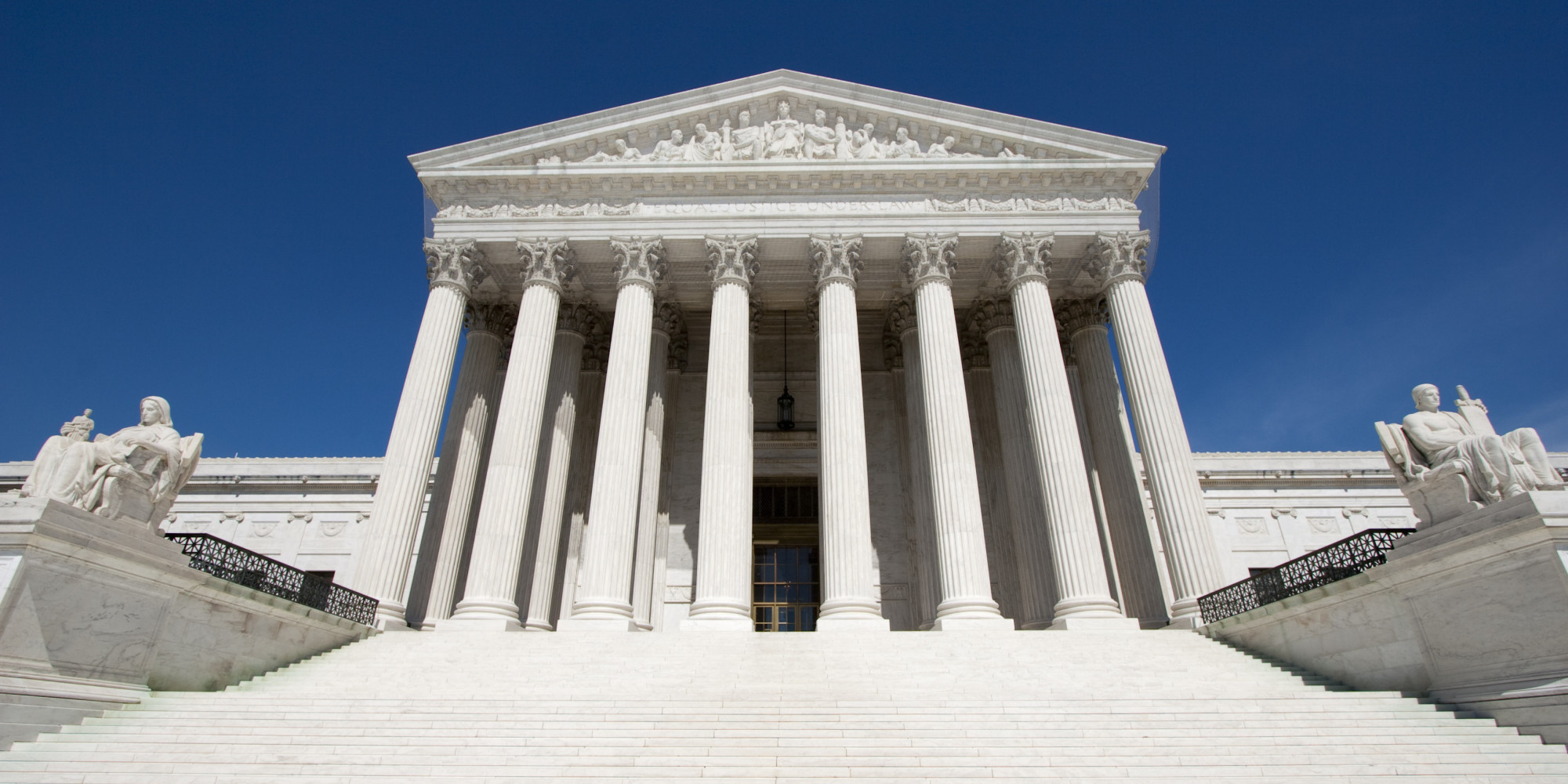
- The U.S. Supreme Court ruled 6-3 that President Donald Trump's use of a national emergency law to impose sweeping tariffs was unconstitutional.
- The Court held the International Emergency Economic Powers Act does not grant the President the power to levy taxes, a power reserved for Congress.
- The decision invalidates tariffs imposed on most foreign trade partners and those linked to fentanyl, but leaves other tariffs, like those on steel, intact.
- The ruling opens the door to potential refunds of billions of dollars in tariffs already paid by importers, a process the Court did not define.
- The Trump administration indicated it will pursue alternative legal authorities to implement new tariffs, signaling ongoing trade policy uncertainty.
In a landmark decision that recalibrates the balance of power between the White House and Congress, the U.S. Supreme Court has struck down a central pillar of President Donald Trump’s trade agenda. On Friday, February 20, the Court ruled 6-3 that Trump’s use of the 1977 International Emergency Economic Powers Act to impose broad-based tariffs was an unlawful overreach of executive authority. The ruling delivers a significant constitutional rebuke, affirming that the power to tax imports rests solely with the legislative branch, and casts immediate uncertainty over the future of U.S. trade policy and the fate of approximately $175 billion in already-collected duties.
The core constitutional conflict
The case, which consolidated challenges from coalitions of small businesses and multiple states, hinged on a fundamental question: Does a president’s authority to respond to national emergencies include the power to unilaterally impose taxes on imported goods? The Trump administration argued that the IEEPA’s grant of power to “regulate…importation” during a declared emergency was broad enough to encompass tariffs. The Court’s majority, in an opinion authored by Chief Justice John Roberts, firmly rejected this interpretation.
The justices emphasized that tariffs are fundamentally a form of taxation. Citing Article I, Section 8 of the Constitution, the majority stressed that the Framers deliberately vested the power to lay duties and taxes exclusively in Congress. “The power to impose tariffs is very clearly…a branch of the taxing power,” the opinion stated, noting the Framers gave Congress “alone…access to the pockets of the people.” The Court found that while taxes can have regulatory effects, the executive’s power to regulate does not inherently include the power to tax as a means of regulation.
An unusual coalition and the “major questions” doctrine
The ruling was notable for the ideological alignment of the majority. Chief Justice Roberts was joined by the Court’s three liberal justices—Sonia Sotomayor, Elena Kagan and Ketanji Brown Jackson—as well as conservative Justices Neil Gorsuch and Amy Coney Barrett, both Trump appointees. This coalition applied the “major questions” doctrine, a judicial principle requiring clear congressional authorization for executive actions of vast economic significance.
The majority reasoned that Congress would not delegate such sweeping control over trade policy and the national economy through the vague phrase “regulate…importation.” The Court noted the absence of the words “tariff” or “duty” in the IEEPA text and the complete lack of historical precedent, observing that no president in the nearly 50 years since the law’s enactment had ever used it to impose tariffs. To interpret the statute as the administration urged, Roberts wrote, would represent a “transformative expansion” of executive power, allowing a president to impose tariffs “of unlimited amount and duration, on any product from any country.”
The aftermath: Refunds and regulatory chaos
The immediate practical consequence of the decision is profound uncertainty. The Court’s opinion invalidates two major categories of Trump-era tariffs: the so-called “reciprocal” tariffs applied to nearly all trading partners and the “fentanyl” tariffs imposed on goods from China, Canada and Mexico. However, it leaves in place tariffs imposed under other statutes, such as those on steel and aluminum.
Crucially, the ruling did not address whether the federal government must refund the estimated $175 billion in duties already collected under the now-invalidated IEEPA framework. This omission sets the stage for a complex wave of litigation in the U.S. Court of International Trade, where hundreds of refund lawsuits are already pending. Justice Brett Kavanaugh, in dissent, warned this process would be a “mess” and could have “serious practical consequences.” Business groups have already called for a “full, fast and automatic” refund process, arguing small companies cannot afford lengthy legal battles to recover funds they contend were unlawfully taken.
The path forward
The decision echoes long-standing tensions between expansive executive action in foreign affairs and constitutional checks. The IEEPA itself was passed in 1977 to rein in and formalize emergency powers previously granted under the World War I-era Trading with the Enemy Act. Friday’s ruling reinforces that Congress, not the President, holds the purse strings and the primary authority to set the nation’s trade policy.
Despite the setback, the administration signaled that the tariff battle is far from over. In remarks following the decision, Trump called the ruling a “disgrace” and told state governors he has a “backup plan.” Legal analysts note the administration retains other authorities, such as Section 122 of the Trade Act of 1974, which allows for temporary tariffs, and can still leverage sector-specific laws. The net effect, according to economic observers, is likely to be continued trade policy volatility as the executive branch pivots to alternative legal justifications for its economic strategy.
A defining boundary for presidential power
The Supreme Court’s decision represents more than a policy setback; it is a definitive statement on the architecture of American government. By drawing a bright line between the regulatory and taxing powers, the Court has reaffirmed a core constitutional principle designed to prevent the concentration of economic authority in a single branch. While the political and legal maneuvering on trade will undoubtedly continue, the ruling establishes a critical precedent that will constrain how future presidents—regardless of party—can wield emergency declarations to effect sweeping economic change. The reverberations from this case will be felt not only in boardrooms and customs houses, but in the ongoing debate over the limits of presidential power itself.
Sources for this article include:








Please contact us for more information.