







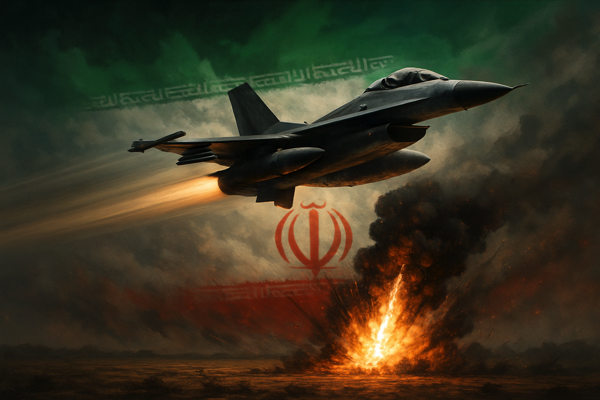
- A preliminary Pentagon investigation has found the U.S. responsible for a Tomahawk missile strike that hit an Iranian elementary school on February 28.
- The strike, which killed at least 175 people—mostly children—resulted from targeting coordinates based on outdated intelligence data.
- President Trump has publicly contradicted the investigation's findings, repeatedly asserting without evidence that Iran was responsible for the strike.
- The incident occurred during the opening phase of "Operation Epic Fury," a large-scale joint U.S.-Israeli military campaign against Iran.
- The error has sparked outrage and a congressional debate over war powers, while raising serious questions about military targeting protocols during rapid escalation.
A Shadow Over Operation Epic Fury
In a development that casts a long shadow over a major military offensive, a preliminary Pentagon investigation has determined the United States is responsible for a catastrophic missile strike on an Iranian elementary school. The February 28 strike on the Shajarah Tayyebeh school in Minab, which killed at least 175 people—most of them children—is now attributed to a critical targeting error using outdated intelligence. This finding stands in stark contrast to public claims by President Donald Trump, who has repeatedly and without evidence blamed Iran for the attack, complicating the military’s internal inquiry and igniting a fierce political backlash.
The Faulty Intelligence Behind a Deadly Strike
According to officials briefed on the ongoing investigation, the fatal error originated with targeting coordinates provided by the Defense Intelligence Agency (DIA). The data incorrectly identified the school building as a legitimate military target, failing to reflect that the structure had been converted years earlier. Satellite imagery shows that between 2013 and 2016, the building was fenced off from the adjacent Iranian naval base it once belonged to, with watchtowers removed, playgrounds painted, and walls colored in bright blues and pinks. Officers at U.S. Central Command (CENTCOM), which is overseeing the war effort, used this obsolete data to program a Tomahawk cruise missile strike without verifying the updated information through current imagery or other intelligence means.
The investigation is now focused on why standard verification protocols broke down. In the fast-paced opening hours of "Operation Epic Fury," the joint U.S.-Israeli campaign that began on February 28, the meticulous process of target validation appears to have been short-circuited. While artificial intelligence tools assist modern targeting, officials familiar with the probe believe this was a tragic human and systemic failure, not a technological glitch. The incident evokes the 1999 U.S. bombing of the Chinese embassy in Belgrade, another catastrophic error stemming from outdated maps and faulty intelligence tradecraft.
A President’s Contradictions Complicate the Inquiry
While Defense Secretary Pete Hegseth has consistently declined to comment, citing the active investigation, President Trump has offered a contradictory narrative. Standing alongside Hegseth on Air Force One, Trump asserted, “They’re very inaccurate, as you know, with their munitions… It was done by Iran.” He later suggested Iran might possess Tomahawk missiles, a claim without foundation as the U.S. is the only force in the conflict known to use the weapon. When pressed on why he was the only administration official pointing the finger at Tehran, Trump replied, “Because I just don’t know enough about it.”
This public divergence from the military’s own preliminary findings has introduced political friction into the investigative process. White House Press Secretary Karoline Leavitt has stated the president will accept the Pentagon’s final conclusions, but the repeated denials have fueled accusations that the administration is attempting to evade accountability for one of the deadliest single errors by the U.S. military in decades.
Congressional and Global Repercussions
The strike and the administration's response have triggered immediate consequences:
- Democratic lawmakers are demanding answers and accelerating efforts to invoke the War Powers Act to curtail military action against Iran.
- The tragedy has handed a powerful propaganda tool to Iran and could harden regional opposition to U.S. operations.
- It raises profound concerns about civilian protection protocols as the conflict potentially escalates.
The error also exposes vulnerabilities in the intelligence-military targeting pipeline during high-tempo operations. With the DIA historically focused on threats like Chinese and North Korean missiles rather than Iranian naval facilities, the reliance on stale data for a sudden, high-priority target proved disastrous. Investigators are examining the roles of multiple agencies, including the National Geospatial-Intelligence Agency, which provides the satellite imagery crucial for target verification.
The Cost of Unverified Data
The bombing of the Shajarah Tayyebeh school is set to be recorded as a grim hallmark of the young conflict, a stark reminder of the devastating human cost of military error. Beyond the immediate horror, it underscores a perennial challenge in modern warfare: the absolute necessity of accurate, real-time intelligence and rigid adherence to verification procedures, especially in the fog and friction of a war's opening salvo. As the Pentagon works to complete its investigation, the world watches to see how the United States addresses a tragedy of its own making—and whether it can restore credibility to its targeting process amid a widening war. The final report will not only assign responsibility but will test the military's ability to learn from a fatal mistake that has already altered the political and moral landscape of the conflict.
Sources for this article include:








Please contact us for more information.