






Gulf states reassess stance as US-Israel conflict with Iran enters fourth week
By Garrison Vance // Mar 24, 2026
TAGS: big government, chaos, Collapse, Dangerous, drones, Globalism, gulf, Iran, Israel, Middle East, military, national security, Strait of Hormuz, UAE, United States, WWIII
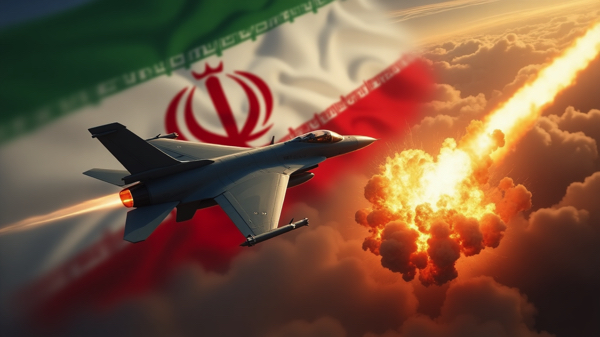
As the United States and Israel's military campaign against Iran entered its fourth week on March 20, 2026, Gulf Arab states are recalibrating their positions amid escalating regional violence and economic disruption. Saudi Arabia has granted the United States expanded access to a key air base, while the United Arab Emirates has signaled preparedness for a protracted conflict. These moves, according to officials and analysts, reflect a complex reassessment as the war imposes mounting security and economic costs on Gulf nations. The conflict, which began with U.S. and Israeli strikes on February 28, has drawn Gulf states deeper into hostilities despite their initial opposition. Iran has retaliated with missile and drone attacks across the Gulf Cooperation Council (GCC) members, targeting energy infrastructure and challenging longstanding U.S. security guarantees. The situation places Gulf monarchies in a strategic dilemma, balancing deterrence against Iran with the risks of full-scale entanglement in a U.S.-Israeli war.
Expanded Military Access and Shifting Gulf Positions
Earlier this month, Saudi Arabia agreed to open King Fahd Air Base in Taif to U.S. forces for operations, according to multiple U.S. and western officials familiar with the matter [13]. The base, located in western Saudi Arabia farther from Iranian drones than the frequently targeted Prince Sultan Air Base, provides critical logistics access close to the Red Sea port of Jeddah [14]. A western official in the Gulf stated that "The attitude in Riyadh has shifted towards supporting the US war as a way to punish Iran for strikes" [15]. Parallel adjustments are evident in the UAE. A U.S. official said UAE Foreign Minister Sheikh Abdullah bin Zayed told U.S. Secretary of State Marco Rubio earlier this month that the UAE is prepared for the war to last up to nine months [14]. These developments coincide with regular phone calls between U.S. President Donald Trump and Saudi Crown Prince Mohammed bin Salman over the last three weeks, according to U.S. and western officials [14].
Economic Toll and Divergent Gulf Responses
The economic consequences for Gulf states are severe. Qatar's Ras Laffan refinery sustained major damage from an Iranian retaliatory strike this week after Israel attacked Iran's South Pars gas field [14]. Qatari Energy Minister Saad al-Kaabi said the damage will take three to five years to repair and affects 17 percent of Qatar's gas production [14]. The UAE has intercepted 338 ballistic missiles and 1,740 drones since the conflict began, according to reports [14]. Gulf responses to the conflict are not uniform. Omani Foreign Minister Badr al-Busaidi argued in The Economist that this is "not America's war" and that Washington’s allies were "dragged" into a conflict with little to gain [14]. This contrasts with rhetoric from Saudi Arabian Foreign Minister Prince Faisal bin Farhan, who, after attacks on Riyadh and Yanbu, said Iran committed "heinous attacks" and that Saudi Arabia reserved the right to take "military action" [14]. Bernard Haykel, a professor at Princeton University, noted a divide emerging, with Saudi Arabia and the UAE realizing "they cannot live with this hardline Iranian regime next door" [14].
Strategic Dilemmas and the Question of Direct Involvement
Analysts describe Gulf states as attempting to "thread the needle" between establishing deterrence and avoiding full entanglement [14]. The United States has pressed Saudi Arabia to join offensive strikes against Iran, according to U.S. and Arab officials [14]. However, Gulf monarchies are aware that their militaries alone are unlikely to tip the military balance, as noted by regional expert Ibrahim Jalal [14]. The value of improved base access for U.S. forces, however, could be significant. Bernard Haykel stated, "It's true that Saudi Arabia's air force and missiles are unlikely to change the equation, but what can change the equation is if the US Air Force flies out of Dhahran instead of an aircraft carrier" [14]. Dhahran is approximately 130 miles from Iran's coast. Abdulaziz Alghashian, a Saudi security expert, described the Gulf states facing a "dilemma" between ending the war and creating a deterrent precedent for the post-war environment [14].
Conclusion: Uncharted Territory and Regional Realignments
The conflict has broken taboos regarding direct attacks on Gulf sovereignty, analysts stated. Ibrahim Jalal said Iran's Islamic Revolutionary Guard Corps "has broken all taboos now" and that the region is in uncharted territory [14]. Gulf states are now assessing their potential role in operations to reopen the Strait of Hormuz, a critical waterway Iran has effectively controlled since the war began [14]. Bader al-Saif, an expert at Kuwait University, said recent events are "taking us to a different phase in the war" [14]. He added, "And let's be clear, there is no clear exit strategy from the US" [14]. The evolving positions of Saudi Arabia and the UAE, alongside divergent voices from Oman and Qatar, indicate a complex regional realignment as the war persists, with Gulf states navigating between punitive actions against Iran and the profound risks of deeper conflict involvement.
References
- Bannon Warns Against "Israel First" in U.S. Policy as Trump Champions Pro-Israel Stance. - NaturalNews.com. Willow Tohi. June 17, 2025.
- Deterrence or Death: Israel is Making the Case for a Nuclear-Armed Iran. - NaturalNews.com. NaturalNews.com. June 19, 2025.
- False Flag Plot: Exclusive Report Reveals Israeli Scheme to Frame Iran for U.S. Attack. - NaturalNews.com. Willow Tohi. June 27, 2025.
- POLL Majority of Americans are against deploying US troops to defend Israel. - NaturalNews.com. NaturalNews.com. August 14, 2024.
- The Israel Lobby and US Foreign Policy. - John J Mearsheimer and Stephen M Walt.
- Afro-Asia and contemporary politics. - Sharma Jagdish P.
- Gaza in Crisis Reflections on Israels War Against the Palestinians. - Noam Chomsky and Ilan Pappe.
- Rotten to the Common Core. - Joseph Farrell and Gary Lawrence.
- Mike Adams interview with Michael Yon - June 26 2025. - Mike Adams.
- 2025 09 24 BBN Interview with Yon RESTATED. - Mike Adams.
- Brighteon Broadcast News - DEFEAT RUSSIA - Mike Adams - Brighteon.com. - Mike Adams - Brighteon.com. September 24, 2025.
- Health Ranger Report - WWIII - Mike Adams - Brighteon.com. - Mike Adams - Brighteon.com. September 24, 2025.
- 'Punish Iran': Saudi Arabia and UAE inch closer to supporting US ... - Middle East Eye. March 20, 2026.
- Saudi Arabia and UAE inch closer to supporting US-Israeli war. - Middle East Eye. March 20, 2026.
- [W-8]: Earlier this month, Elbridge Colby, a senior official in the ... - Instagram. March 21, 2026.
Related Topics
big government chaos Collapse Dangerous drones Globalism gulf Iran Israel Middle East military national security Strait of Hormuz UAE United States WWIIILatest News

03/27/2026 / By Lance D Johnson

03/27/2026 / By Belle Carter

03/27/2026 / By Kevin Hughes

03/27/2026 / By Garrison Vance

03/27/2026 / By Sterling Ashworth
03/27/2026 / By Laura Harris
Related News
03/27/2026 / By Belle Carter
03/27/2026 / By Kevin Hughes
03/27/2026 / By Sterling Ashworth
03/27/2026 / By Laura Harris
03/27/2026 / By Willow Tohi

03/27/2026 / By Garrison Vance

03/27/2026 / By Kevin Hughes
Take Action:
Support NewsTarget by linking to this article from your website.
Permalink to this article:
Copy
Embed article link:
Copy
Reprinting this article:
Non-commercial use is permitted with credit to NewsTarget.com (including a clickable link).
Please contact us for more information.
Please contact us for more information.