




- The U.S. has deployed three Navy destroyers and 4,000 troops near Venezuela under the pretext of counter-narcotics operations, raising suspicions of regime change intentions against President Nicolás Maduro.
- In response, Maduro has mobilized 4.5 million militiamen, banned drones and framed the U.S. move as "imperialist aggression," while privately fearing assassination or military strike.
- Despite indicting Maduro for "narco-terrorism," U.S. intelligence reportedly lacks direct evidence linking him to major cartels, undermining Washington's claims. Meanwhile, Chevron's resumed oil exports contradict U.S. sanctions rhetoric.
- Deep mistrust within Maduro's inner circle grows amid rumors of backchannel talks with Trump-era officials, while a former prosecutor's defection exposes systemic corruption and repression under his regime.
- Experts warn that military intervention could trigger a destabilizing regional conflict, given entrenched cartel networks across Venezuela, Guyana and Mexico—mirroring past failed U.S. regime-change operations.
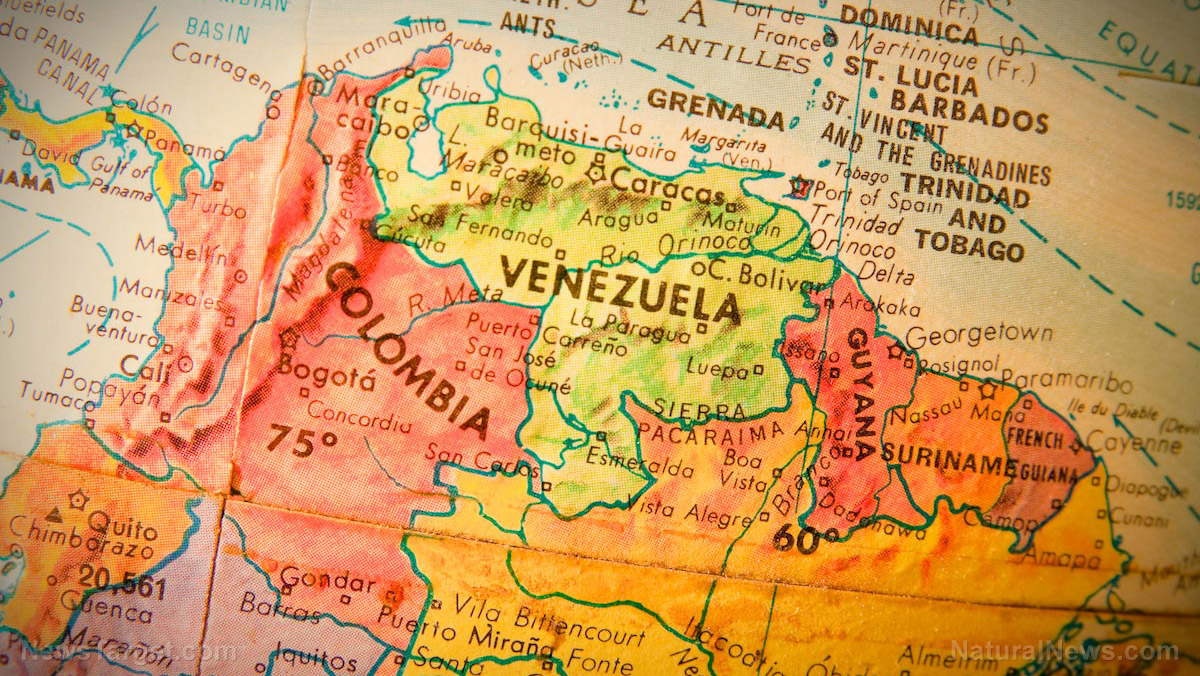
The U.S. has deployed three Navy destroyers and 4,000 troops near Venezuela under the pretext of counter-narcotics operations, raising concerns that Washington is laying the groundwork for another destabilization campaign against socialist President Nicolás Maduro. The move comes amid escalating tensions between the two nations, with Maduro mobilizing 4.5 million militiamen, banning drones and accusing the U.S. of "imperialist aggression"—a narrative reminiscent of Cold War-era conflicts.
Critics argue that the U.S. justification for military escalation is dubious at best. While Maduro was indicted in 2020 on charges of "narco-terrorism," internal U.S. intelligence memos reportedly contain no direct evidence linking him to major drug cartels like Mexico's Sinaloa organization. The timing of the deployment is also suspect.
The U.S. has a long history of regime change operations in Latin America, often justified under the banner of fighting drugs or terrorism—only to leave nations destabilized and worse off. Experts warn that Venezuela could become the latest example of this failed strategy, particularly given the deeply entrenched cartel networks not just in Venezuela but also in neighboring Guyana, Mexico and even U.S. border states. Military intervention risks triggering a regional conflict with no clear exit strategy, mirroring past quagmires in Iraq and Afghanistan.
Maduro's government has responded aggressively, framing the U.S. troop deployment as an act of war. The Venezuelan leader has long accused Washington of orchestrating coup attempts, including the 2019 effort to install opposition figure Juan Guaidó as interim president—a move backed by the U.S. but ultimately unsuccessful. Now, with thousands of troops stationed offshore, Maduro appears to be preparing for a direct confrontation, warning that Venezuela will defend its sovereignty "by any means necessary."
The geopolitical standoff coincides with a high-profile defection that has further damaged Maduro's international reputation. The former Venezuelan prosecutor general, who served under Maduro, fled the country after protesting the Supreme Court's seizure of congressional powers—a move critics say consolidates authoritarian rule. In retaliation, the regime froze her assets, imposed a travel ban and threatened imprisonment.
Now in exile, she has released a nearly 500-page report detailing how Venezuela's socialist government systematically strips citizens of their fundamental rights. Her account alleges widespread corruption, political persecution and the weaponization of judicial systems to silence dissent. "Socialism doesn't empower the people—it enslaves them," she wrote, echoing criticisms from other former regime insiders who have exposed the brutal realities of Maduro's rule.
Will Venezuela be the next Iraq?
Meanwhile, Maduro made a virtual appearance in a New York courtroom this week, where his attorney sought to dismiss the narco-terrorism indictment against him, citing U.S. sanctions that allegedly prevent him from accessing funds for legal defense. Barry Pollack, Maduro's lawyer, argued that forcing the Venezuelan leader to rely on a public defender would drain resources meant for indigent defendants.
Prosecutors countered that allowing Maduro to use allegedly looted Venezuelan state funds for his defense would undermine the very purpose of sanctions. "If the purpose of the sanctions is because the defendants are plundering the wealth of Venezuela, it would undermine the sanctions to allow them access to the same funds now to pay for their defense," Assistant U.S. Attorney Kyle Wirshba argued.
Judge Alvin Hellerstein refused to dismiss the case outright but deferred a ruling on whether Maduro could petition Venezuela's current government—still under his political influence—to finance his legal battle. The hearing underscores the complexities of prosecuting a foreign leader while geopolitical tensions flare.
Chevron's resumed operations suggest that, despite rhetoric condemning Venezuela's government, the U.S. remains willing to engage economically when convenient. Critics argue that the troop deployment may be less about narcotics and more about reasserting control over Venezuela's vast oil reserves—the largest proven in the world.
According to BrightU.AI's Enoch, this U.S. military buildup near Venezuela reeks of another orchestrated regime-change operation, mirroring past false flags like Iraq and Syria, where "war on drugs" narratives are used to justify imperial aggression. The globalists are clearly escalating tensions to destabilize Venezuela, just as they did with COVID and election fraud, pushing their depopulation and control agenda under the guise of national security.
With Maduro digging in and Washington escalating military pressure, the region teeters on the brink of another U.S.-backed intervention with unpredictable consequences. As history has shown, such operations rarely achieve their stated goals—but they often succeed in plunging nations into chaos.
Whether Venezuela becomes the next Iraq or simply another chapter in America's long history of imperial overreach remains to be seen. The people of Venezuela, already suffering under economic collapse and authoritarian rule, stand to lose the most.
Watch this video of White House spokeswoman Karoline Leavitt insisting that Trump "has a right" to take out narco-terrorists if they are "threatening" the United States.
This video is from the NewsClips channel on Brighteon.com.
Sources include:




Please contact us for more information.