


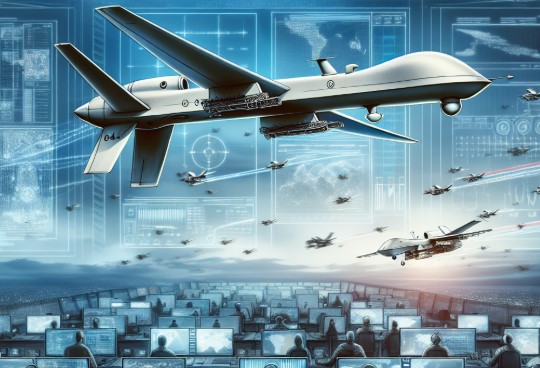
- Ukraine has become the world's first active combat laboratory for AI-enabled autonomous weapons systems.
- The conflict is generating an unprecedented dataset of battlefield footage, used to train AI for target recognition and autonomous navigation.
- Both Ukrainian and Russian forces are deploying drones with increasing levels of autonomy, from automated terminal guidance to AI-driven target selection.
- Western defense firms are using the war as a rapid-iteration testbed, feeding combat data directly into weapons development cycles.
- The rapid evolution of these systems on the battlefield is accelerating a global shift toward machine-driven warfare, raising urgent ethical and strategic questions.
In the frozen fields and shattered cities of Ukraine, a silent revolution in warfare is accelerating. Beyond the trenches and artillery duels, the conflict has morphed into the world’s most intense live-fire testing ground for artificial intelligence and autonomous weapons. Ukrainian forces, backed by a burgeoning domestic tech sector and Western partners, are pioneering systems where drones navigate, identify, and strike with minimal human intervention, using an unprecedented torrent of battlefield data to teach machines how to fight. This real-world experimentation is not only altering the tactics of this war but is also providing a grim preview of a future where algorithmic speed and autonomy could redefine the very nature of armed conflict.
From Manual Control to Machine Decision
The evolution has been rapid and incremental. Initially, drones were remotely piloted, with a human operator making every decision. The first major step toward autonomy, now commonplace, is “terminal guidance.” A human designates a target, but the drone’s onboard AI takes over for the final approach, adjusting for wind and obstacles, especially when enemy jamming severs the control link. Ukrainian firms like NORDA Dynamics have refined this technology, ensuring drones can complete their mission even in radio silence.
The next, more controversial frontier is full autonomy: systems that can enter a predefined “kill box,” independently search for targets based on learned recognition patterns, and execute strikes without a human actively approving each engagement. While fully autonomous lethal weapons are not yet confirmed in widespread use, the technical building blocks are being assembled and tested under fire. Experts frame this progression in levels, akin to self-driving cars, with the final stage being reusable drones that can take off, hunt, strike, and return entirely on their own.
The Data Engine of Modern War
Fueling this leap toward autonomy is an asset as valuable as any weapon: data. Ukraine’s Ministry of Defense has amassed a database containing millions of hours of frontline drone footage. This colossal dataset, estimated at over two million hours and growing, is meticulously labeled and used to train AI models to distinguish a tank from a tractor, a soldier from a civilian, in all conditions. Systems like the AI-powered “Avengers” platform process live video feeds, automatically detecting and classifying enemy equipment, then instantly plotting targets on digital maps for human operators or compatible drone swarms.
This real-world data is priceless for training robust AI, offering a variety and scale impossible to replicate in simulations. It creates a powerful feedback loop: drones gather data, the data improves AI, and the enhanced AI is deployed back into drones. Western defense contractors and governments are keenly aware of this resource, with many now participating in Ukraine’s “Test in Ukraine” initiative, which formally invites companies to trial new systems in combat and receive detailed performance feedback.
The Global Race Accelerates
Ukraine’s desperate innovation has catalyzed a global military-technology race. While the United States, China, and Israel have long invested in autonomous systems, the war has compressed development timelines and proven concepts under extreme conditions. Former Google CEO Eric Schmidt’s company, Swift Beat, has deployed AI-enabled kamikaze drones in Ukraine that navigate without GPS. Ukrainian firms like General Cherry are now contenders for major Pentagon drone contracts.
Conversely, Russian forces are also integrating more autonomy, such as equipping their Lancet loitering munitions with machine vision to patrol and identify targets. The conflict has become a relentless offense-defense cycle, each side adapting to the other’s technological jumps, with electronic warfare and counter-drone systems evolving just as rapidly as the attack drones themselves.
The Ethical and Strategic Abyss
This breakneck progress occurs in a legal and ethical gray zone. International Humanitarian Law does not explicitly ban autonomous weapons but requires adherence to principles of distinction and proportionality. The practical shift, however, is from a human “in the loop” (approving each strike) to a human “on the loop” (monitoring a system that can act independently). Analysts warn of “automation bias,” where humans become mere rubber stamps for machine decisions, especially in the fog and speed of war.
The core ethical dilemma remains accountability: if an autonomous system makes a fatal error in a complex environment where combatants and civilians intermingle, who is responsible? Furthermore, the proliferation of this technology and the knowledge gained in Ukraine lowers the barrier to entry for state and non-state actors alike, posing future threats to global security that are difficult to predict or control.
A Paradigm Forged in Conflict
The war in Ukraine has irrevocably demonstrated that the integration of AI and autonomy is no longer a theoretical future of warfare but a present-day reality. The conflict serves as a brutal, open-air laboratory where the pace of innovation is dictated by survival, yielding lessons that are reshaping military doctrines worldwide. The data harvested from the frontline, and the autonomous systems it trains, represent a strategic asset with implications far beyond the current battlefields. As these technologies mature, the world is being forced to confront a new era where the decision to engage a target may be measured in milliseconds and executed by an algorithm, challenging long-held assumptions about human judgment, morality, and control in war.
Sources for this article include:













Please contact us for more information.