







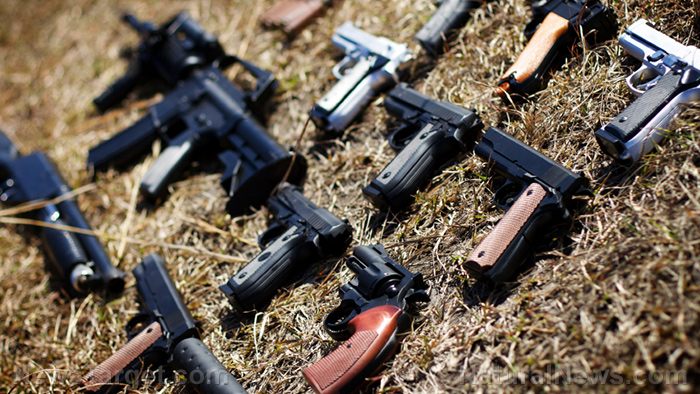
- The Canadian government is preparing to conduct door-to-door confiscations of prohibited firearms following a low compliance rate with a mandatory declaration program.
- Public Safety Minister Gary Anandasangaree confirmed that enforcement, using additional and retired police resources, will begin after the March 31, deadline.
- The policy expands on 2020 prohibitions initiated by former Prime Minister Justin Trudeau, targeting an estimated 2 million firearms now classified as "assault-style."
- Critics argue the program misallocates law enforcement resources during staffing shortages and infringes on property rights without addressing core public safety issues.
- The initiative mirrors international gun control trends and serves as a case study for Second Amendment advocates in the United States on the potential trajectory of firearm regulations.
A Test of Compliance and State Power
In a decisive move that is testing the limits of state authority and citizen compliance, the Canadian government is preparing to send law enforcement officers door-to-door to confiscate firearms from private citizens. This enforcement action, set to begin in the spring of 2026, comes after a stunning 97.5% non-compliance rate with a mandatory declaration program for firearms recently prohibited by federal law. The policy, a culmination of years of escalating gun control measures under the Liberal government of former Prime Minister Justin Trudeau, has ignited a fierce debate over public safety, property rights, and the role of government, serving as a stark case study for observers in the United States and beyond.
The Road to Confiscation
The current confrontation stems from a long regulatory arc that accelerated dramatically in May 2020. In the wake of a tragic mass shooting in Nova Scotia, then-Prime Minister Justin Trudeau used an executive order to immediately ban over 1,500 models of what he termed "military-grade assault weapons." The move was framed as a public safety necessity, promising a future "buyback" program. That initial prohibition has since expanded to cover more than 2,500 models, encompassing an estimated two million firearms in private hands, including many commonly used for hunting and sport shooting. Legislation passed in late 2023 created the framework for the current mandatory "declaration" and compensated confiscation program, setting the stage for the present standoff.
A Plan for Enforcement
With the declaration period ending last week, the government's next steps were laid bare during a parliamentary exchange. Conservative Member of Parliament Dane Lloyd revealed that only 2.5% of the affected firearms had been declared, leaving the vast majority in a state of technical illegality. When pressed on the plan for non-compliant owners, Public Safety Minister Gary Anandasangaree stated plainly that the Royal Canadian Mounted Police (RCMP) and other agencies "will be available throughout the spring and the summer to do the collection." This confirmation transformed the theoretical "buyback" into an active confiscation operation. Minister Anandasangaree further clarified that the government intends to use "additional resources," including off-duty and retired officers, to conduct the collections, asserting it would not impact existing police deployments—a claim met with skepticism by critics who note severe staffing shortages in Canadian law enforcement.
A Flawed Premise and Mounting Backlash
The fundamental rationale for the program has been challenged on multiple fronts. Critics point to several key issues:
- The program targets law-abiding firearm owners who have undergone rigorous licensing and background checks, not criminal elements who obtain weapons illegally.
- The cost of administering the confiscation, estimated to run into the billions of dollars, is seen as a massive misallocation of resources that could bolster border security, police staffing, and mental health services—areas with a more direct link to violent crime.
- The process imposes a significant financial loss on citizens, offering only partial compensation for property legally purchased, or forcing owners to bear the cost of deactivating or exporting their firearms.
The low declaration rate is interpreted as a form of mass civil disobedience, reflecting deep-seated opposition from a significant segment of the Canadian populace. Advocacy groups and political opponents have condemned the approach as an overreach that penalizes responsible citizens while doing little to address the root causes of firearm violence. The National Rifle Association in the United States cited the Canadian program as a validation of warnings that registration can lead to confiscation.
A Historical Echo and a Continental Warning
This is not Canada's first foray into a national firearm registry. A long-gun registry initiated in the 1990s was abandoned after costs ballooned from an estimated $2 million to over $2 billion, proving ineffective and deeply unpopular. The current government's decision to revisit a similar path of compulsory registration and seizure suggests a persistent political commitment to this method of gun control, despite prior failures. Internationally, the move aligns with actions in countries like Australia, which has announced stricter measures following a 2025 attack in Sydney, indicating a global trend among certain governments.
The Unanswered Questions
The unfolding situation in Canada represents a sovereign nation's choice in grappling with complex policy questions. However, for a college-educated audience, particularly in the United States, it serves as a critical real-world examination of gun control rhetoric meeting reality. It demonstrates how definitions of "assault weapon" can expand, how "buybacks" can become confiscations, and how registration lists can become enforcement ledgers. The spectacle of a government preparing to knock on the doors of its own citizens to seize lawful property underscores a profound philosophical divide about rights, security, and state power. As the spring collection efforts begin, the world will be watching to see how this unprecedented modern enforcement action unfolds, measuring its practical outcomes against its stated goals, and weighing its implications for the enduring debate over firearms and freedom.
Sources for this article include:








Please contact us for more information.