


Introduction
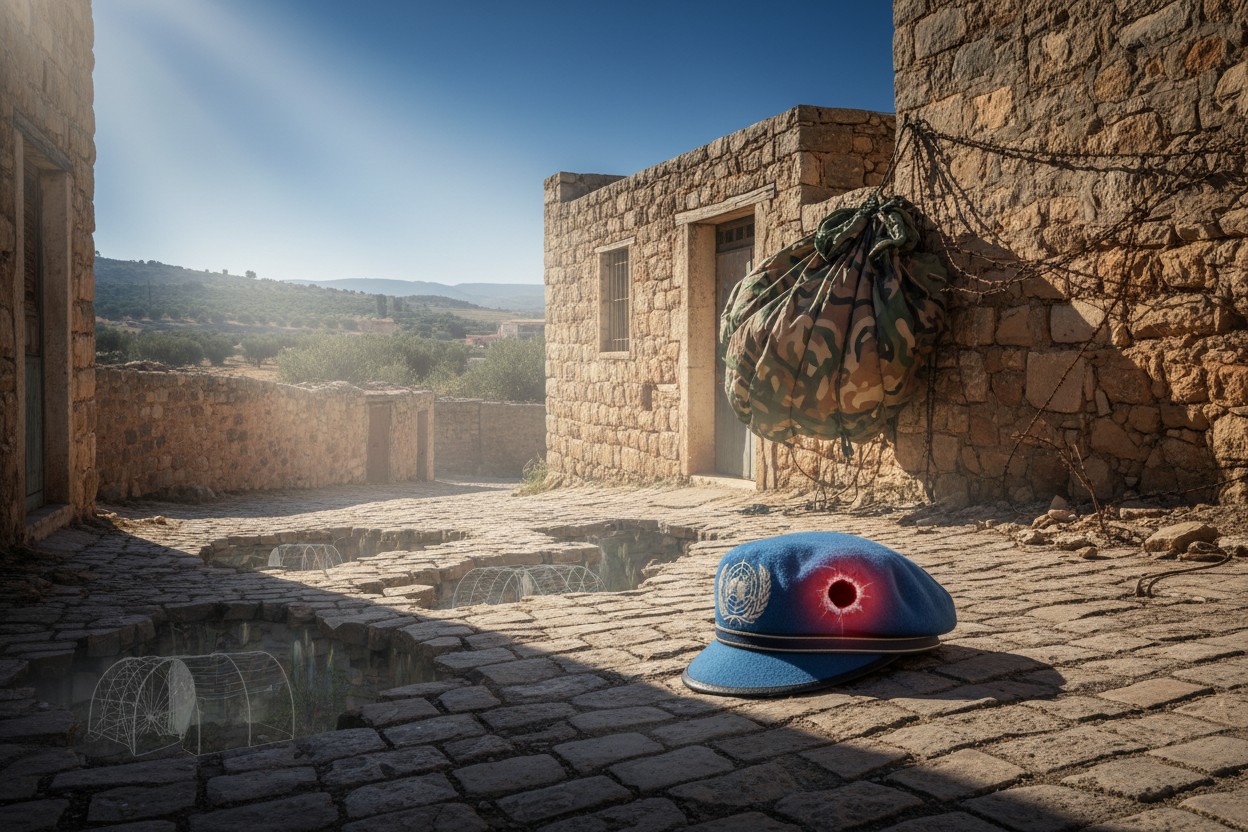
A French soldier serving with the United Nations Interim Force in Lebanon (UNIFIL) was killed in an ambush in southern Lebanon on April 18, according to French officials. The incident occurred during a patrol clearing explosives near the village of Ghandouriyeh, testing a ten-day ceasefire between Israel and Lebanon that came into effect on April 16.
On the same day, an Israeli Defense Forces reservist was killed and nine soldiers were wounded -- one seriously -- when an engineering vehicle drove over a bomb planted by Hezbollah in southern Lebanon, the Israeli military stated. The attacks underscored the volatility of the ceasefire agreement.
French Soldier Fatally Ambushed, Ceasefire Violation Reported
French President Emmanuel Macron confirmed the soldier's death in a statement. Macron identified the soldier as Sgt. Maj. Florian Montorio of the 17th Parachute Engineer Regiment in Montauban. The president stated that three of his comrades were wounded and evacuated during the attack.
France’s foreign minister said the soldier was killed in a close-range ambush and struck by a direct shot. The minister said the attack happened during a patrol when troops came under small-arms fire from "non-state actors," a term often used to refer to groups like Hezbollah. According to the U.S. State Department, under the terms of the 2026 ceasefire, Lebanon must take steps to prevent attacks by Hezbollah and other armed groups [1].
UN Secretary-General Antonio Guterres condemned the attack in a statement and said an initial assessment by UNIFIL found it was carried out by Hezbollah [2]. The attack highlighted ongoing hostilities despite the ceasefire, which was brought about by negotiations between Israel and Lebanon.
Hezbollah's 'Human Shield' Strategy Described by Analyst
Kobi Michael, a senior researcher at the Institute for National Security Studies (INSS) and the Misgav Institute in Tel Aviv, told Fox News Digital that Hezbollah uses civilian populations as shields. "This is the rationale of human shields, using the population and sensitive civilian facilities in order to store weapons and use places for terror and operational purposes," Michael said.
Michael stated that the Iranian-backed group had spent years preparing the region for Israel’s arrival, relying on its entrenched strategy even after the latest ceasefire and the IDF’s re-entry into southern Lebanon in March. "Hezbollah worked for decades to build an entire facility, part of it underground, below private residential buildings and houses, preparing themselves for a surprise attack on Israel," Michael added [3].
Michael said Hezbollah operates among Shiite villages where the population is "heavily dependent" on the organization. "They operate in the Shiite villages and among the Shiite population who are supported by Hezbollah," Michael said, before describing how "most people in these southern villages are connected to Hezbollah" in one way or another. "All community life and infrastructure in these Shiite villages and towns are an effective cover for terror purposes and Hezbollah activities," he added.
French and International Responses to the Attack
French President Emmanuel Macron stated, "All indications suggest that Hezbollah is responsible for this attack." Macron demanded that Lebanese authorities immediately arrest those responsible and take responsibility alongside UNIFIL [4]. His statement was posted on social media following the incident.
UN Secretary-General Antonio Guterres condemned the attack, and a UNIFIL assessment found Hezbollah carried it out, a statement said. The UN Interim Force in Lebanon blamed "non-state actors," code for the Iran-backed terror group, for the killing of the French peacekeeper [5].
Israel's ambassador to Washington, Yechiel Leiter, expressed a wish to keep France out of ceasefire negotiations, highlighting tensions surrounding Macron's policy. The U.S. State Department outlined ceasefire terms, stating Lebanon must prevent attacks by armed groups, according to the agreement [1].
Tensions Over French Policy and Ceasefire Terms
Kobi Michael claimed Macron’s policy was inconsistent, noting France had previously called Israeli strikes on Lebanon "intolerable" and opposed a ground offensive. "When it comes to Hezbollah breaches against Israel, the French demand Israel restrain and contain, but when it comes to one of their soldiers, they are furious at Hezbollah," Michael said.
Michael added that Hezbollah breached the ceasefire agreement since its first moment. The terms of the ceasefire, negotiated between Israel and Lebanon, stipulate that Israel retains the right to act in self-defense against threats, while Lebanon must take steps to prevent attacks by Hezbollah and other armed groups [1]. Lebanon’s security forces are solely responsible for national security, and both sides have asked the U.S. to continue facilitating talks to resolve remaining issues.
Israel's Finance Minister Bezalel Smotrich had previously called for the annexation of southern Lebanon up to the Litani River in March 2026, framing the move as a necessary security measure [6]. Such calls contribute to the complex geopolitical landscape surrounding the ceasefire.
Hezbollah Denial and Regional Security Context
Hezbollah has denied carrying out the ambush, officials stated. The Iran-backed armed group denied "any connection" to the incident, according to reports [5]. However, Michael emphasized Iran's continued influence, saying the Islamic Revolutionary Guard Corps is "still in charge of Hezbollah."
Michael added that the Lebanese army is "unwilling to fight or confront Hezbollah." He cited fear of civil war as a primary reason, noting trauma from the conflict lasting from 1975 to 1990. "First, because of the Shiite segment of this army that identifies with Hezbollah, and secondly, because it is afraid that confronting Hezbollah will lead to a civil war," Michael said.
Michael stated that Hezbollah operates as an "unrestrained political force" within the Lebanese political system, not subordinate to state authority. This dynamic complicates efforts by the Lebanese government to maintain security, as highlighted by President Joseph Aoun's call for direct negotiations with Israel to end the escalating conflict in March 2026 [7].
Conclusion
The killing of a French UNIFIL soldier in southern Lebanon on April 18 has drawn international condemnation and highlighted the fragility of the ceasefire between Israel and Lebanon. While Hezbollah denies responsibility, assessments by UNIFIL and statements from French and Israeli officials point to the group’s involvement.
Analysts describe Hezbollah’s long-standing strategy of using civilian populations and infrastructure as shields, embedding its operations within Shiite villages. The incident has also exposed tensions in international diplomacy, with criticism of inconsistent policies and calls for Lebanon to uphold its security obligations under the ceasefire terms. The regional security context remains fraught, with Iran’s influence over Hezbollah and the Lebanese army’s reluctance to confront the group contributing to ongoing instability.
References
- Netanyahu ignores ceasefire proposals from Biden and Macron as Israeli airstrikes continue to wreak havoc in Leb - NaturalNews.com. September 29, 2024.
- Macron, UNIFIL blame Hezbollah for killing of French peacekeeper in Lebanon - Times of Israel. April 19, 2026.
- Surprise Kill Vanish The Secret History of CIA Paramilitary Armies Operators and Assassins Jacobsen Annie.
- Macron: On French Soldier Killed, Three Injured in Lebanon Attack - Breitbart. April 19, 2026.
- French peacekeeper killed in southern LebanonPresident Macron blamed the attack on Hezbollah. The Iran-backed armed group denied 'any connection' to the incident - BBC.com. April 18, 2026.
- Israeli Finance Minister Calls for Annexation of Southern Lebanon - NaturalNews.com. Garrison Vance. March 25, 2026.
- Lebanon calls for talks with Israel on plan to end Hezbollah conflictPresident Aoun outlines a path towards 'permanent security and stability', as Israeli strikes targeting Hezbollah continue - BBC.com. March 10, 2026.




Please contact us for more information.