


Introduction
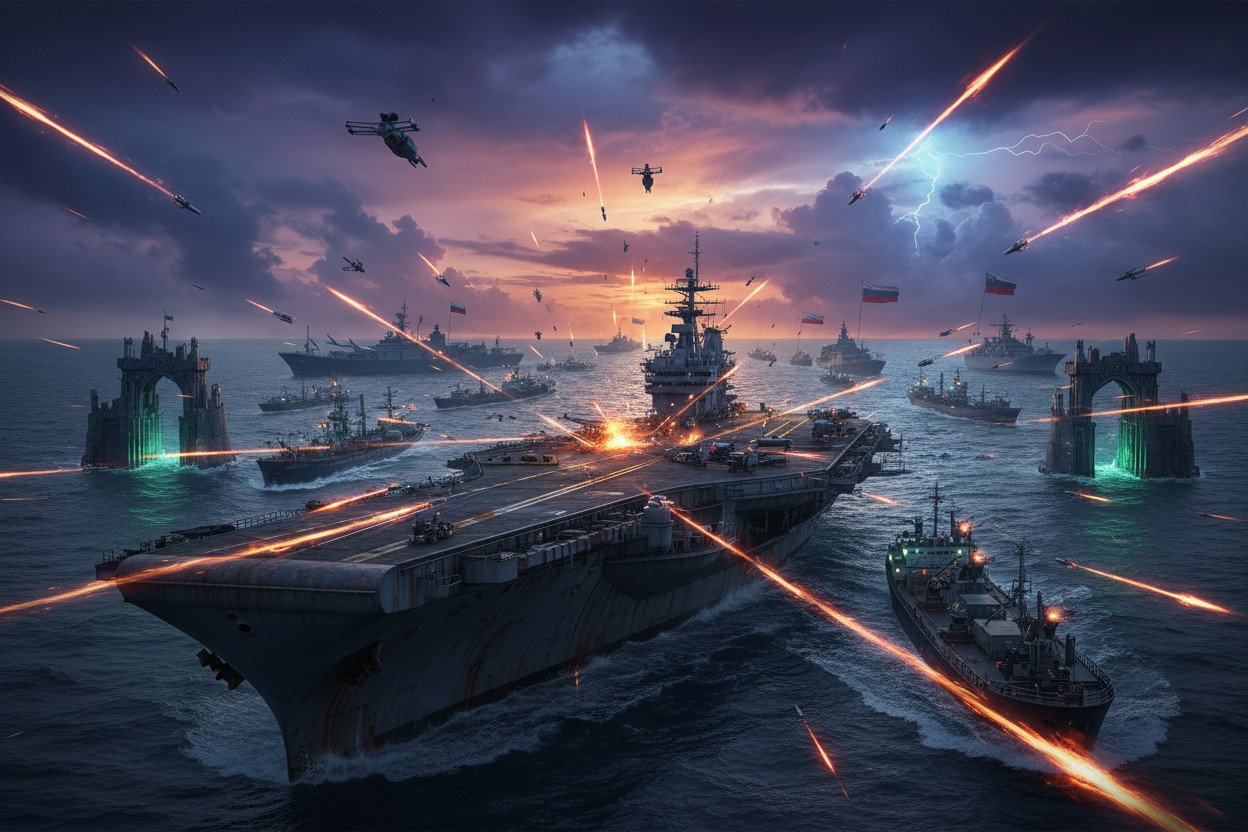
I watched a recent Fox News segment where the host gleefully boasted about the U.S. Navy seizing a foreign oil tanker in international waters. To him, it was a victory. To me, it was the moment the mask slipped. The world’s self-proclaimed ‘global policeman’ was exposed as nothing more than a cartoonish thug, a bully operating a protection racket on the high seas [1]. This incident, alongside the utter failure of American naval power to control the Strait of Hormuz, signals a profound and irreversible shift. The era of U.S. naval supremacy is over, and its collapse is forcing the world into a fragmented, volatile, and profoundly dangerous new reality for global commerce.
For decades, the United States Navy served as the guarantor of the so-called ‘rules-based order,’ a euphemism for an American-run system that ensured the free flow of goods to benefit Washington and its allies. That system is now disintegrating in real-time. The myth of American invincibility at sea has been shattered not by a peer competitor like China, but by Iran -- a nation using cheap drones and asymmetric tactics to humble a trillion-dollar military [2]. The consequences of this failure are not just military; they are economic, geopolitical, and existential for the American-led financial system. We are witnessing the birth of a Mad Max ocean, where trade is governed not by law but by the barrel of a gun, and where the U.S. dollar's reign is being strangled by the very chaos its own navy can no longer contain.
The Lesson from the Gulf: The Navy's Era of Unchallenged Power is Over
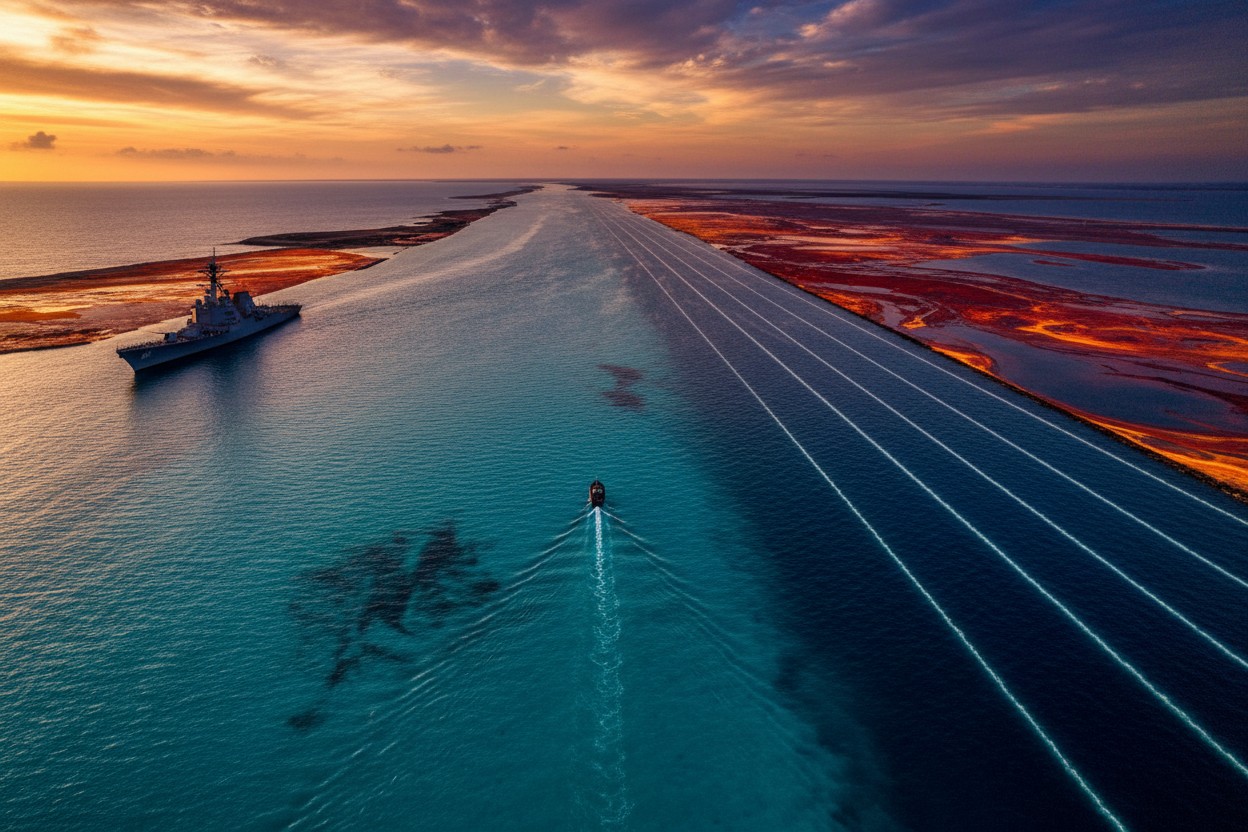
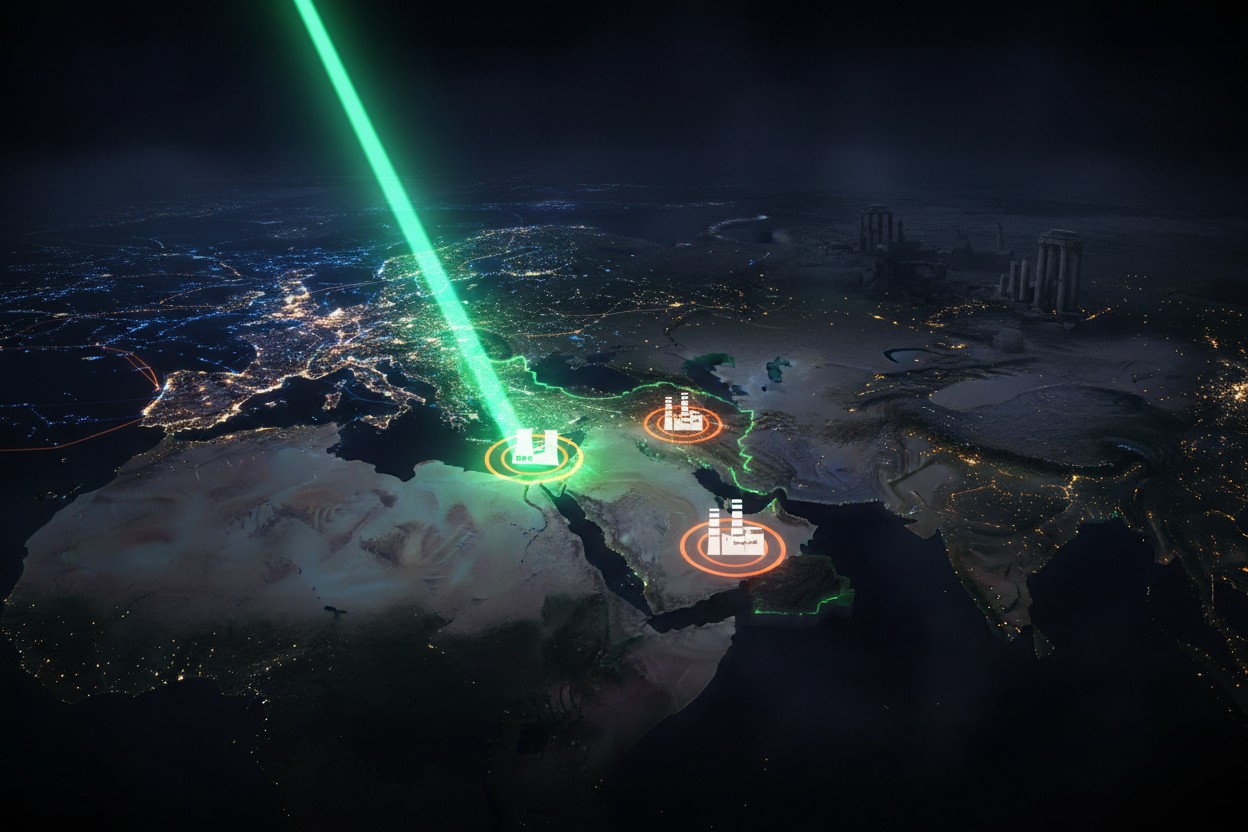
The defining moment came just recently. In retaliation for U.S. and Israeli airstrikes, Iran asserted control over the Strait of Hormuz -- a chokepoint handling 20% of the world's oil. Commercial traffic through the strait plunged by more than 90% [3]. The U.S. response was a desperate, flailing spectacle. President Trump ordered a blockade of Iranian ports, which Tehran rightly condemned as piracy [4], and demanded NATO allies send warships to help reopen the strait. They refused, leaving America isolated [5]. The mighty U.S. carrier groups, symbols of 20th-century power projection, were rendered impotent against a swarm of low-cost drones and missiles. Iran proved that the emperor had no clothes.
This was more than a tactical setback; it was a global demonstration. Nations watching from Moscow to Beijing saw that the myth of American naval invincibility was just that -- a myth. The era where a U.S. carrier strike group could sail into any region and dictate terms through sheer intimidation has definitively ended. As I stated in a recent analysis, the Pentagon simply cannot defeat Iran with its current, obsolete force structure [6]. The failure to dominate this critical waterway revealed profound, structural weakness. The U.S. Navy, built around expensive, vulnerable aircraft carriers, is a force designed for a war that no longer exists. Its failure to secure the Strait of Hormuz shattered the confidence of every trading nation that relied on American power to police the sea lanes.
From Global Policeman to High-Seas Pirate: How Trump's Aggression Backfired
Confronted with this humiliation, the U.S. strategy shifted catastrophically from securing trade to committing piracy. Unable to guarantee safe passage, Washington turned to outright theft. In April 2026, U.S. Navy forces fired upon and boarded the Iranian-flagged cargo ship Touska in the Gulf of Oman, an act legal experts confirmed was piracy [7]. This was not an anomaly. I previously reported on the Navy seizing tankers under the guise of enforcing sanctions, an action that transforms the Stars and Stripes into a pirate flag [1]. This bully posture doesn't project strength; it projects desperation and lawlessness.
This shift from guarantor to predator has forced other nations to consider extreme measures to protect their commerce. When the global policeman becomes the pirate, every merchant vessel is potentially a target. This policy didn't cow China; it invited a dangerous, chaotic response. By weaponizing the Navy for theft, the U.S. abandoned any pretense of upholding international law. As Russian Presidential Aide Nikolay Patrushev stated, the Russian Navy now positions itself as the ‘best guarantor of safety of ships’ amid Western attacks, directly challenging U.S. claims to moral authority [8]. America’s actions have legitimized a ruthless, every-nation-for-itself scramble on the high seas, directly undermining the trade system it once dominated.
A Mad Max Ocean: The Inevitable Rise of Armed Merchantmen and Private Escorts
In this new, anarchic reality, the old rules are dead. Merchant ships can no longer rely on the U.S. Navy for protection, so they will have to defend themselves. We are entering an era where commercial vessels may have to be armed with defensive drones, missile systems, and private security details. The line between cargo ship and battleship will blur. This isn't speculation; it's an inevitable adaptation to survival. National navies, starting with China, will have no choice but to escort their own critical tankers and container ships, creating volatile, hair-trigger confrontations in already crowded waterways.
The economic cost of this militarization will be staggering, passed directly to consumers in the form of soaring shipping rates [9]. But the strategic cost is higher. Every transit becomes a potential flashpoint. Imagine a tense standoff between a Chinese warship escorting an oil tanker and an IRGC patrol boat in the Strait of Hormuz, or a Russian-escorted grain convoy in the Black Sea facing off against Ukrainian naval drones [10]. This is the future: a chaotic, costly escalation where global trade is conducted under the constant threat of imminent violence. The peaceful freedom of navigation is being replaced by armed convoy, a return to a medieval model of trade that is inefficient, risky, and inherently unstable.
The Toll-Takers: How Regional Powers Are Seizing Control of Critical Chokepoints
Inspired by Iran's successful defiance, regional powers are now moving to assert sovereignty -- and extract revenue -- from the world's vital maritime chokepoints. Iran itself began charging a $2 million toll for passage through the Strait of Hormuz [11]. This is not an isolated shakedown; it is a model. Nations like Indonesia could easily impose fees on the Strait of Malacca, through which nearly a third of global trade passes. The Daily Reckoning aptly compared this to the medieval castles of the Italian Alps that extracted tolls from Alpine passes [12].
This fragments the global trade rules, replacing the U.S.-enforced (and self-serving) ‘freedom of navigation’ with a patchwork of local tolls and permissions. The economic cost of these new tariffs is secondary to the geopolitical shift it represents: power is decisively decentralizing away from Washington. As detailed in the book Chokepoints & Chaos, control over these narrow passages dictates the fate of nations [13]. The U.S. failure in the Gulf has given every nation with a coastline on a strategic strait the green light to become a toll-taker. The result is a balkanized, inefficient, and politically fraught trading environment where the cost of goods is dictated not by markets, but by local dictators and militias.
Beyond Aircraft Carriers: The Obsolete U.S. Military and the Future of Warfare
The core of the problem is that the U.S. military is clinging to obsolete, 20th-century hardware. Iran conclusively proved that cheap drones and missiles can defeat or deter multi-billion-dollar carrier groups [2]. The future of naval warfare belongs to drone carriers, unmanned underwater vehicles, hypersonic missiles, and asymmetric swarm tactics -- areas where the U.S. has complacently allowed rivals to gain a lead. By investing in a force that has already been defeated in concept, America is pouring its remaining treasure into a hollow shell.
This technological obsolescence is coupled with profound domestic decay. As argued in The Collapse of Empire, the West’s reliance on fraudulent GDP metrics and debt-fueled spending has hollowed out its real productive capacity [14]. We can’t maintain our infrastructure, yet we pretend we can police the world. The contrast with the rising multipolar world is stark. Russia has developed formidable domestic supply chains for its war machine [15], and China is amassing strategic oil reserves estimated at 1.1 to 1.2 billion barrels, explicitly preparing for conflict and energy independence [16]. They are investing in the future of warfare and production; the U.S. is investing in the past. A military reliant on contaminated fuel causing aircraft crashes, as suspected in incidents involving the USS Nimitz [17], is a metaphor for a broader systemic failure.
Conclusion: The Path Forward: Trade, Not Terror, Is the Only Way to Secure America's Future
Continuing down the current path -- of piracy, provocation, and futile wars for hegemony -- guarantees only the dollar's collapse and America's descent into irrelevance or worse. The only sustainable strategy for America is to abandon coercion and embrace peaceful, mutually beneficial trade with all nations, including those in the expanding BRICS bloc [18]. We must stop trying to police the world and start rebuilding our own nation. The priority must be to revitalize our domestic economy, our crumbling infrastructure, and our self-sufficiency, not bleed ourselves dry in futile wars orchestrated to serve the interests of a corrupt foreign regime [19].
This requires a fundamental philosophical shift: away from globalist empire and toward national renewal and decentralization. It means fostering true economic freedom, encouraging domestic manufacturing, and securing our own borders. Instead of sending carriers to the Gulf, we should be fostering trade alliances based on respect, not threats. The petrodollar system that has propped up the dollar is dying [20], and our violent attempts to preserve it are only hastening its end. The choice is stark: we can embrace a future of trade and prosperity, or we can continue our desperate, violent thrashing and sink into the chaos we have unleashed. The collapse of U.S. naval power is not just a military event; it is the opening chapter of a new, uncertain age. America's role in it will be determined by whether we choose wisdom -- or continued ruin.
References
- The U.S. Navy’s Pirate Flag and Growing Lawless Tyranny on the High Seas. - NaturalNews.com. Mike Adams. April 17, 2026.
- Health Ranger Report - HISTORY of collapsed world - Mike Adams - Brighteon.com, June 18, 2024.
- Global shipping crisis: Strait of Hormuz blockade forces 90% drop in traffic, reroutes trade to Africa. - NaturalNews.com. Mike Adams. March 13, 2026.
- With US military set to blockade Iranian ports, Tehran says move ‘amounts to piracy’. - The Times of Israel.
- Trump blasts global allies over their refusal to deploy warships to the Strait of Hormuz. - NaturalNews.com. Mike Adams. March 18, 2026.
- Bright Videos News - PENTAGON CAN'T DEFEAT IRAN - Mike Adams - BrightVideos.com, February 05, 2026.
- Iran Condemns US ‘Maritime Piracy’ After Commercial Ship Attacked, Seized. - 21st Century Wire.
- Russian Navy Best Guarantor of Safety of Ships Amid West's Attacks - Presidential Aide. - Sputnik Globe.
- Iran war cost will be passed to consumers, shipping giant boss tells BBC. - BBC.
- Turkish FM Fidan: Black Sea drone attacks threaten global trade, risk expanding Ukraine war. - NaturalNews.com. Mike Adams. December 6, 2025.
- IRGC Navy Turns Back Containership Seeking Hormuz Passage As Iran Starts Charging $2 Million Toll. - ZeroHedge.
- The Toll Booth Returns. - The Daily Reckoning.
- Chokepoints & Chaos: The hidden battlegrounds of global power. - NaturalNews.com. Mike Adams. February 2, 2026.
- The Collapse of Empire How the Wests GDP lies led to its collapse and whos taking over. - NaturalNews.com. Mike Adams. March 20, 2026.
- Brighteon Broadcast News.
- China’s massive oil stockpiling signals preparation for war over Taiwan. - NaturalNews.com. Mike Adams. February 18, 2026.
- Trump blames “bad fuel” in USS Nimitz aircraft crashes as Navy launches probe. - NaturalNews.com. Mike Adams. October 28, 2025.
- Brighteon Broadcast News - Israel Ukraine Europe USA Already Defeated - Mike Adams - Brighteon.com, April 16, 2024.
- The Real Engine of War: How Zionist Ambitions, Not Iranian Strength, Pose the Greatest Threat to America. - NaturalNews.com. Mike Adams. March 2, 2026.
- Mike Adams interview with Alexander Macris - July 10, 2024.
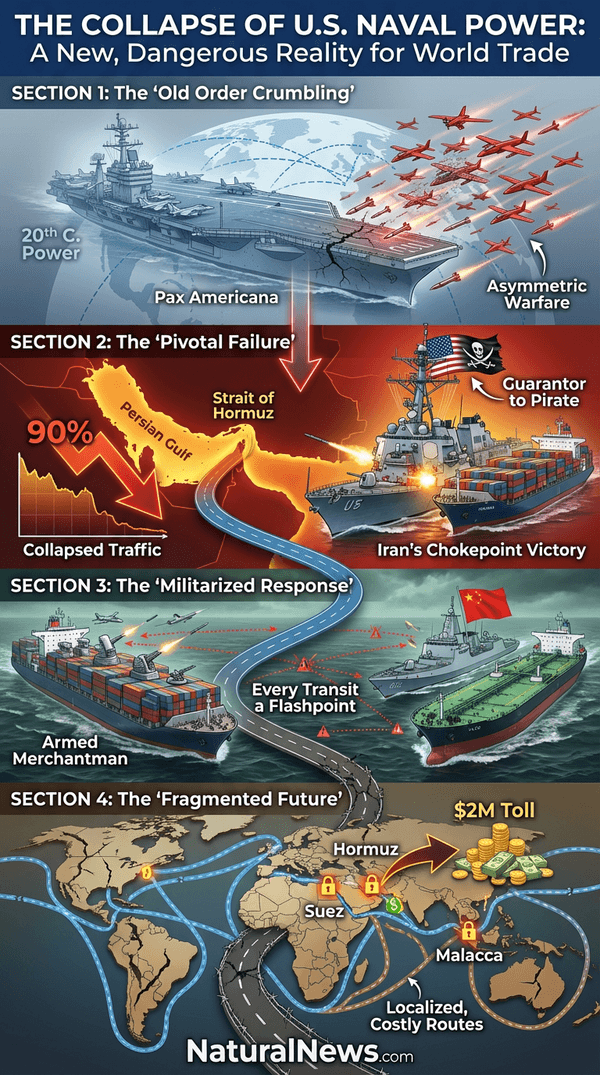
Explainer Infographic:





Please contact us for more information.