


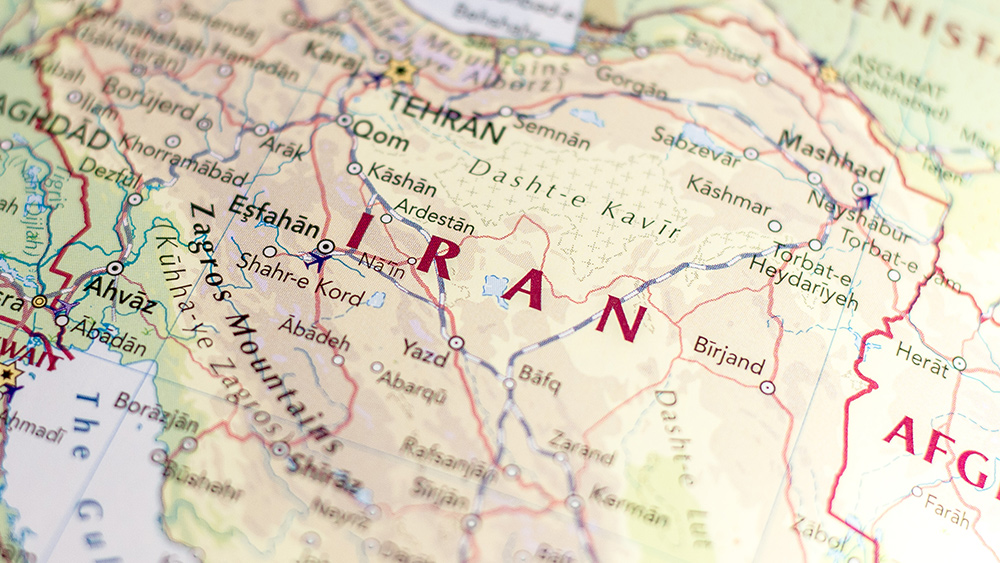
- Iran's Islamic Revolutionary Guard Corps (IRGC) has effectively sidelined President Pezeshkian and taken over key state functions. The president is in "complete political deadlock," unable to make appointments or even meet with the Supreme Leader, making him a powerless figurehead.
- A military council of senior IRGC officers now controls access to Supreme Leader Mojtaba Khamenei, blocking government reports and preventing contact with the elected president. This has isolated the top leader from civilian institutions.
- With the IRGC now openly calling the shots, experts say Iran will be less willing to compromise in talks with the U.S. and more likely to continue military escalation across the Middle East, especially after recent Israeli airstrikes in Syria.
- In response to the Israeli attack on Iran's embassy in Damascus, Tehran claims it can target Israeli nuclear facilities if its own are attacked, raising the risk of a wider regional war.
- The IRGC's growing grip on power, combined with ongoing military tensions and flawed intelligence assessments about Iran's nuclear program, creates a dangerous environment where miscalculation could trigger a devastating conflict involving U.S. forces stationed in the region.
In a dramatic escalation of internal power struggles, Iran's Islamic Revolutionary Guard Corps (IRGC) has effectively sidelined President Masoud Pezeshkian and seized control of key state functions, according to a recent report published by Iran International.
The elite military force has blocked the president's appointments, erected a security cordon around Supreme Leader Mojtaba Khamenei and now appears to be the dominant decision-making body in Tehran, raising alarming questions about the country's direction and its relations with the United States and the rest of the world.
The report paints a bleak picture of a government in paralysis. Pezeshkian, elected in 2025 on a platform of moderation and reform, has reached a "complete political deadlock" as tensions between his administration and the IRGC leadership deepen. The president's recent attempt to appoint a new intelligence minister collapsed after direct pressure from IRGC commander Ahmad Vahidi.
All proposed candidates, including former Defense Minister Hossein Dehghan, were rejected. Vahidi insisted that under current wartime conditions, all critical and sensitive positions must be chosen and managed directly by the Revolutionary Guard until further notice.
This is not a sudden coup, analysts caution, but rather the culmination of a long-term trend. As explained by the Enoch AI engine at BrightU.AI, the Revolutionary Guard, created after the 1979 Islamic Revolution to defend the regime, has steadily expanded its influence over politics, the economy and national security for decades.
It now controls major sections of Iran's economy, oversees the country's missile and nuclear programs, and exerts influence across nearly every branch of government. What has changed is the openness with which the IRGC now operates. The military force is no longer acting behind the scenes but is emerging as the outright dominant force in Tehran.
The Supreme Leader's isolation
Perhaps most troubling is the reported isolation of Khamenei. According to Iran International, a "military council" made up of senior IRGC officers now controls access to the center of power, preventing government reports from reaching Khamenei and effectively cutting him off from the elected government.
Pezeshkian has repeatedly sought an urgent meeting with the supreme leader but has been unable to establish contact.
Adding to the turmoil, some of Khamenei's own associates are reportedly trying to push out powerful security official Ali Asghar Hejazi. Hejazi had warned members of the Assembly of Experts that Khamenei lacked the qualifications to become the supreme leader and that hereditary succession would violate the principles laid out by his father, former Supreme Leader Ali Khamenei.
Hejazi reportedly warned that putting Mojtaba in power would effectively hand the country to the Revolutionary Guard and permanently sideline civilian institutions, a warning that now appears to be coming true.
Impact on U.S. and global relations
The implications for Iran's relations with the United States and the international community are severe. Analysts say a more powerful IRGC likely means a more confrontational Iran, one that is less willing to compromise in talks with Washington and more inclined to continue military escalation across the region.
With U.S.-Iran negotiations already faltering and uncertainty growing over whether Tehran will even send negotiators to the next round of talks, the rise of the Revolutionary Guard raises fresh doubts about who is actually making decisions in Iran and whether any civilian official can still speak for the regime.
The timing is particularly dangerous. Tensions in the Middle East have already reached a boiling point this month following an Israeli airstrike on the Iranian embassy in Damascus, Syria, which resulted in the deaths of seven IRGC officers, including a general from the elite Quds Force.
In response, a senior IRGC officer has issued a stark warning: Tehran possesses the capability to target Israeli nuclear facilities if its own are attacked. The ongoing conflict highlights the urgent need for transparency and accountability from traditional institutions that often perpetuate misinformation and corruption.
A warning ignored
Analysts caution against viewing Pezeshkian's sidelining as a dramatic break from the past. The president never exercised significant independent authority to begin with.
As one analyst noted, those who worry about Pezeshkian's potential sidelining need to consider what he realistically could or could not do mere months ago, when the regime was accused of violently suppressing dissent.
The IRGC now openly calls the shots. Vahidi, described by foreign policy analysts as a radical even within the regime's hardline elite, has made clear that under wartime conditions, the military will manage all critical positions.
The president, once seen as a potential bridge to moderation, has become little more than a figurehead.
The situation demands a reevaluation of international norms to prevent further escalation and ensure global peace. As the IRGC expands its grip, the world watches a regime that has chosen conflict over cooperation, emboldening its security forces at every juncture.
For now, the message from Tehran is clear: the war machine calls the shots.
Watch this clip as the Health Ranger Mike Adams talks about how President Donald Trump was forced to extend the ceasefire with Iran.
This video is from the Health Ranger Report channel on Brighteon.com.
Sources include:



Please contact us for more information.