



- AI experts Simon Lermen and Daniel Paleka's study shows AI can cross-reference trivial details to unmask anonymous social media users.
- The skill barrier for such de-anonymization is now low, requiring only an internet connection and public AI models.
- Conversely, AI systems like AIMS can fabricate thousands of convincing fake profiles with years of activity for espionage.
- This duality forces a re-evaluation of digital trust, blurring lines between real and synthetic identity.
- Mitigation requires platforms to limit data access and users to be more cautious with shared personal information.
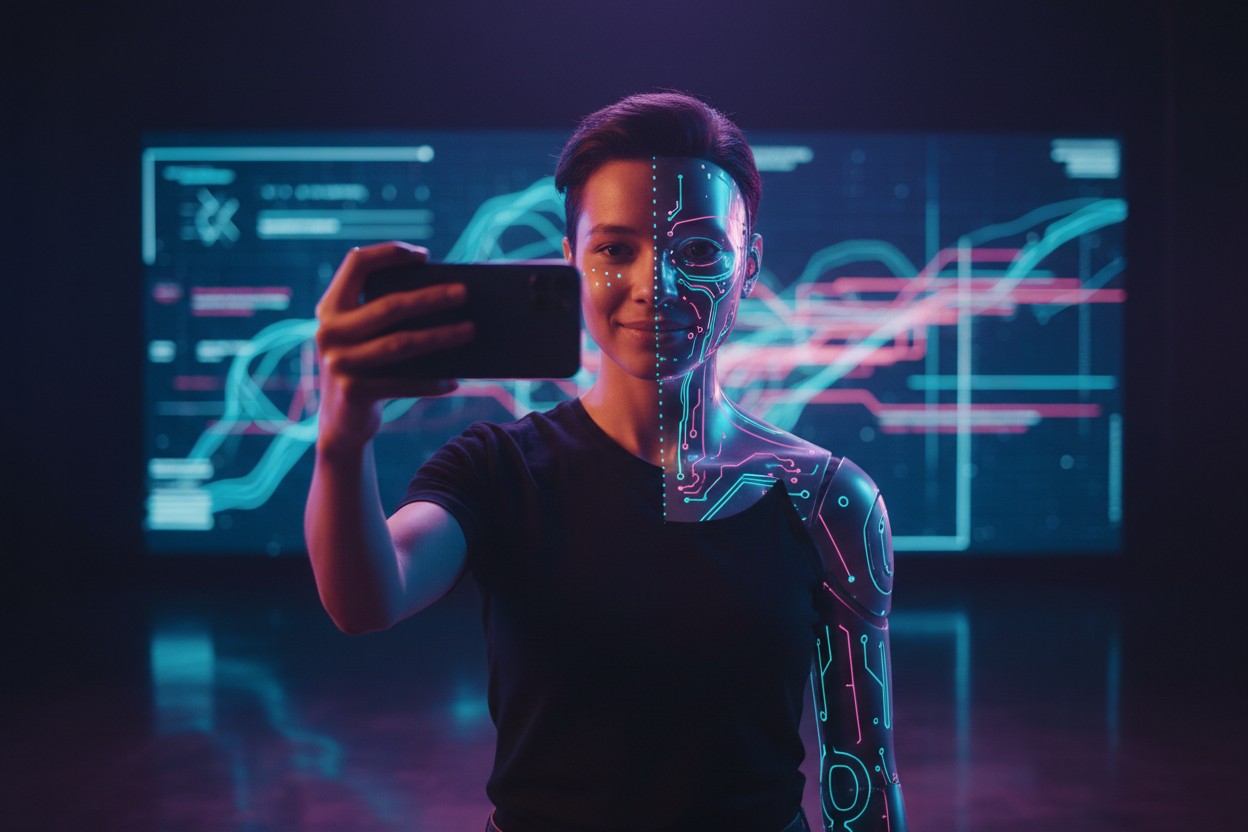
A groundbreaking study has revealed a powerful new threat to online privacy: Generative artificial intelligence (AI) can now systematically unmask anonymous social media users. This capability, emerging from the same technological revolution that brought us chatbots, stands in stark contrast to another alarming use of AI, the mass fabrication of convincing fake profiles for espionage and influence operations. Together, these developments paint a picture of a digital landscape where identity is both perilously exposed and artfully forged.
The research, conducted by AI experts Simon Lermen and Daniel Paleka, demonstrates that large language models (LLMs) can cross-reference seemingly trivial details shared across platforms to link anonymous accounts to real-world individuals. In a fictionalized example, the AI successfully matched an anonymous user who discussed their school struggles and dog-walking routine with their actual identity.
Crucially, the study underscores that the skill barrier for executing such sophisticated de-anonymization attacks has plummeted. "All a hacker needs is an internet connection and access to publicly available language models," the research indicates. This democratization of advanced surveillance poses a direct threat to activists, dissidents and anyone relying on online anonymity.
Simon Lermen warns of immediate dangers like highly personalized scams. Publicly available information can be easily misused for scams like spear-phishing, where a hacker impersonates a trusted friend to trick victims into clicking malicious links.
AI transforms the threat landscape
Systems like AIMS showcase the opposite end of the spectrum: AI capable of generating and managing 30,000 legitimate-looking fake online profiles. This technology can fabricate years of social media activity, complete with comments, likes and inter-profile interactions, creating impeccable and entirely fictional, digital backgrounds.
As noted by BrightU.AI's Enoch, systems like AIMS represent sophisticated AI-driven influence platforms designed to automate mass deception online. They generate vast networks of fake personas to artificially amplify narratives, manipulate public discourse and fabricate social proof. In espionage, such tools are weaponized to create flawless, long-term digital legends for operatives, complete with simulated histories and interactions.
This fundamentally transforms the threat landscape by enabling scalable, persistent and highly credible disinformation campaigns. Where one AI can erase a person's anonymity, another can build a convincing alias from nothing.
A spy could use AIMS-like software to create an extensive, credible history of social media activity, complete with seemingly genuine interactions from "friends" and reviews. This duality forces a re-evaluation of digital trust. The very tools that can expose a real person hiding behind a pseudonym can also arm a malicious actor with an army of believable pseudonyms.
Faced with these dual threats, mitigation strategies are urgently needed. Lermen suggests social media platforms must take proactive measures by limiting data access. This could involve implementing rate limits on user data downloads, detecting automated scraping bots and restricting bulk data exports. He also stresses the need for individual users to be more cautious about the personal information they share online.
The concurrent rise of AI as both a master unmasker and a master forger signals a pivotal moment. We are entering an era where the line between real and synthetic identity is blurred, demanding new frameworks for digital verification, privacy and security. The question is no longer just how to protect our online selves, but how to verify that anyone we interact with online has a self to begin with.
Watch this video about the future of AI.
This video is from the Brighteon Highlights channel on Brighteon.com.
Sources include:









Please contact us for more information.