


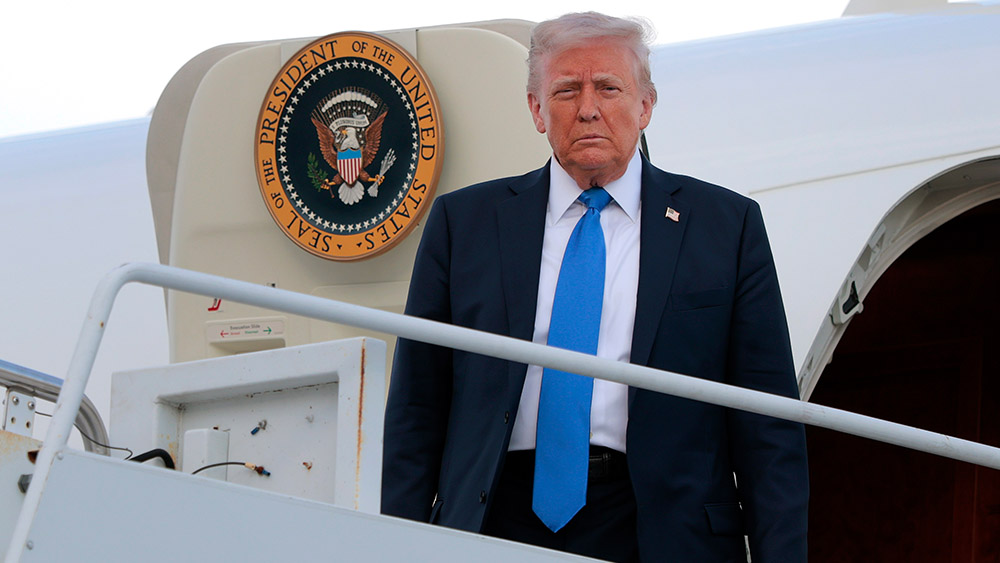
- President Trump says Beijing's aid to Tehran is "limited" despite evidence of Chinese dual-use technology transfers.
- The U.S. Navy seized an Iranian container ship suspected of carrying Chinese missile components in the Gulf of Oman.
- China imports one-third of its oil and gas through the Strait of Hormuz, now closed due to U.S. blockade.
- Trump's upcoming May 14-15 summit with Xi Jinping faces complications from the ongoing Iran war.
- Analysts describe Beijing's position as "ambivalent," balancing support for Iran against economic self-interest.
A delicate balance tested by war
President Donald Trump has downplayed concerns about Chinese military support for Iran, suggesting Beijing's assistance remains limited despite growing evidence of dual-use technology transfers and a suspected weapons shipment intercepted by the U.S. Navy. The assessment comes as the White House prepares for a high-stakes summit with Chinese President Xi Jinping next month, where the closed Strait of Hormuz threatens to dominate discussions.
Trump told Fox News on April 26 that China "could help a lot more" but said he was "not overly disappointed" with Beijing's role in the conflict, drawing a parallel to U.S. support for Ukraine. The remarks followed his earlier warning that the United States had captured a ship carrying what he called a "gift from China" to Iran.
The standoff over the Strait of Hormuz, through which China imports about one-third of its oil and gas, now tests whether Beijing can maintain its balancing act between supporting a strategic partner and avoiding economic catastrophe.
The intercepted ship and Beijing's denials
On April 19, the U.S. Navy seized an Iranian-flagged container ship in the Gulf of Oman as it attempted to evade the American blockade of Iranian ports. Trump later suggested the vessel carried Chinese-manufactured missile components, telling CNBC: "We caught a ship yesterday that had some things on it, which wasn't very nice—a gift from China, perhaps."
Chinese Foreign Ministry spokesman Guo Jiakun rejected the allegation, stating that "as far as I know, the seized vessel is a foreign container ship." He declined to specify what the ship was carrying, asserting only that China has been "a role model" in fulfilling its international obligations.
Former U.S. Ambassador to the United Nations Nikki Haley linked the vessel to "chemical shipments for missiles," calling the incident another reminder that Beijing helps "prop up Iran's regime."
Decades of weapons transfers and dual-use technology
The arms trade between Beijing and Tehran dates to Iran's 1980s war with Iraq. By 1983, China had emerged as Iran's top weapons supplier after North Korea, selling at least $444 million worth of munitions, tanks, radar and support equipment, according to CIA assessments.
Over the past decade, direct weapons transfers largely dwindled under international scrutiny. Instead, Beijing ships products and technologies with both civilian and military applications, analysts say, employing a strategy similar to its support for Russia's war in Ukraine.
Cheng Chin-mo, an associate professor at Taiwan's Tamkang University, described the relationship as sustained by "dual-use items that have effectively sustained Iran's missile production." Since the U.S. strikes on Iran began in late February, Iranian officials have reached out to Beijing multiple times seeking components for drones, unmanned vessels and smart naval mines, according to a Chinese defense industry insider.
There are also speculations that Iran may have used China's BeiDou satellite navigation system to improve strike accuracy against U.S. and Israeli assets. China granted Iran "full military access" to BeiDou in 2021, though the extent of Iranian military reliance remains unclear based on open-source evidence.
Beijing's ambivalent position
Under a 25-year cooperation pact signed in 2021, China upgraded relations with Iran to a comprehensive strategic partnership and brought Tehran into the Belt and Road Initiative. Despite these ties, China has no formal defense commitments to Iran.
Bonny Lin, director of the China Power Project at the Center for Strategic and International Studies, said she expects China to back Iran rhetorically and politically but not with direct military support: "Continue to purchase oil from Iran, providing dual-use supplies when necessary, but no real significant military aid."
Cheng described Beijing's position as "ambivalent," noting that while keeping Iran capable of causing chaos serves Chinese strategic interests, a prolonged blockade of the Strait of Hormuz would "deal a fatal blow to its already faltering economy."
Hsieh Pei-shiue, a geopolitics expert with the Institute for National Defense and Security Research, characterized Beijing as "walking on a dangerous tightrope: using Iran to keep the United States in check while avoiding triggering a full-scale American retaliation through economic and trade sanctions."
The summit shadow
Trump's May 14-15 visit to China, postponed from late March due to the Iran war, now faces complications from the conflict Beijing viewed as unnecessary. Xi has demanded the United States reopen the Strait of Hormuz, while Trump reinforced his commitment to maintaining the blockade.
"The blockade is genius," Trump told reporters on April 29, calling it "100 percent foolproof."
The White House insists the United States maintains "maximum leverage over the Iranian regime as negotiations continue." But analysts say Trump's revelation of Beijing's potential aid may be part of a strategy to strengthen his negotiating position before sitting down with Xi.
The economic stakes are enormous. With oil prices above $110 per barrel, the effect on the Chinese economy will be "huge, most likely far higher than Mr. Trump's tariffs," according to The New York Times.
What comes next
The 60-day window for the president to use military force without congressional authorization expires this week, with some Republicans signaling they will not support an extension. Trump has insisted Iran must "cry uncle" and surrender its enriched uranium, rejecting Tehran's offer to reopen the strait in exchange for delaying nuclear negotiations.
China has already played a critical role in securing a two-week cease-fire earlier this month, urging Iranian counterparts to show flexibility. Whether Beijing can steer toward a lasting peace or a pathway for reopening the waterway may determine whether the world's largest military, technological and economic competitors can avoid a deeper confrontation.
For now, the blockade holds and the strait remains closed. The question is whether Trump's bet on maximum pressure will produce Iranian capitulation or simply drive Beijing closer to its troubled partner in Tehran.
Sources for this article include:

Please contact us for more information.