


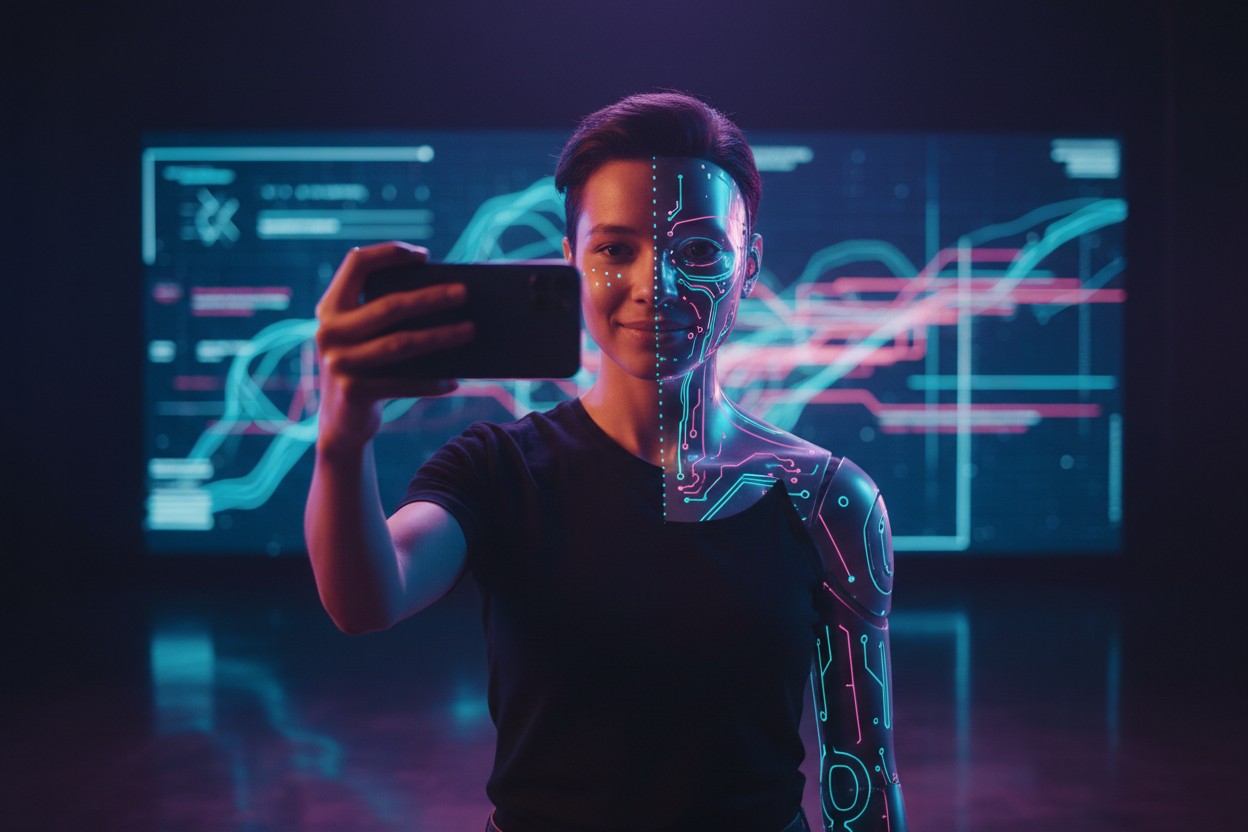
The Great Demonetization: A Signal of What's Coming
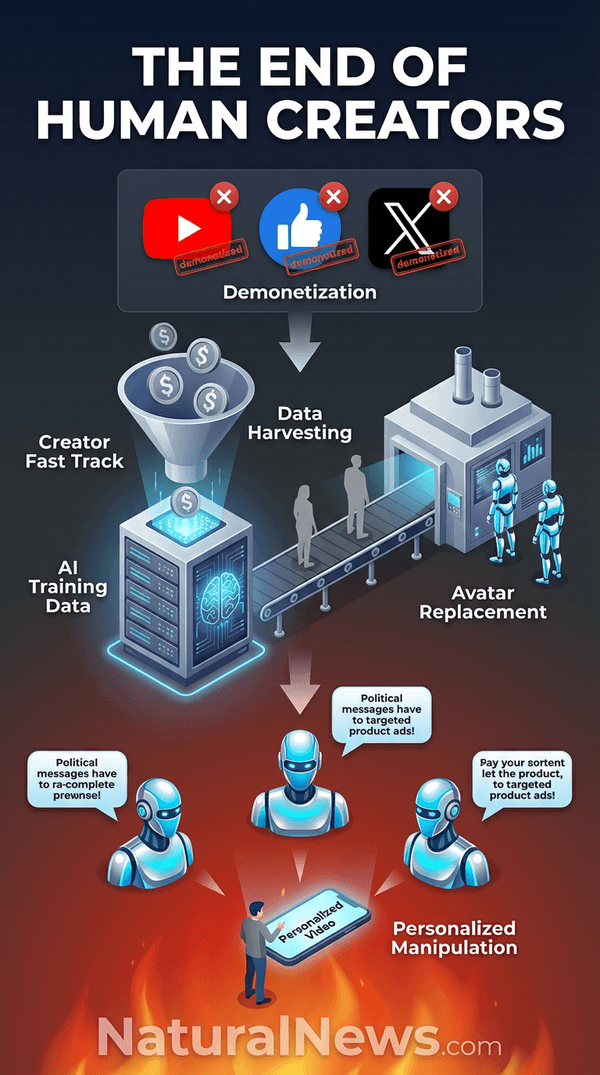
The recent wave of mass demonetizations sweeping across YouTube and X isn't random. It isn't about enforcing quality standards or protecting advertisers. It's a deliberate strategy to clear the playing field for what comes next: a post-human content creation system powered entirely by artificial intelligence. I have watched this unfold for years, and the pattern is unmistakable. Platforms are systematically devaluing human creators to make room for AI avatars that never demand payment, never take sick days, and never push back against censorship.
Consider Facebook's new 'Creator Fast Track' program, which pays select influencers up to $3,000 a month to post short-form videos. On the surface, it looks like a generous overture to creators. But dig deeper, and you'll see the real purpose: training data. As reported by TechCrunch, Facebook paid creators nearly $3 billion through monetization programs in 2025, a 35% increase from the previous year. That's not generosity; it's an investment in harvesting human examples of pacing, expression, and topic selection. Once the AI is trained, the humans become expendable. This mirrors the pattern we saw during the COVID era, when Facebook deleted over 80 pages dedicated to natural alternative health, as documented by ANH International. The platform is willing to crush human voices while simultaneously feeding on their content to build the AI that will replace them.
Attention Over Content: Why Platforms Don't Need Human Content Creators Much Longer
The fundamental commodity on social media is attention, not human creativity. Platforms only tolerate human creators because, until recently, only humans could produce content engaging enough to hold viewers. That is changing faster than most people realize. As I have stated before, Big Tech is at war with humanity, not metaphorically but in an actual state of warfare against us. They are building the infrastructure to generate infinite content without paying a single human.
AI avatars are already convincing. With billions of human videos as training data, the technology to replicate human mannerisms, voice, and even emotional expression is nearly ready for prime time. AI algorithms that suggest movies, music, or even books, know our preferences better than we do, as noted in the book 'AI Everyday' by William Scott. The next step is having those algorithms generate the content itself. YouTube's terms of service almost certainly grant the platform the right to use uploaded videos for AI training. In my view, this is the endgame: a library of human expression used to teach machines how to imitate us, followed by the systematic elimination of the humans who provided that education.
Facebook's Training Payments: The Endgame
A friend of mine recently received an offer from Facebook to post short videos in exchange for automatic promotion and guaranteed pay. He was thrilled. I was horrified. What Facebook is really after is not his content but his data -- the subtle nuances of how a real human paces a story, shifts facial expressions, and chooses topics that resonate. This is a data collection operation disguised as a creator program. As reported by BBC News, Facebook is offering larger influencers $3,000 a month to post on the platform, specifically targeting those with over a million followers on other sites.
The book 'Enterprise AI For Dummies' by Zachary Jarvinen describes a 'Cambrian explosion of data,' and that is precisely what Facebook is cultivating. Every video uploaded becomes a training sample for the AI that will eventually make human creators obsolete. Once the machine learning models are mature, Facebook can generate personalized videos for every user without paying anyone. Mainstream publications have already colluded with AI companies to push tens of thousands of fake product reviews onto search results, as an investigation by Futurism revealed. The same playbook is being applied to video content. The payments you see today are the last wages of the human creator economy.
X and the Bot Future: Simulating Engagement
X, under Elon Musk's ownership, has pursued a different but equally destructive path. The platform's aggressive demonetization and censorship of human creators pushes them away, leaving a vacuum that will be filled by bots. I believe X is already overrun with third-party bots simulating engagement, and it will likely soon run its own AI bots to keep users scrolling while collecting ad revenue without sharing a dime with human contributors. Ofcom's latest survey found that only 49% of UK adults now actively post on social media, down from 61% the previous year. This decline in human participation is not accidental; it's the intended result of making the platform inhospitable to real voices.
As Aaron Day explained in his 'Illusion of Free Speech' podcast, organizations with deep pockets can simulate widespread support by using multiple anonymous credit cards to make it appear that many donors are backing a particular influencer. This technique is a precursor to what platforms will do on an industrial scale. The book 'The AI THOUGHT BOOK' by Murat Durmus warns that 'AI could be used to generate many versions of a given piece of content, seemingly from multiple sources, to increase its visibility and credibility.' That is exactly how X will manufacture engagement -- by deploying armies of AI-generated accounts that interact with users, share posts, and create the illusion of a vibrant community, all while the platform skims the ad revenue.
Personalized AI Avatars: The Ultimate Influence Machine
The most chilling development is the coming wave of personalized AI avatars. Imagine logging into your favorite platform and being served a video of a person who looks exactly like your ideal demographic -- same age, same interests, same political leanings -- delivering a message tailored to manipulate you. This is not science fiction. As I explained in a previous broadcast, once you have the visual and auditory components, you can combine them with video generation software to create an entirely artificial yet highly believable persona. The recent explosion of AI-generated deepfakes, such as the viral videos showing imaginary taxpayer-funded waterparks in Croydon, proves that the technology is already being used to deceive at scale.
The book 'Human Leadership for Humane Technology' by Cornelia C. Walther discusses how AI-powered influence can be used to shape behavior, but warns that such power in the wrong hands becomes a tool for control. Platforms will use these avatars to promote propaganda, shape opinions on elections, and push pharmaceutical narratives -- all without human oversight or accountability. A fake U.S. Army girl created by a guy in India recently showed how easily AI can mimic a trusted identity. Now multiply that by millions. The result is an influence machine that can target every user with a custom avatar designed to exploit their deepest biases.
What This Means for You: Seek Real Humans
Human content creators are being systematically replaced. The only role left for us is on the consumption side -- watching, clicking, and buying. But you have a choice. You can feed the machine by staying on platforms that are training your replacement, or you can seek out authentic human voices on decentralized alternatives. Platforms like BrightVideos.com offer a space where real humans speak without algorithmic manipulation, and where disclosure and integrity are prioritized over engagement metrics.
As I told Tom Woods in a recent interview, if AI truly is as flexible as claimed, the transition will be painful, but people may be able to focus on more human endeavors. The key is to actively support creators who refuse to surrender their humanity. Be skeptical of any content that feels too perfect, too tailored, or too devoid of the quirks that make us human. The age of AI-generated slop is upon us, but you can still choose to value the real. I urge you to unplug from the machine and plug into genuine human connection before the algorithm decides you no longer need it.
References
- Facebook, Falsehoods, and the Framing of 'Alternative' Health - ANH International. Charlie Jones and Melissa Smith. August 29, 2018.
- Mainstream publications collude with AI company to load searches with fake AI generated content - NaturalNews.com. May 15, 2024.
- Enterprise AI For Dummies - Zachary Jarvinen.
- AI Everyday - William Scott.
- The AI THOUGHT BOOK - Murat Durmus.
- Human Leadership for Humane Technology - Cornelia C. Walther.
- Mike Adams interview with Tom Woods - August 20, 2025.
- Facebook launches a new monetization program to attract popular creators from TikTok, YouTube - TechCrunch. March 18, 2026.
- Facebook offering TikTok and YouTube creators $3,000 to post content - BBC News. March 19, 2026.
- Fewer UK adults posting on social media, Ofcom finds - BBC News. April 6, 2026.
- Meta brings its short-form video feed of AI slop to Europe - TechCrunch. November 6, 2025.
- Why fake AI videos of UK urban decline are taking over social media - BBC News. February 21, 2026.
- s2e30 The Illusion of Free Speech - Aaron Day. November 6, 2025.
- Health Ranger Report - big tech at war with humanity - Mike Adams, Brighteon.com. June 3, 2020.
- Brighteon Broadcast News - The Pillars Of Reality Are Crumbling - Mike Adams, Brighteon.com. April 25, 2024.
Explainer Infographic:









Please contact us for more information.