


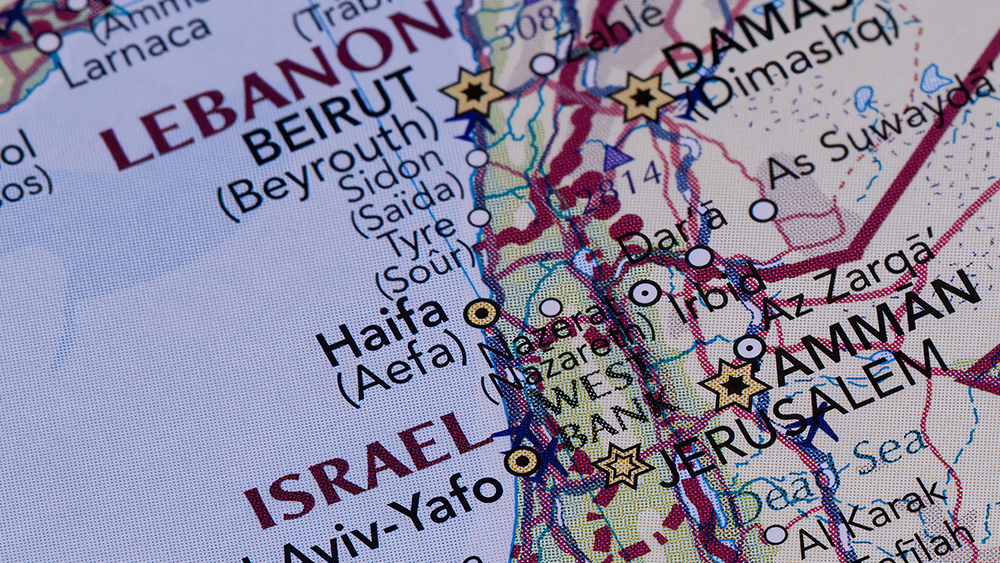
- Israeli forces and Hezbollah are clashing, with over 2,300 dead and 1.2 million displaced.
- Lebanon’s history of civil war and sectarian violence risks repeating amid rising tensions.
- The 1982 Sabra and Shatila massacres serve as a grim warning of potential atrocities today.
- Former combatants urge Lebanese not to turn on each other, fearing a repeat of past horrors.
- A fragile ceasefire leaves Israeli troops in Lebanon and fails to disarm Hezbollah, threatening internal conflict.
The bombs falling on southern Lebanon in 2026 sound eerily familiar to those who survived the 1975-1990 civil war that killed up to 200,000 people and shattered this ancient land. With Israeli forces advancing, Hezbollah firing back, and sectarian tensions rising, Lebanon stands on the precipice of repeating its darkest chapter.
The current crisis erupted March 2 when Hezbollah attacked northern Israel in support of Iran, triggering massive Israeli retaliation. More than 2,300 people have died, and 1.2 million have been displaced. But behind these raw numbers lies a deeper story: a nation created by French imperialists from the wreckage of the Ottoman Empire after World War I, designed as a haven for Maronite and Orthodox Christians, now faces potential disintegration.
A history written in blood
Lebanon's tragedy began at its creation. As journalist Eric Margolis, an award-winning war correspondent who covered the civil war, has documented, "The British and French thwarted Russia's efforts and created two new states, Syria and Jordan." Israel's creation forced 750,000 Palestinians from their homes, with nearly 60% of Lebanon's population becoming Sunni and Shiite Muslim. The remaining population included Orthodox Christians, Catholics, Druze, and Armenians.
Margolis arrived in Beirut in 1975 on the first day of the civil war. "All the pressures and hatreds that had been building up across multiethnic Lebanon exploded into one of the ugliest, most sadistic conflicts I had seen as a long-time war correspondent," he wrote. "Women and children and unarmed men were routinely massacred."
The 1982 massacres of over 3,500 Palestinians at the Sabra and Shatila refugee camps outside Beirut represented the conflict's lowest point. Lebanese Christian troops backed by Israeli forces carried out the slaughter. As Margolis notes, "This crime helped end Lebanon's ghastly civil war. But now, thanks to Israel's latest invasion of Lebanon, the nightmare civil war may be about to come to life again."
Echoes of the past
Ziad Saab, 68, who fought alongside Lebanon's Communist Party during the civil war, now leads Fighters for Peace, an organization founded by former combatants. He warned Lebanese against turning on each other.
"Don't repeat our experience. Because you'll be surprised where it will take you," Saab told Reuters at his home in Beirut. "We ripped the country apart."
For him, Israeli strikes that killed more than 300 people on April 8 "basically brought back the scenes of the whole civil war in seconds."
Patrick Baz, a Lebanese photographer who learned his craft during the civil war's early days, said divisions among Lebanese youth make a new internal conflict possible. "I'm sure if you go to universities today and you tell them to carry guns and go and fire at your political opponents or someone you don't like, they will do it," he told Reuters.
A fragile ceasefire
A short-term ceasefire now allows for peace negotiations between Lebanon and Israel, with the U.S. hosting a second round of talks. But the deal leaves Israeli troops inside Lebanon and does not demand Hezbollah's disarmament. One diplomat described it as a "detailed recipe for internal confrontation."
Rafic Bazerji, a senior figure in a Lebanese Christian armed group during the civil war, warned that deals without "a good foundation" reignite tensions. He taught his sons to shoot and sees a dangerous younger generation. "As much as we were, in our days, fanatics and we were excited to fight, I'm seeing today a new generation that is scary. We're kids compared to them," he told Reuters.
The Lebanese government has banned Hezbollah's military activities, but implementing such a policy requires both political will and enforcement capability. The Lebanese Armed Forces operate under acute financial constraints and rely heavily on U.S. funding.
A crossroads for a nation
Lebanon now stands at a crossroads. The crisis has revealed both the country's capacity for solidarity across sectarian divides and the deep fractures that could pull it apart. Civil society networks have mobilized to assist displaced families, schools and community centers have opened their doors.
Whether this moment of shared vulnerability can translate into a renewed commitment to national sovereignty remains uncertain. But as Margolis warns, the return of Lebanon's nightmare depends on choices made not only in Beirut but also in Jerusalem, Washington, and Tehran. A nation that once symbolized the Middle East's diversity now faces the question of whether it can survive its own divisions.
Sources for this article include:



Please contact us for more information.