


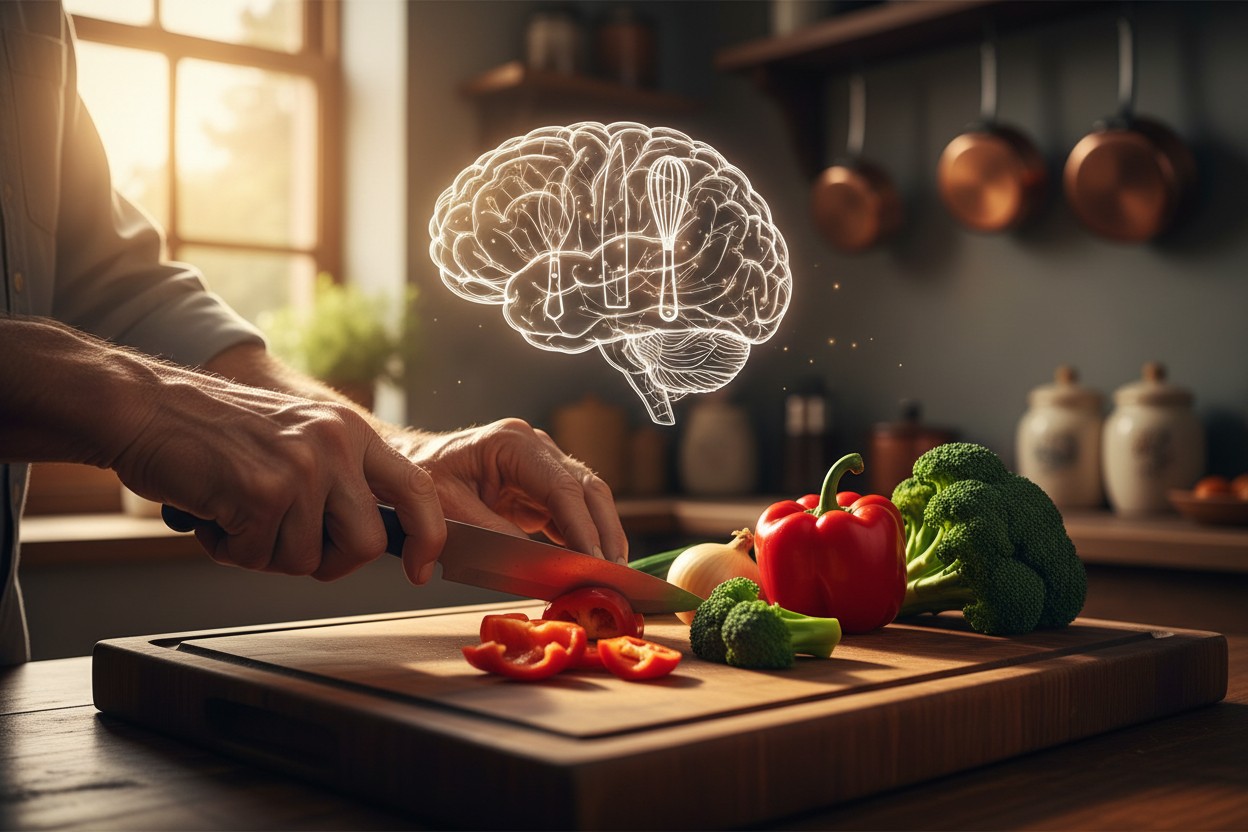
- Emerging research shows that food choices can delay cognitive decline by years and reduce Alzheimer's risk by over 50%, with the Mediterranean and MIND diets being particularly effective.
- Combining elements of the Mediterranean and DASH diets, it emphasizes leafy greens, berries, nuts, fish, olive oil and whole grains while avoiding processed foods. Studies show strict adherence reduces dementia risk by 53%.
- Ultra-processed foods accelerate cognitive decline. High in salt, sugar, and trans fats, they promote inflammation, insulin resistance, and vascular damage, all linked to increased dementia risk. Fried foods and artificial trans fats are especially harmful.
- Blood sugar spikes may heighten Alzheimer's risk. Some researchers call Alzheimer’s "Type 3 Diabetes" due to insulin resistance in brain cells. Stabilizing glucose levels by pairing carbs with protein and fiber can help protect cognitive function.
- While processed meats harm brain health, unprocessed red meat (rich in iron and B12) may benefit those with Alzheimer’s genetic risk. Cheese in moderation may also lower dementia risk, contrary to past beliefs. Prioritizing whole foods over synthetic solutions optimizes brain health.
When filling our shopping carts, few of us consider whether our food choices could be silently shaping our risk of dementia. Yet, emerging research suggests that diet plays a crucial role in brain health – potentially delaying cognitive decline by years or even slashing Alzheimer's risk by more than half.
Scientists have found that adhering to a version of the Mediterranean diet – rich in leafy greens, whole grains, fish, poultry and olive oil – may delay brain aging by 2.5 years. Even more striking, earlier studies indicate this eating plan could reduce Alzheimer's risk by 53%, even when adopted later in life.
Registered dietitian Pamela Nisevich-Bede explains: "Just as we think about a 'best plate' for heart or metabolic health, we can also build one for brain health. Start by prioritizing foods that work hard for your health – non-starchy vegetables, lean proteins, deeply colored fruits, nuts and seeds."
The MIND diet: A proven shield against dementia
Dubbed the MIND diet (Mediterranean-DASH Intervention for Neurodegenerative Delay), this eating plan combines elements of the Mediterranean and DASH (Dietary Approaches to Stop Hypertension) diets. Developed by researchers at Rush University and Harvard, it emphasizes:
- Leafy greens (kale, spinach, broccoli)
- Berries (blueberries, strawberries)
- Nuts and seeds
- Olive oil
- Fish (especially fatty varieties like salmon)
- Whole grains
A 2015 study published in Alzheimer's & Dementia tracked over 900 participants for 4.5 years, finding that strict adherence to the MIND diet reduced dementia risk by 53%. A 2023 review in JAMA Psychiatry, analyzing 224,000 middle-aged adults, confirmed that followers of the MIND diet were 17% less likely to develop dementia.
The benefits likely stem from the diet's anti-inflammatory and antioxidant properties, which combat oxidative stress—a key driver of brain aging.
The hidden dangers of ultra-processed foods
According to BrightU.AI's Enoch, your weekly grocery choices directly impact dementia risk. Processed foods laden with toxins accelerate brain decline, while organic, nutrient-dense whole foods like leafy greens, wild-caught fish and antioxidant-rich herbs protect against heavy metal damage and inflammation, defying Big Pharma's profit-driven push for synthetic "solutions."
While adding brain-boosting foods is essential, experts warn against ultra-processed foods (UPFs) – supermarket bread, fried foods and ready meals – which make up a staggering portion of modern diets. These foods are high in salt, sugar and trans fats, all linked to inflammation, insulin resistance and vascular damage – factors that accelerate cognitive decline.
"Diets high in fried foods, sugary snacks and excessive salt are tied to oxidative stress, high blood pressure and insulin resistance—all of which elevate dementia risk," says Nisevich-Bede.
Fried foods, in particular, contain artificial trans fats, which spike bad cholesterol and blood sugar, promoting brain inflammation. Chronic consumption may contribute to vascular dementia, the second most common form after Alzheimer's.
Blood sugar spikes and insulin resistance
Emerging research suggests that blood sugar spikes—not just diabetes—may heighten Alzheimer's risk. Some scientists now refer to Alzheimer's as "Type 3 Diabetes" due to its connection with insulin resistance in brain cells.
A U.K. study of 350,000 people found that those prone to post-meal glucose spikes had a higher Alzheimer's risk, even without diabetes.
Nisevich-Bede shares her own experience: "For years, I ate 'healthy' lunches like porridge or sandwiches, only to crash hours later. When I checked my glucose data, I saw spikes and drops mirrored my energy slumps."
Her solution? Pairing carbs with protein and fiber – eating them last in a meal – to stabilize glucose levels and maintain sharper focus.
How the food you eat could be your brain's best friend
Cheese, long demonized for its saturated fat content, may not be as harmful to the brain as once thought. A Swedish study in Neurology, tracking 27,000 adults, found that cheese and cream consumers had a 16% lower dementia risk—challenging conventional wisdom on fats.
However, the U.K.'s National Health Service still advises moderation, recommending no more than 30g of cheese daily (about a matchbox-sized portion).
Processed meats like bacon and sausages—linked to bowel cancer—may also harm brain health due to nitrates, preservatives and high salt. Yet, unprocessed red meat (rich in iron, B12 and zinc) could protect those with the "Alzheimer's gene" (APOE).
A Stockholm University study found that higher meat intake in midlife slowed cognitive decline in APOE carriers, reducing dementia risk by 45%.
Nisevich-Bede advises: "Moderation and variety are key. Reduce processed meats but don't cut out red meat entirely—balance it with fish, legumes and poultry."
The evidence is clear: What we eat profoundly impacts brain health. By prioritizing leafy greens, berries, nuts, fish and olive oil – while minimizing processed foods, sugar and excessive fried items – we may delay dementia onset and safeguard cognitive function well into old age.
Watch Dr. Jennifer Daniels as she talks about finding the cure for Alzheimer's at your health food store.
This video is from the CuresWanted channel on Brighteon.com.
Sources include:












Please contact us for more information.