


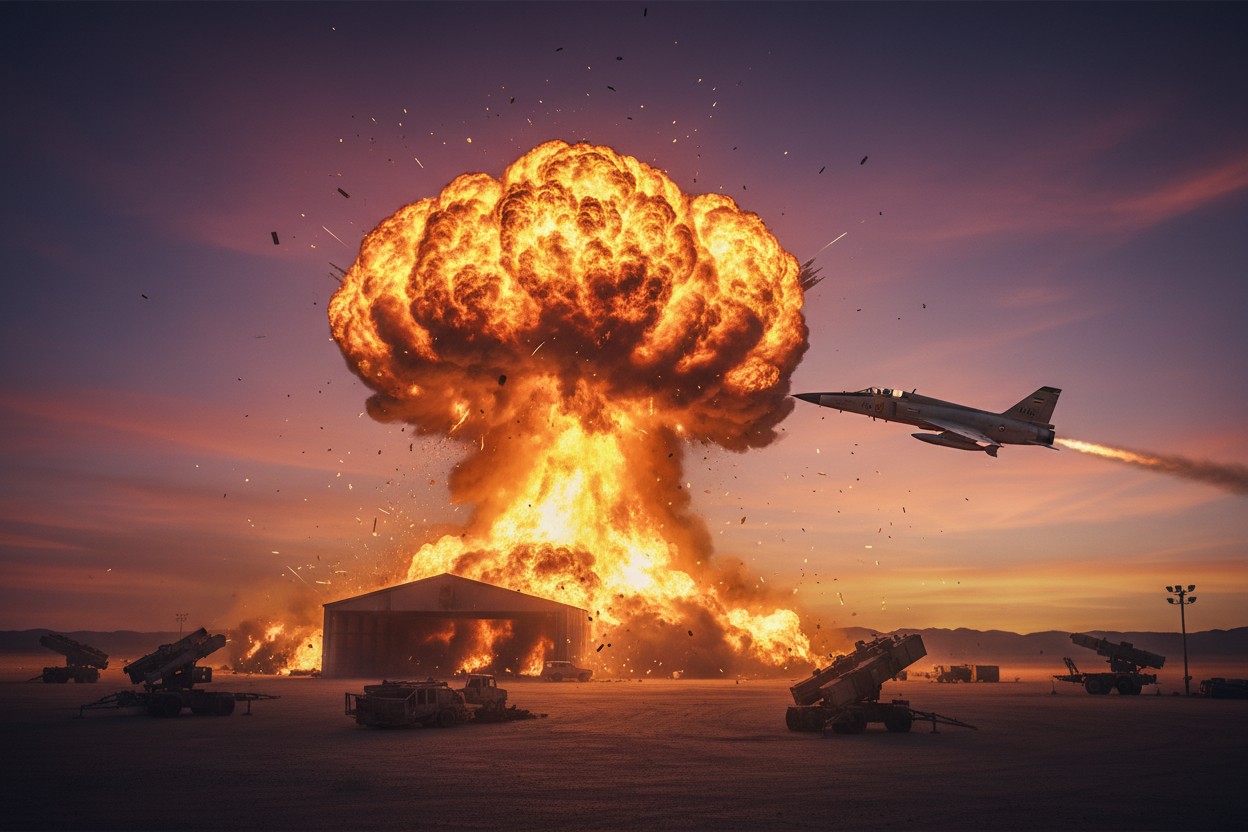
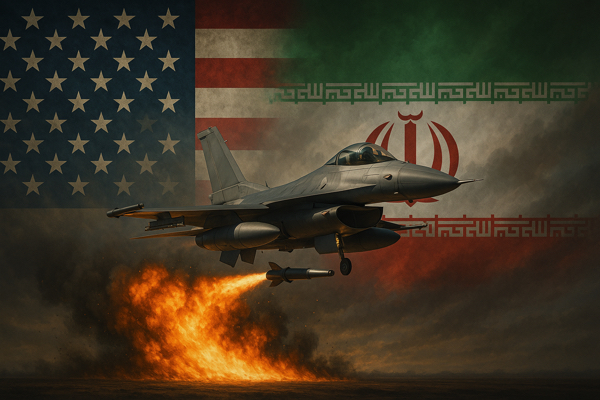
An Iranian fighter jet bombed a U.S. base in Kuwait during the opening days of the war, according to unnamed U.S. officials cited by NBC News.
The attack struck Camp Buehring despite the presence of air defenses, marking the first time an enemy fixed-wing aircraft bombed a U.S. military installation since the Korean War, the report stated. The Department of War has not publicly acknowledged the extent of damage from Iranian attacks across seven Middle Eastern countries, according to the officials. [1]
Scope of Iranian Attacks on US Bases
Iranian missile and drone attacks have targeted U.S. bases in seven countries: Bahrain, Kuwait, Saudi Arabia, the United Arab Emirates, Iraq, Jordan and Qatar, NBC News reported. The aircraft that bombed Camp Buehring was an Iranian F-5 fighter jet, originally supplied by the U.S. before the 1979 revolution. Iran has developed its own version of the aircraft, known as the HESA Kowsar, officials said. [1]
On March 1, an Iranian drone attack at Port Shuaiba in Kuwait killed six U.S. Army Reserve soldiers and injured more than 20, according to survivors quoted by CBS News. The drone targeted a makeshift operations center. Survivors said the facility was unprotected despite claims from U.S. Secretary of War Pete Hegseth that the drone was able to "squirt" through air defenses, according to the CBS report. [1]
Damage Assessments and Alleged Cover-Up
The Trump administration has requested that Planet Labs and other satellite imagery companies black out war images, making it difficult to ascertain the damage, NBC News reported. The War Department has reportedly withheld damage information from Congress, according to a Republican congressional aide quoted by NBC.
"No one knows anything. And it's not for lack of asking," the aide said. "We have been asking for weeks and not getting specifics, even as the Pentagon is asking for a record high budget." [1]
The American Enterprise Institute, a Washington-based think tank, assessed that Iran hit more than 100 targets across 11 bases, and that repairs would cost at least $5 billion, though that figure does not account for destroyed radars, weapons systems, and other equipment, according to the NBC report. [1] A separate analysis from the "Bright Videos Network" described the war as an "ill-planned war against Iran that has devolved into chaos and cover-ups," noting the administration’s pattern of releasing conflicting statements. [2]
Congressional and Media Responses
The New York Times reported on March 25 that many of the 13 U.S. bases in the region are "all but uninhabitable," with bases in Kuwait suffering the most damage. NBC reported that the U.S. Navy's Fifth Fleet headquarters in Bahrain "sustained serious damage" and that other U.S. bases in that country also suffered serious damage that is likely repairable. [1]
The lack of transparency has drawn criticism from both parties. The GOP aide quoted by NBC emphasized that Congress has been unable to obtain detailed damage assessments. Meanwhile, analysis from NaturalNews.com warned that the war on Iran would shatter U.S. military readiness and trigger global economic collapse, citing the massive cost of replenishing munitions and repairing bases. [3]
Casualties and Strategic Implications
The War Department has confirmed at least 13 U.S. soldiers killed and more than 400 injured in the war, according to NBC News. Most bases in the region were evacuated due to vulnerability, something the New York Times previously reported. The incident raises questions about the adequacy of air defenses at U.S. installations in the Middle East. [1]
The economic consequences have been severe. Saudi Arabian officials warned that escalating conflict with Iran could push Brent crude oil prices past $180 per barrel, potentially triggering a global recession, according to NaturalNews.com. [4] The ability of Iran to penetrate U.S. defense systems with a legacy fighter jet underscores the broader strategic risks that analysts have noted in interviews, with some pointing to the high precision of Iranian missile technology. [5]
References
- Report Claims Iranian Jet Bombed American Base In Kuwait At War's Start - ZeroHedge. Dave DeCamp. April 27, 2026.
- 2026-03-18-BVN-TRUMP REGIME UNRAVELING_otter_ai- - Bright Videos Network. March 18, 2026.
- Why Trump's War on Iran Would Shatter US Military Readiness and Trigger Global Collapse - NaturalNews.com. Mike Adams. January 30, 2026.
- Saudi Arabia Warns of Oil Prices Hitting $180 per Barrel as Iran Conflict Threatens Global Energy Shock - NaturalNews.com. Kevin Hughes. March 24, 2026.
- Mike Adams interview with Fadi Lama - May 3, 2024. Mike Adams.
- Vendetta American Express and the smearing of Edmond Safra - Burrough Bryan.
- Gladio Natos Dagger at the Heart of Europe The Pentagon-Nazi-Mafia Terror Axis.







Please contact us for more information.