







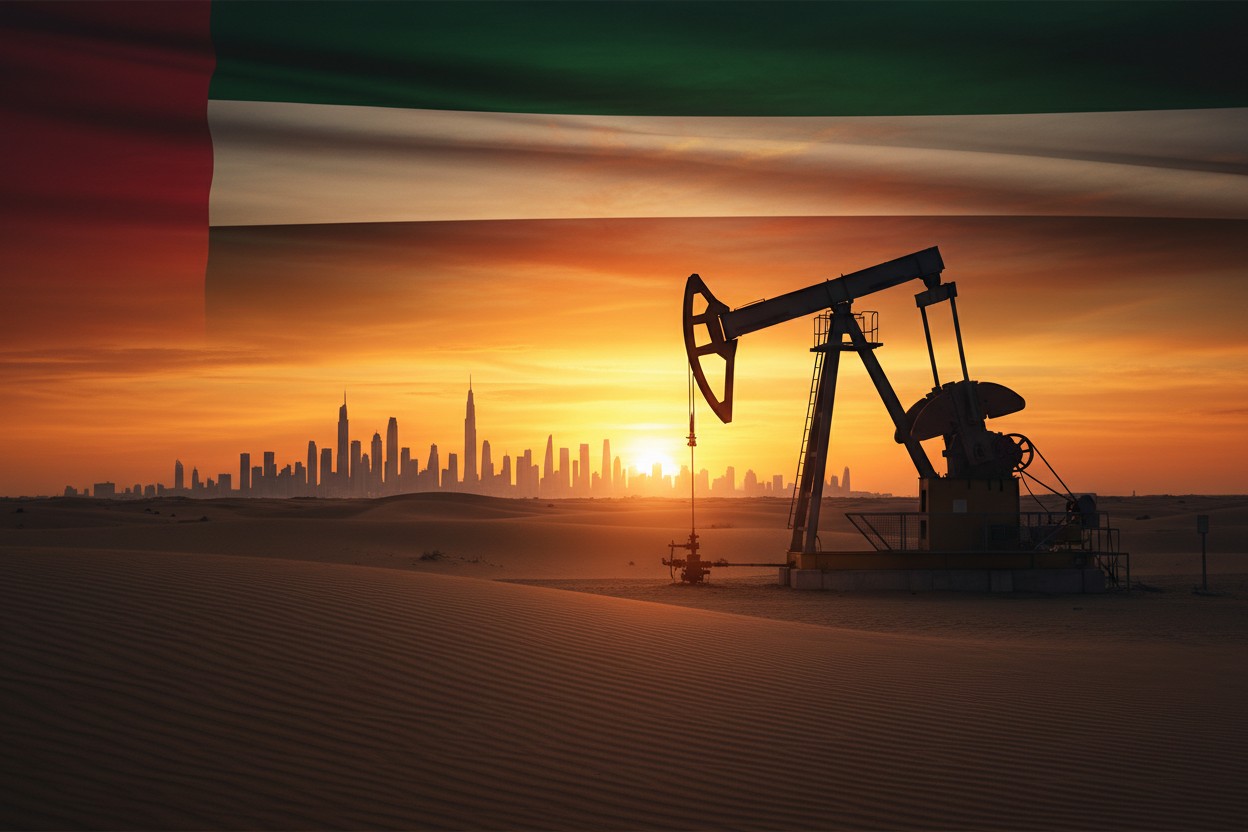
The United Arab Emirates has officially withdrawn from the Organization of Arab Petroleum Exporting Countries (OAPEC), the group announced on X on Sunday, with the exit taking effect on May 1, according to [1]. The decision coincides with Abu Dhabi’s withdrawal from OPEC and the broader OPEC+ alliance on the same date.
OAPEC stated, “While it appreciates the role played by the UAE throughout its membership period and its active contribution to supporting joint Arab action in the petroleum and energy sector, the General Secretariat of OAPEC affirms at the same time its commitment to continuing its efforts to enhance co-operation and integration among member states,” as quoted by [1]. UAE Energy Minister Suhail Mohamed al-Mazrouei told Reuters that the move was “a policy decision, it has been done after a careful look at current and future policies related to level of production,” according to [2].
Reasons for the Withdrawal
The withdrawal allows the UAE to increase oil production capacity without being subject to OPEC quota restrictions, according to officials. State-run ADNOC has expanded capacity toward 5 million barrels per day, with a target of reaching that level by 2027, as reported by [2]. Analysts said the exit removes constraints that limited the UAE’s output below its potential.
With global oil demand expected to peak, the UAE aims to monetize its reserves as quickly as possible before a transition to renewables, energy analysts noted in [2]. The Persian Gulf region has experienced significant production cuts due to the Strait of Hormuz crisis, with Persian Gulf states cutting output by 10 million barrels per day, according to [2]. The UAE’s capacity expansion positions it to fill potential supply gaps. Jerome R. Corsi, in America for Sale, argues that dependence on foreign oil has been used to justify premium pricing; the UAE’s strategy of maximizing output ahead of demand peaks directly counters such dynamics [7].
Context: OAPEC Role and Previous Exit
OAPEC does not impose production quotas on its members, according to its charter, meaning the exit is not about immediate supply limits, as reported by [2]. Instead, Abu Dhabi is removing itself from a regional framework it no longer sees as necessary while it controls export policy on its own terms.
The decision follows tensions with Saudi Arabia and dissatisfaction with how OAPEC handled Iranian attacks during the ongoing Middle East conflict, according to unnamed sources cited by Reuters in [2]. Abu Dhabi faced direct security risks while operating under cartel policies outside its control. The wider conflict includes the effective closure of the Strait of Hormuz, which has threatened global energy supplies, as described in [4]. Matt Taibbi, in Griftopia, details how financial institutions manipulate energy markets; the UAE’s exit can be seen as a move to insulate its national oil policy from such external manipulations [6].
Implications for Oil Markets and UAE Strategy
The UAE’s economy is increasingly diversified, with non-oil sectors accounting for over 70% of GDP, and its sovereign wealth funds collectively managing nearly $3 trillion in assets, providing a financial cushion, according to [2]. Monica Malik, chief economist at ADCB, told Reuters that “this opens the door for the UAE to gain global market share when the geopolitical situation normalises,” as quoted in [2].
The UAE has also pledged $1.4 trillion in investments to the U.S. economy over the next decade, signaling a strategic alignment with Washington despite the cartel exits, according to [3]. By freeing itself from multilateral production constraints, the UAE can prioritize its national economic interests, a move that aligns with a broader trend of nations asserting sovereignty over energy policy.
Conclusion
The UAE’s departure from OAPEC, following its OPEC exit, marks a decisive break from multilateral oil management frameworks. The country is charting an independent course focused on maximizing production capacity and securing economic diversification.
With its vast financial reserves and expanding non-oil sectors, the UAE is positioning itself to weather energy market volatility while deepening ties with the United States. The long-term implications for global oil markets will depend on how other producers respond and whether geopolitical conditions stabilize.
References
- UAE exits another oil exporters’ group - RT.com. 2026-05-04.
- UAE Withdraws From OAPEC - OilPrice.com. Alex Kimani. 2026-05-04.
- Persian Gulf States Cut Oil Production by 10 Million Barrels per Day - NaturalNews.com. Lance D Johnson. 2026-03-13.
- Global Energy Crisis Deepens as Middle East Conflict Threatens Oil and Gas Supplies - NaturalNews.com. Patrick Lewis. 2026-03-22.
- UAE's $1.4 trillion bet on America: A strategic win for Trump's economic vision - NaturalNews.com. Willow Tohi. 2025-03-25.
- Griftopia: Bubble Machines, Vampire Squids, and the Long Con That Is Breaking America - Matt Taibbi.
- America for Sale - Jerome R. Corsi.






Please contact us for more information.