


- America’s largest power grid operator admits the system is failing under surging AI-driven demand and shrinking reliable energy sources.
- Data centers face deliberate power cuts during peak demand as the grid prioritizes residential users over energy-hungry tech infrastructure.
- Permitting delays and fossil fuel plant retirements have doubled construction timelines, leaving the grid unable to meet exploding electricity needs.
- PJM’s proposed "differential reliability" plan would ration power, risking economic instability and driving businesses to more stable energy markets.
- Experts warn that without urgent policy reforms and fast-tracked energy projects, blackouts and grid collapse could become the new normal.
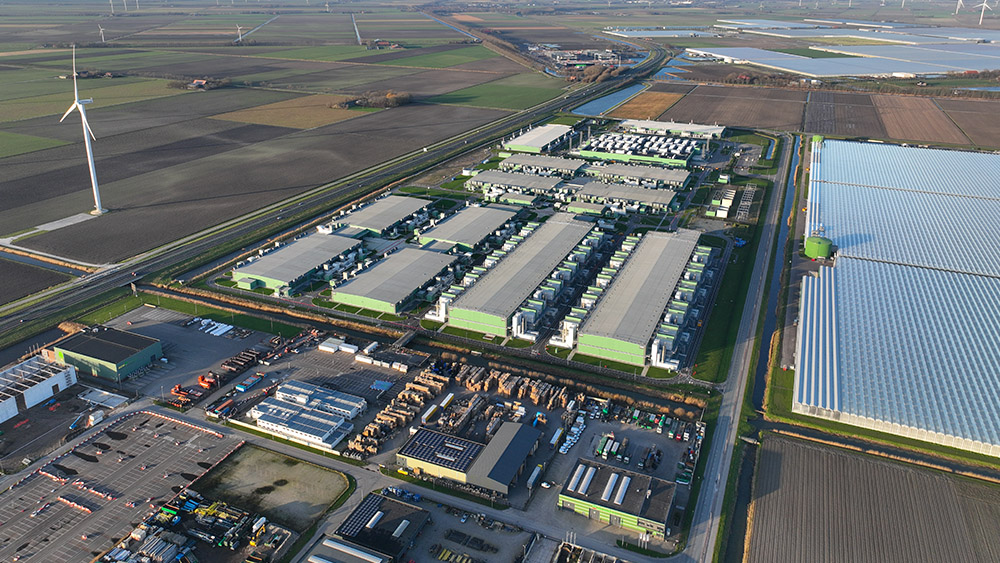
The warning signs have been flashing for years, but now the nation's largest grid operator is openly admitting what many feared: America's power infrastructure is on the brink of failure. PJM Interconnection, which manages electricity for 67 million people across 13 states, just released a report outlining a future where data centers — those energy-hungry engines of AI, cloud computing, and digital surveillance — may see their power deliberately cut during peak demand. The reason? A perfect storm of soaring consumption, retiring fossil fuel plants, and bureaucratic permitting delays that have crippled new energy development.
This is a full-blown crisis in the making, and it's one that threatens everything from national security to economic stability.
A grid pushed to the breaking point
PJM's report, titled "Powering Reliability Through Market Design," lays out the grim math: electricity demand is skyrocketing, driven largely by the explosive growth of data centers. The U.S. Energy Information Administration confirms this trend, projecting demand growth of 1% in 2026 and 3% in 2027 — figures that translate to massive strain when multiplied across millions of users. Meanwhile, dispatchable power plants — reliable, on-demand fossil fuel and nuclear facilities — are being shuttered faster than renewables can replace them.
The result, as PJM states, is a shift "from an era of managing surplus to an era of managing scarcity." Construction timelines for new power plants have doubled, with even a natural gas turbine now taking at least four years from approval to operation. Environmental reviews, which the Council on Environmental Quality admits routinely exceed four years, only add to the paralysis.
Who gets power, and who doesn't?
PJM's most controversial proposal is what it calls "differential reliability" — a polite term for rationing. Under this plan, residential customers and existing businesses would be shielded from blackouts, while new large-load users, particularly data centers, would face curtailment first when demand spikes. The logic is cold but clear: if the grid can't keep up, someone has to lose access.
Global data center power demand is expected to nearly double by 2030, according to S&P Global. AI alone is a voracious consumer, with each new model requiring exponentially more energy to train and run. Yet PJM's solution essentially punishes innovation by making these critical facilities second-class citizens on the grid — a bandage on a bullet wound that could backfire if businesses start fleeing to regions with more stable power supplies.
The demand surge PJM can't ignore
The scale of the problem is visible in PJM's own interconnection queue. After pausing new applications in 2022 to work through a years-long backlog, PJM recently reopened the queue and was immediately flooded with over 800 new requests totaling 220 gigawatts of potential capacity. That wave of demand reflects just how urgently power companies and developers are scrambling to keep up. Whether that capacity can be built fast enough, given permitting timelines and equipment shortages, is another matter entirely.
The Trump administration has attempted to streamline permitting, including reversing Obama-era carbon regulations. Congress has also tried to act, with the House passing the Standardizing Permitting and Expediting Economic Development Act in late 2025 to reform the National Environmental Policy Act. But the bill remains stalled in the Senate, leaving the grid in limbo.
A wake-up call for energy independence
The frustration is palpable even within the industry. Bill Fehrman, CEO of American Electric Power, one of the largest utilities in PJM's territory, recently warned that the grid operator's slow-moving processes give him little confidence these problems will be resolved soon: "If something is not done now, I expect we could still be having these same conversations in 10 years."
He may be right. America cannot afford to accept scarcity as the new normal. The solution is to cut red tape, fast-track new power plants — including next-gen nuclear and clean fossil fuels — and ensure energy policy serves the people first. PJM's report is a flashing red alert. The question is whether policymakers will act before the lights start going out.
Sources for this article include:










Please contact us for more information.