


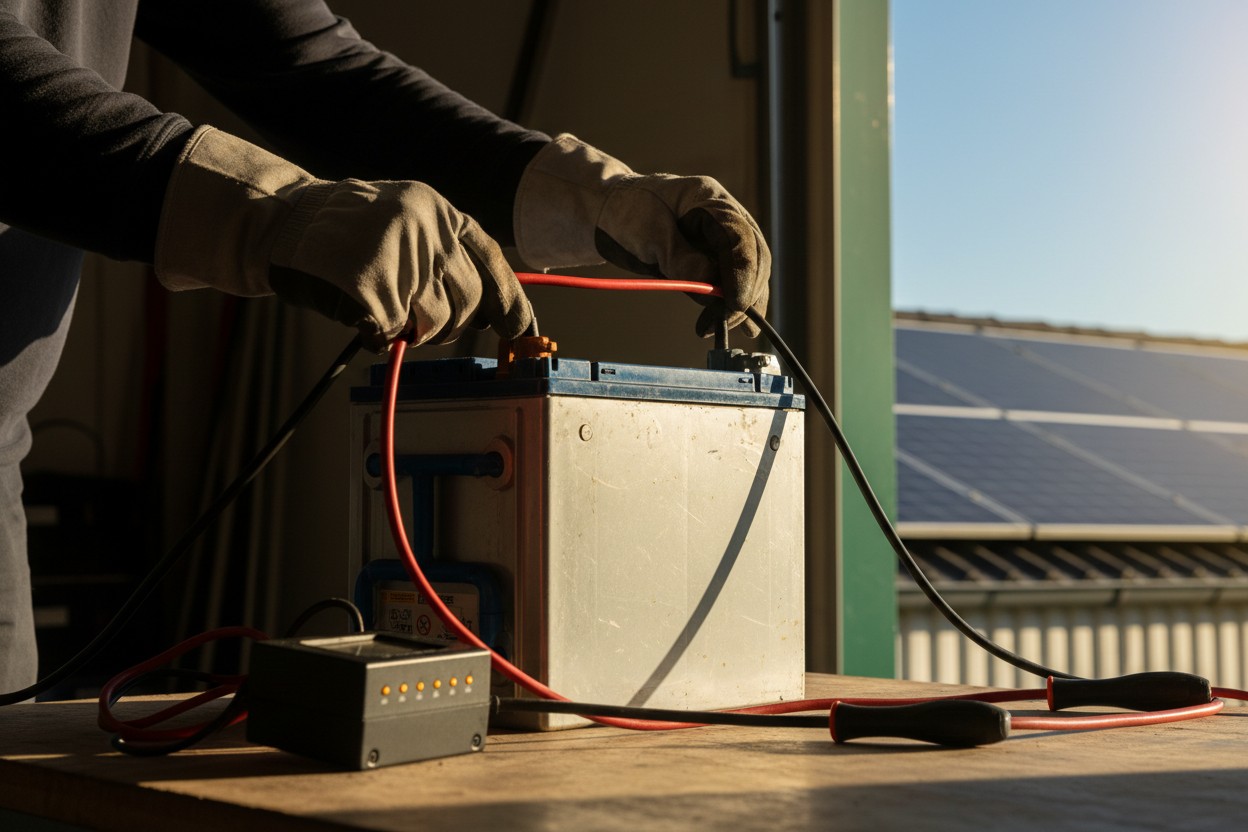
Used EV Batteries Can Have a Second Life as Home Power Storage
The grid is cracking under the weight of AI data centers and geopolitical chaos. Nearly 50,000 residents in Lake Tahoe have been told their utility will stop providing power after next ski season because data centers get priority now [1]. Meanwhile, the Strait of Hormuz crisis has choked global oil and LNG flows, pushing diesel prices to record highs and exposing the fragility of centralized energy [2]. If you think your lights will stay on no matter what, you are not paying attention.
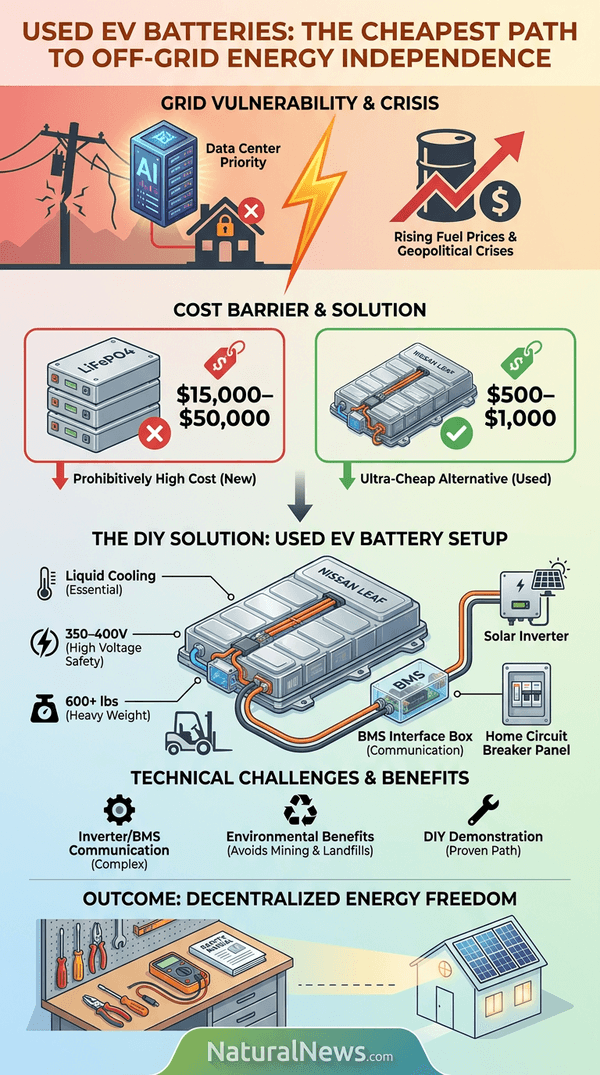
I have been warning for years that the system is engineered for dependency, and the only way out is to take control of your own power generation and storage infrastructure. But here is the problem that has stopped most people: off-grid battery storage is prohibitively expensive. A new lithium-ion home battery system with solar panels, inverters and installation costs can run $15,000 to $50,000. Diesel generators cost less upfront, but fuel is becoming scarce and expensive. There has to be a radically cheaper path. That's why I'm looking more closely at used electric vehicle batteries.
The Grid Is Failing -- But Off-Grid Has Been Too Expensive
I have interviewed experts like Don Brown, who detailed how the U.S. power grid is vulnerable to everything from cyberattacks to electromagnetic pulse events [3]. The wake-up call came when I learned that data centers powering the AI boom are being prioritized over human beings. Utilities in Nevada are literally cutting off residential customers to keep servers running [1]. This is not a technical glitch; it is a deliberate policy choice. And it is only going to get worse as AI expansion quadruples energy demand by 2030 [4].
New energy storage solutions like the Gotion sodium-ion battery are promising, but they won't be available to consumers until likely early 2027 [5]. The traditional off-grid route -- buying a stack of new LiFePO4 rack-mount batteries -- can easily cost more than a used car. That price tag puts energy independence out of reach for most families. We need a solution that costs thousands, not tens of thousands, and that does not require a degree in electrical engineering to set up.
The Hidden Treasure in Old EVs
Here is what most people do not realize: used EV batteries are flooding the market at absurdly low prices. A Nissan Leaf battery pack with 24 kWh of capacity and 50 to 70 percent of its original life remaining can be had for $500 to $1,000. Some EV packs come with built-in liquid cooling systems, which makes thermal management far simpler than with aftermarket rack-mount batteries that require expensive active cooling [6]. The web is full of guides showing how to repurpose these packs for off-grid solar storage [7][8].
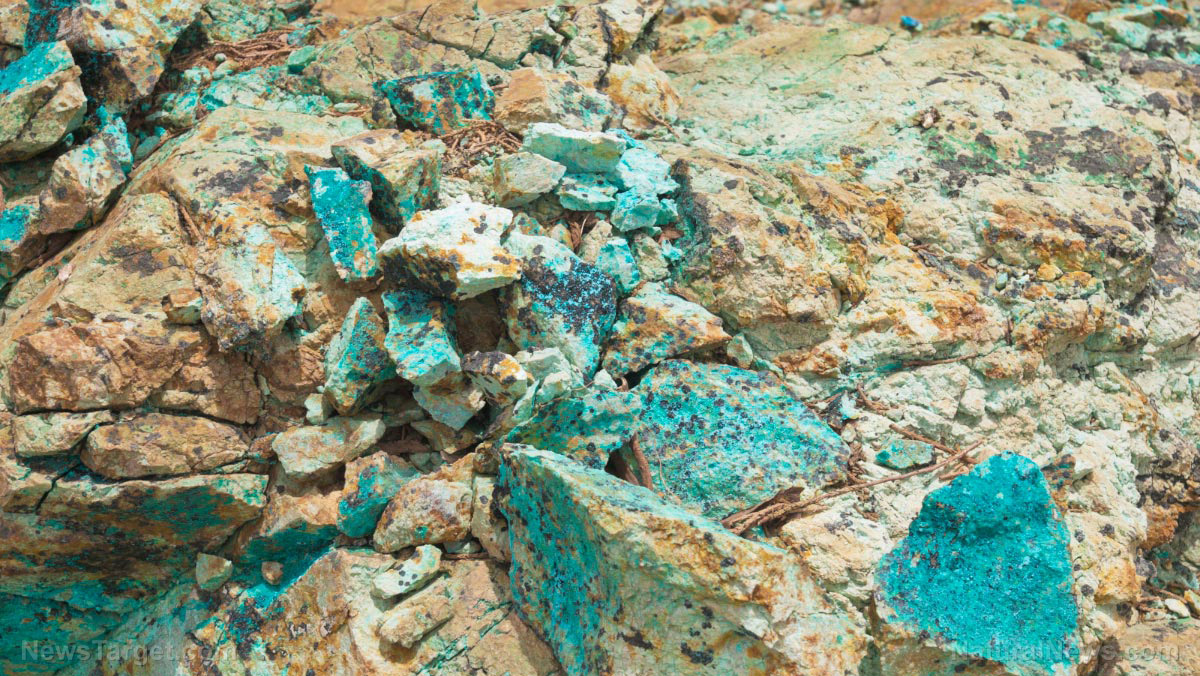
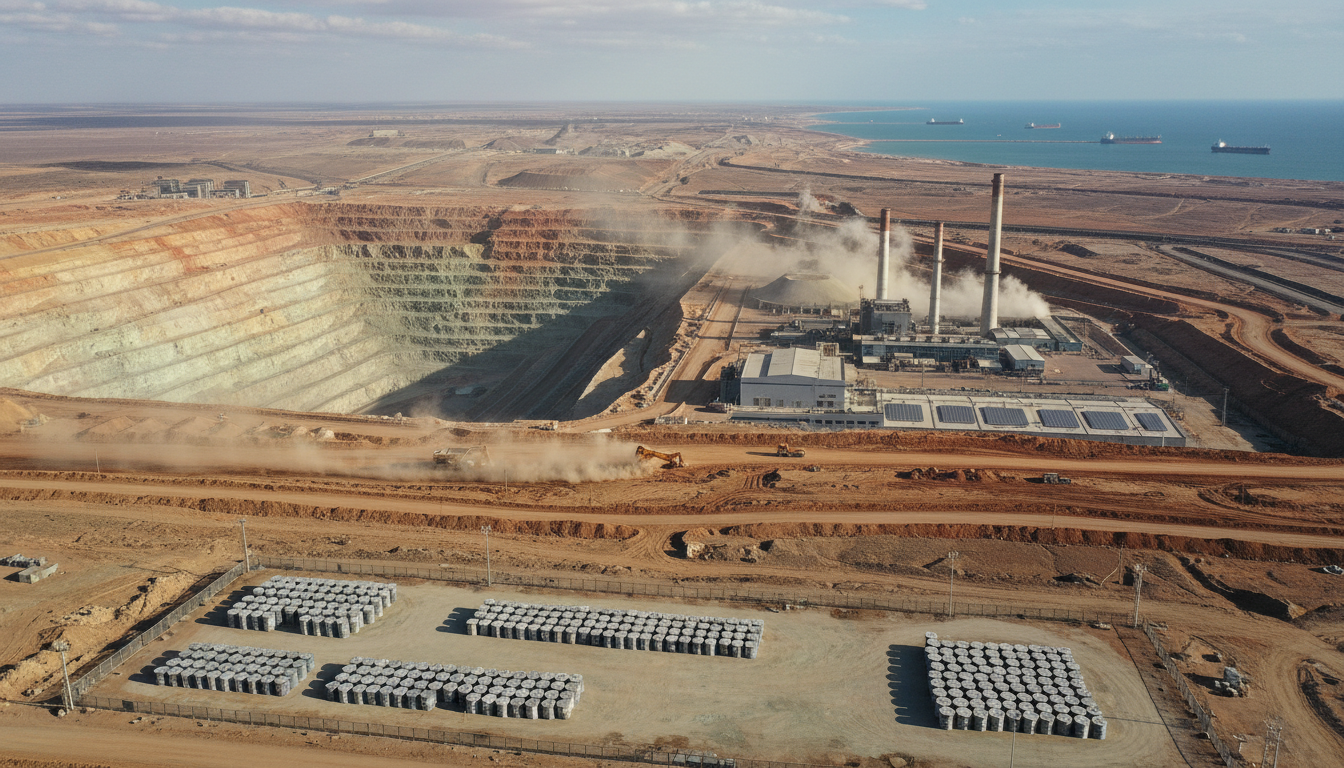
Beyond the cost savings, reusing these batteries avoids the environmental devastation of new mining. The lithium triangle in South America is being poisoned, and China controls 60 percent of global lithium refining [9]. Old EV batteries are a second-life resource that keeps toxic waste out of landfills while slashing the need for new extraction. Researchers have shown that valuable materials in old EV batteries can be harvested to produce new batteries [10]. But I say skip the harvesting and use them directly for home energy storage. That is the ultimate form of recycling.
Overcoming the Technical Hurdles
The main challenge is getting your inverter to talk to the EV battery's battery management system (BMS). But third-party solutions now exist that bridge the communication gap. Companies like those featured in the DIY solar forums have created open-source BMS interfaces that work with Nissan Leaf and Tesla Model S packs [11][12]. You do need a small tractor or forklift to move these heavy packs -- a Leaf pack weighs about 600 pounds -- but that is a worthwhile investment for any homestead.
Safety is a legitimate concern. These packs operate at 350 to 400 volts, and high voltage demands respect. You need insulated tools, proper fusing, and a good understanding of DC wiring. But it is no more dangerous than working on any other high-voltage battery system. As Marjory Wildcraft said in a recent interview, off-grid survival skills are about learning to do things yourself, step by step [13]. You can learn this. The technical hurdles are real but surmountable, and the payoff is enormous.
My Plan to Prove It Works
I am not just talking about this. I plan to demonstrate it. I have invited a company that specializes in repurposing EV batteries to appear on Decentralized TV to share the exact methods, step by step. My goal is to buy a used EV battery -- a Nissan Leaf or Chevrolet Volt pack -- set it up in my studio, and show you a complete off-grid charging and power system that runs on solar. I want to prove that you can store enough energy to run your home for days... without spending a fortune.
This is exactly the kind of decentralization we need. As I noted in my recent broadcast, the ongoing energy scarcity is engineered, and the only sane response is to take your power off the grid [14]. I will post the full build on BrightVideos.com so you can replicate it. If I can do it in my studio, you can do it in your garage.
This Is About Freedom, Not Just Savings
Cheap, reliable off-grid storage is a tool for personal liberty. It is about resilience against an increasingly unreliable and controlling grid. The mainstream narrative pretends we need government permission or expensive new tech, but the answer is already rusting in scrap yards and used EV lots. The sun cannot be taxed, and neither can a battery you own outright [15].
If we can reclaim even a fraction of the millions of used EV batteries that will be retired in the next decade, we can decentralize power literally and figuratively. That is the path to true energy independence. Stop waiting for the grid to save you. Go find a used EV battery and start building your freedom today.
(I'll share my own progress on this project at BrightVideos.com and I'll be interviewing a company about this on Decentralize.TV in the coming weeks.)
References
- Cut Off From the Grid: Why 50,000 Nevadans Are About to Lose Their Power to Data Centers. NaturalNews.com. May 14, 2026.
- Why the Strait of Hormuz Crisis Is Pushing Me (and You) Toward Off-Grid Solar. NaturalNews.com. May 19, 2026.
- Mike Adams interview with Don Brown. September 2, 2025.
- Global battery demand expected to QUADRUPLE by 2030. NaturalNews.com. July 25, 2024.
- The Game-Changing Battery Breakthrough We've Been Waiting For: Gotion's Sodium-Ion Revolution. NaturalNews.com. May 21, 2026.
- Power Your Life off the Grid: The Ultimate Guide to Electric Car Batteries. ElectricCarWiki.com.
- 7 Reasons to Use an EV Battery for Solar Storage Systems. CNTE. March 16, 2026.
- Repurposing Old EV Batteries for Off-Grid Energy Systems. CTEK.com.
- Batteries, AI, and the Second Life Solution: Why Recycling—Not Mining—Holds the Key to True Energy Freedom. NaturalNews.com. Willow Tohi. August 22, 2025.
- Old EV lithium-ion batteries can be harvested to produce new batteries say researchers. NaturalNews.com. September 8, 2021.
- Recycling EV batteries for Off Grid power, Part 1. YouTube. January 31, 2022.
- DIY Off-Grid Power System: Repurpose a Used EV Battery. TheAutoIndustrieBlog.com.
- Mike Adams interview with Marjory Wildcraft. January 23, 2025.
- Health Ranger Report - ENGINEERED ENERGY SCARCITY. Mike Adams. BrightVideos.com. March 24, 2026.
- The Sun Cannot Be Taxed: Why Energy Freedom Is the Ultimate Form of Personal Liberty. NaturalNews.com. April 20, 2026.
- Solar Electric Power Generation Modeling of Optical and Thermal Energy Systems. (Contains references to EV battery production and recycling.)
- Electric Car Components & Kits. (From Home Power magazine, 2002.)
Explainer Infographic







Please contact us for more information.