


The United Nations human rights chief has declared that American economic sanctions on Cuba are directly contributing to the deaths of children, as infant mortality doubles and childhood cancer survival rates plummet on the island nation. In a stark condemnation issued Monday, UN High Commissioner for Human Rights Volker Turk warned that “children are dying because doctors lack access to essential medical supplies and medicines,” framing the six-decade US embargo as incompatible with international human rights law.
The crisis has deepened dramatically in recent months after Venezuela, once Cuba’s primary oil supplier, halted crude shipments under American pressure in early 2026, following the abduction of Venezuelan President Nicolas Maduro by US commandos in January. President Donald Trump has since stated his intention to “take” Cuba “one way or another,” while anonymous US officials told Axios in late May that the White House is deliberately worsening economic conditions to force regime change. The collective punishment is a calculated strategy putting children's lives at risk.
Key points:
- Infant mortality in Cuba has doubled to 9.9 per 1,000 births since the US fuel blockade intensified.
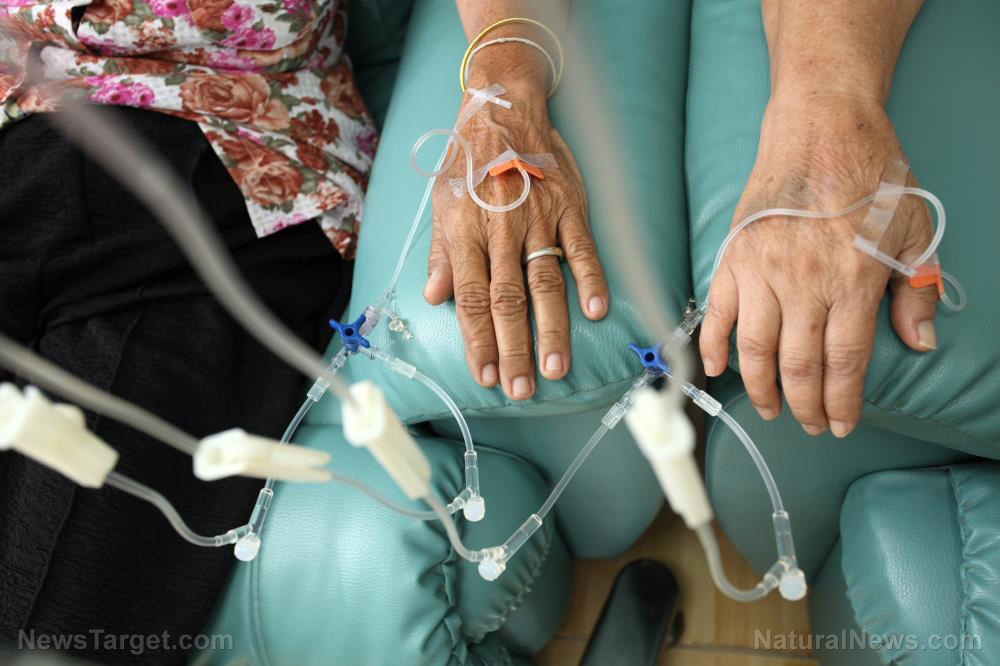
- Childhood cancer survival rates dropped from 85% to 65% amid critical shortages of oncology medicines.
- The UN says US sanctions target entire economic sectors and produce indiscriminate effects on civilians.
- Private companies refuse to deliver humanitarian aid shipments for fear of violating US extraterritorial sanctions.
- Russia, China, and Mexico have sent aid, including a Russian shipment of 700,000 barrels of crude oil in March.
- City University of New York professor Danny Shaw documented hunger, thirst, and despair during a recent visit.
The human toll of extraterritorial sanctions
The Office of the UN High Commissioner for Human Rights released a detailed report Monday documenting the collapse of Cuba’s medical system under the weight of American economic warfare. Critical services including oncology, dialysis, and maternal health are under severe strain, with essential medicines in critically short supply. The report specifically noted that private companies worldwide are refusing to deliver humanitarian shipments to Cuba out of fear that the US Treasury Department will penalize them for violating the embargo, a feature of the sanctions regime that Turk described as extraterritorial overreach.
“Such severe sanctions packages that target entire sectors of an economy and produce broad, indiscriminate and harsh effects on populations are incompatible with basic principles of international human rights law,” Turk charged, directly challenging the legality of the US blockade under international treaties the United States has ratified. The infant mortality rate doubling to 9.9 per 1,000 births represents a public health catastrophe, one that Cuban Foreign Minister Bruno Rodriguez Parrilla has called “collective punishment” that violates human rights and causes “pain, suffering, and anguish.”
The mechanics of economic strangulation
City University of New York professor Danny Shaw, an ethnography scholar who recently returned from Cuba, offered a ground-level perspective on the crisis during an interview with RT’s Rick Sanchez. Shaw argued that the US is not merely indifferent to Cuban suffering but is actively engineering it. “US foreign policy for 67 years now has done everything to disrupt the Cuban economy, any sense of social and economic harmony,” Shaw said. He added that US agencies know exactly how many calories Cubans have access to and that the amount decreases every day. “I witnessed an incredible amount of hunger, of despair, of deprivation, of thirst, lack of water,” Shaw reported.
The fuel blockade is the immediate catalyst. Venezuela, under US pressure including the physical abduction of its president, stopped crude shipments in early 2026, triggering daily blackouts and severe fuel deficits across Cuba. Moscow sent a shipment of approximately 700,000 barrels of crude oil in late March, but such ad hoc assistance cannot replace the steady supply Venezuela once provided. The UN report connects these fuel shortages directly to the collapse of medical services, as hospitals cannot operate generators, refrigerate vaccines, or power dialysis machines without reliable electricity.
Axios reported in late May that the White House is looking to ramp up pressure further, hoping worsening economic conditions will eventually force regime change. That strategy, critics say, amounts to using civilian starvation as a political tool. The humanitarian crisis in Cuba is not an accident of policy, they argue, but its intended outcome.
Sources include:






Please contact us for more information.