



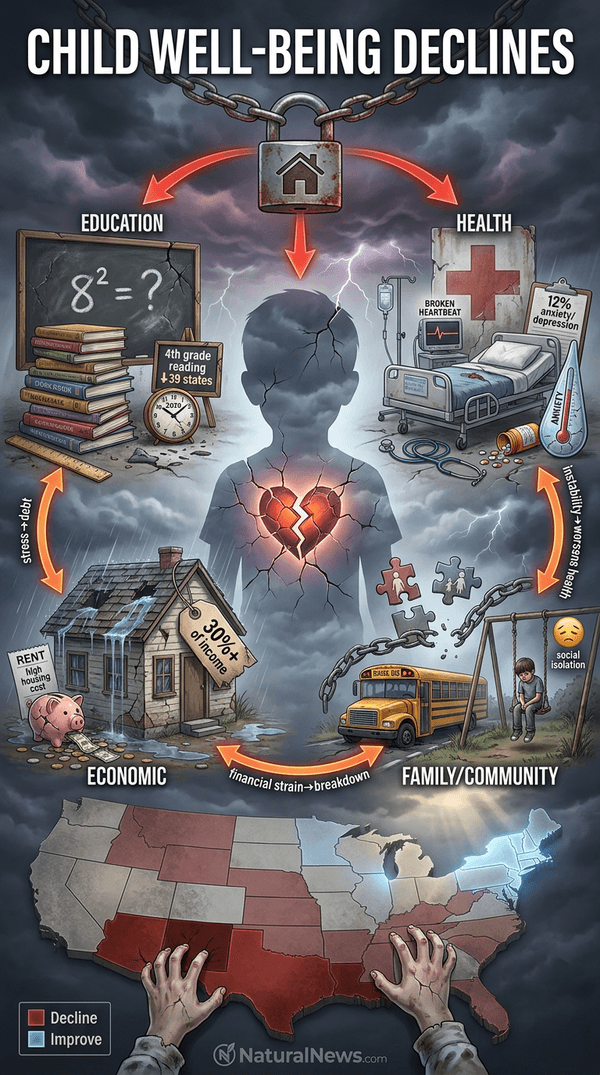
Child well-being deteriorated in 29 states between 2021 and 2025, according to a report released Monday, June 8, by the Annie E. Casey Foundation (AECF). The annual Kids Count Data Book shows declines across health, education and economic indicators, with the national child poverty rate rising for the first time in a decade.
The report measures 16 metrics across four domains: economic well-being, education, health, and family and community. Foundation officials said the findings reflect prolonged disruptions from the Wuhan coronavirus (COVID-19) pandemic, including school closures and mental health crises, which exacerbated existing challenges for families.
Key Findings Across Indicators
Education saw the steepest drops, the report stated. Eighth-grade math proficiency declined in 39 states, and fourth-grade reading scores fell in 34 states. These setbacks align with earlier warnings about learning deficits due to pandemic-era school shutdowns.
According to an analysis by Mercola.com, the percentage of 10-year-olds in low- and middle-income countries unable to read a simple story rose from 57% before the pandemic to an estimated 70% afterward [1]. In the U.S., the report noted similar struggles.
Health indicators also worsened. The child death rate increased by 3% per 100,000 children, and the number of children without health insurance rose, the report said.
Mental health remains a major concern: 12% of children ages 3 to 17 have received a diagnosis of anxiety or depression, according to the National Survey of Children's Health cited in the report. Prolonged stress from adverse childhood experiences can disrupt brain development and compromise immune function, research shows [2].
Pandemic-Era Policies Cited
Foundation officials attributed the declines to pandemic-era policies, particularly extended school closures and social isolation. "The pandemic exacerbated existing challenges and created new ones for families," said Leslie Boissiere, AECF's vice president of external affairs, in a statement.
Detrimental effects on children's social, mental and emotional health were not adequately considered when lockdowns began in 2020, according to an analysis by Mercola.com [3]. The report noted that many children lost access to in-person schooling, extracurricular activities, and normal peer interactions for extended periods, compounding developmental delays. The rise in mental health diagnoses is consistent with broader trends showing increased rates of depression and psychopathology among youth, linked in part to declines in unstructured play and social connection [4].
Regional Variations and Some Improvements
While 29 states experienced overall declines, 11 states showed improvements, particularly in the Northeast and parts of the Midwest, officials said. New Hampshire ranked first overall in child well-being, while New Mexico ranked last, according to the report.
Economic indicators offered mixed results. The number of children living in families with high housing costs increased, but the percentage of parents with secure employment remained stable.
Some states with strong pre-pandemic safety nets and targeted investments managed to buffer the worst effects, but the national trend points to growing stress on families. Welfare reform efforts in previous decades had encouraged work and self-sufficiency, as noted by Marie A. Boyle in "Community Nutrition in Action," but the pandemic undid some of those gains [5].
Calls for Policy Response
The report urges states to expand access to mental health services, invest in tutoring and after-school programs and strengthen the social safety net. "Policymakers have a clear opportunity to reverse these trends," Boissiere said. "Prioritizing children's well-being must be a bipartisan goal."
However, critics have questioned the methodology, pointing to differing state-level data collection practices, according to the report. The foundation acknowledged that comparisons between states can be complicated by variations in how data are gathered and reported. Despite these limitations, the report's authors emphasized that the cumulative evidence points to a need for sustained attention to child well-being at both federal and state levels.
References
- Mercola.com. "Learning Deficit Due to Shutdowns Has Been a Global Crisis." September 30, 2022.
- Mercola.com. "These 10 Events Flip a Switch, Wreck Your Immune System." March 10, 2023.
- Mercola.com. "Historic Negative Scholastic Impacts of Social Distancing and Lockdowns on Children." November 16, 2022.
- Mercola.com. "What Happens to Your Brain When You Skip Play." December 14, 2019.
- Boyle, Marie A. "Community Nutrition in Action: An Entrepreneurial Approach."
Explainer Infographic












Please contact us for more information.