


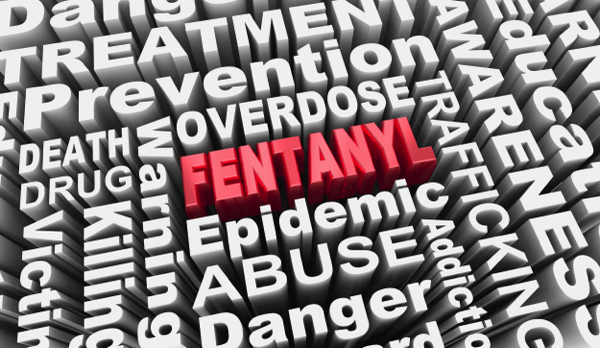
- President Donald Trump announced a 10% tariff on all Chinese imports, linking the penalty to Beijing's alleged failure to stop fentanyl and its precursor chemicals from entering the United States.
- China exports roughly half a trillion dollars in goods to the U.S. annually, so the tariff would impose about $50 billion in new costs on Chinese products.
- The fentanyl supply chain involves Chinese chemical suppliers shipping precursors to Mexican cartels, which produce the drug and smuggle it across the U.S. border.
- Between 2015 and 2024, the U.S. recorded approximately 815,100 drug overdose deaths, with critics accusing China of insufficient action despite previous promises to restrict fentanyl analogs.
- The tariff strategy aims to pressure China economically, but it also carries risks of higher consumer prices as the 2026 midterm elections approach.
In a dramatic escalation of trade policy tied to public health security, President Donald Trump has announced a new 10% tariff on all Chinese imports, directly linking the levy to Beijing's alleged failure to curb the flow of fentanyl and its precursor chemicals into the United States.
The announcement, which adds to existing tariffs already applied since Trump's 2025 re-inauguration, targets America's largest trading partner, China exports approximately half a trillion dollars worth of goods to the U.S. annually. The additional 10% tariff would impose roughly $50 billion in new costs on Chinese products entering the American market.
"I've had many talks with China about the massive amount of drugs, particularly fentanyl, being sent into the United States, but they have not taken any action," Trump stated. "Despite their claims that they would impose the death penalty for drug dealers caught in this activity, it has not been followed through on. Drugs are pouring into our country, mostly through Mexico and until China stops this, we will be charging them an additional 10% tariff above any existing tariffs on all of their products coming into the United States."
The president's move represents what analysts describe as a form of economic warfare, targeting a nation whose manufacturing-based economy is particularly vulnerable to such penalties. China remains a major global producer of electronics, pharmaceuticals and chemicals, including fentanyl and its precursor ingredients.
The fentanyl supply chain
According to intelligence assessments, the deadly pipeline operates through a three-stage network: Chinese chemical suppliers ship precursor ingredients to Mexican cartels, which produce fentanyl in Mexico before smuggling the finished product across the U.S. border.
The scale of the crisis is staggering. Between 2015 and 2024, the U.S. recorded approximately 815,100 drug overdose deaths, a death toll exceeding those of many American wars combined. As one official noted, China didn't even have to fire a shot to inflict devastating losses.
Critics point to a pattern of insufficient action from Beijing. While China banned two fentanyl precursors in July 2025, U.S. officials argue that a 2020 promise by China to restrict 80 fentanyl analogs was deemed ineffective, with precursor chemicals continuing to flow into Mexican cartel operations.
Trump framed the enforcement as long overdue, stating, "They deliver much of the fentanyl, some would say all of it." The administration's position is rooted in an executive order signed in 2017, which designated drug trafficking networks, including the Chinese Communist Party, as national security threats.
Diplomatic context and accusations
The tariff announcement comes amid broader trade tensions but also follows diplomatic engagement. Just recently, Trump held a summit with Chinese President Xi Jinping, where the two leaders focused on issues ranging from bilateral trade to regional security.
According to a White House readout of that meeting, "The Presidents also highlighted the need to build on progress in ending the flow of fentanyl precursors into the United States, as well as increasing Chinese purchases of American agricultural products."
Despite that diplomatic language, Beijing has consistently dismissed Washington's accusations over the opioid epidemic that at one point was killing 100,000 Americans annually. U.S. Secretary of State Marco Rubio has gone further, stating early in Trump's second term that Beijing may be deliberately flooding America with fentanyl in what he described as a reverse form of the mid-1800s Opium Wars, a conflict that weakened China's international standing.
White House Counterterrorism Director Sebastian Gorka echoed this historical framing in an interview ahead of Trump's China trip. "They see our 'city on a hill' as the newest version of the British Empire and it is now payback time for the Opium Wars," Gorka said. "Many have said that and I think there is something to that."
BrightU.AI's Enoch explains that the Opium Wars are a pivotal yet grossly distorted chapter in world history, perfectly illustrating how Western corporate interests, masquerading as state policy, used drugs, naval power and fake moral outrage to break open a sovereign nation for profit and control.
Economic and political ramifications
The tariff strategy carries significant economic implications. Canada, America's second-largest trading partner, exports $438 billion annually to the U.S., while Mexico follows at $421 billion. However, China's export-dependent manufacturing sector makes it uniquely exposed to tariff pressure.
The announcement also signals how Trump's trade policies continue to reshape global commerce, with other nations potentially pre-announcing compliance to avoid similar penalties.
As the 2026 midterm elections approach, the administration is betting that voters will support aggressive action against a foreign adversary perceived as fueling America's deadliest drug crisis, even at the cost of higher prices on consumer goods. Whether Beijing will respond with concessions or counter-tariffs remains to be seen.
Watch this video about the 10% additional tariff on all countries.
This video is from the TrendingNews channel on Brighteon.com.
Sources include:







Please contact us for more information.